Enoshima
"You walk out to Enoshima over the sea itself, on a bridge so low the waves seem to be deciding whether to let you cross."
A small shrine-crowned island off the Shōnan coast near Kamakura, reached by a long low bridge over the sea. Sea caves at its far tip, Mount Fuji across the water on a clear evening, and the salt-and-grilled-squid smell of a Japanese seaside afternoon.
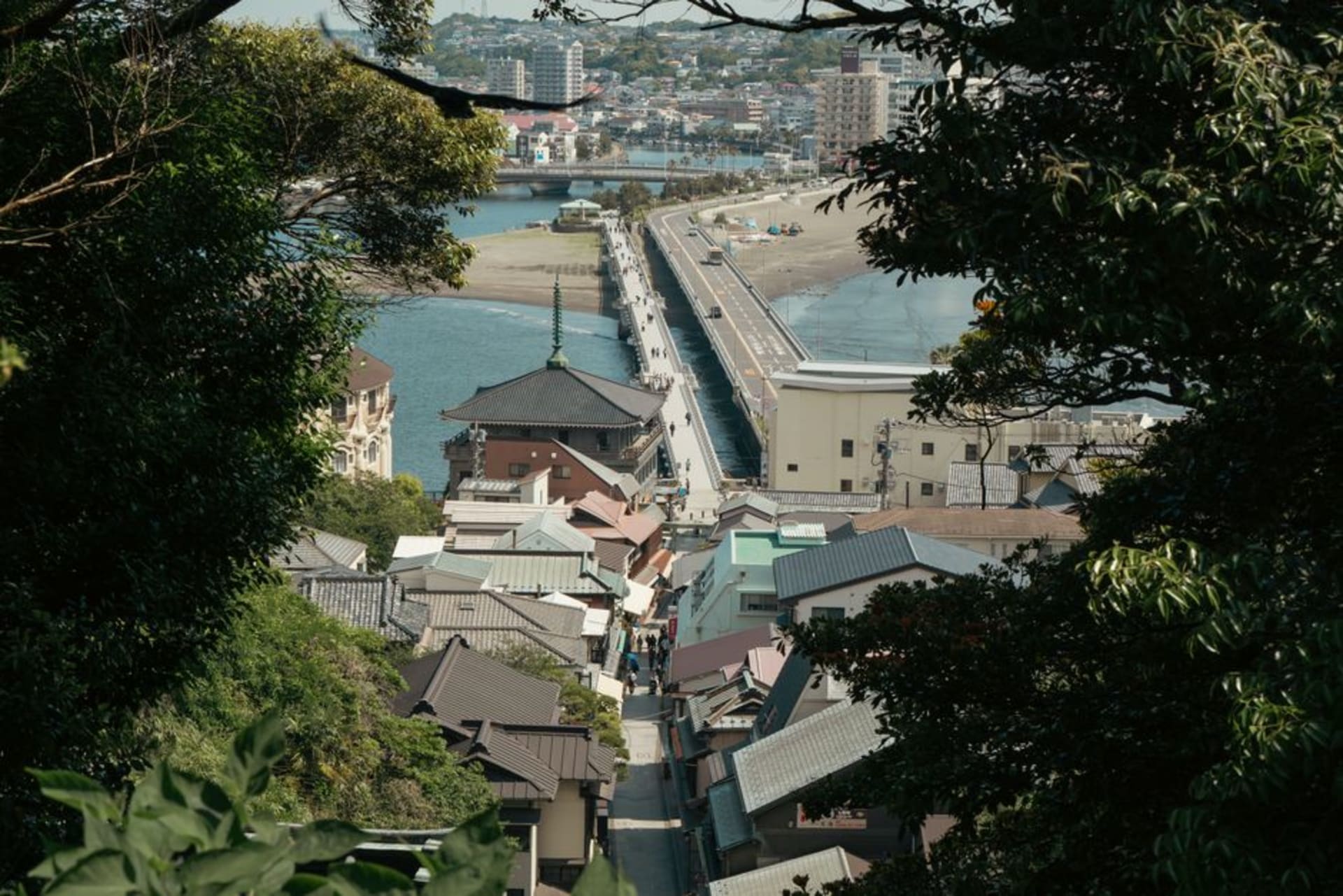
Lia wanted the sea and I wanted to not look at another temple, so Enoshima was the compromise that turned out to be neither compromise nor consolation but simply a good day. We came down from Kamakura on the little Enoden tram, which rattles along so close to the houses you could reach out and take the washing off the lines, and got our first sight of the island from the shore: a green hump in the bay, tethered to the land by a long, low bridge that seemed to float on the water.
Crossing the bridge
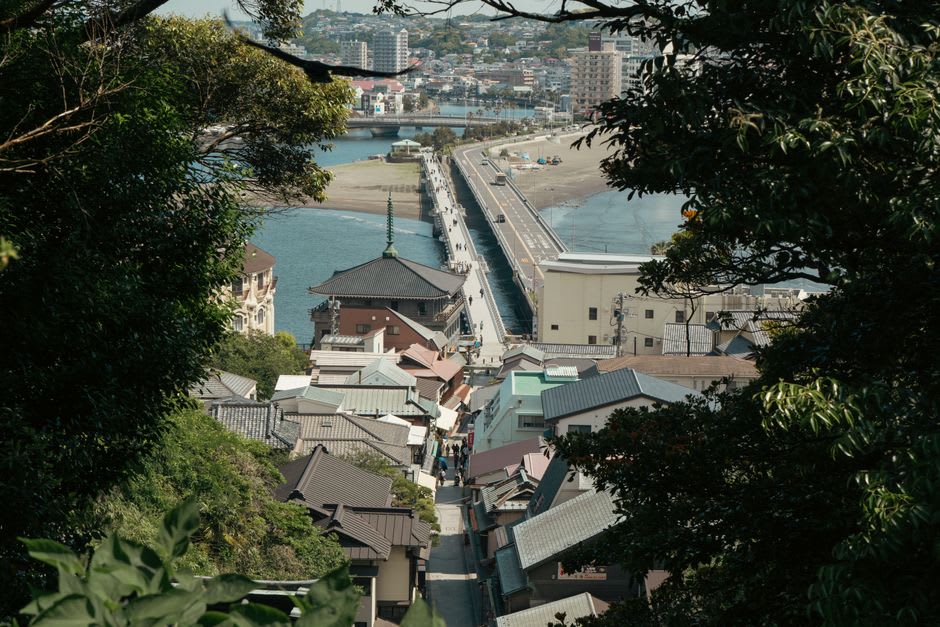
The walk out is the thing. The bridge runs flat and long over the shallow sea, exposed to the wind, and on the Saturday we crossed it was full of families, cyclists, a man with a fishing rod and no evident intention of using it. Halfway across, the island fills your whole view — a wooded rock climbing to a lighthouse, its lower slopes packed with the rooftops of a shrine town. Enoshima has been sacred for well over a thousand years, dedicated to Benzaiten, the goddess of everything that flows: water, music, eloquence, luck. Pilgrims have made this crossing since long before the bridge. We made it with soft-serve in hand, which felt, if not reverent, at least in the right spirit.
Up through the shrine town
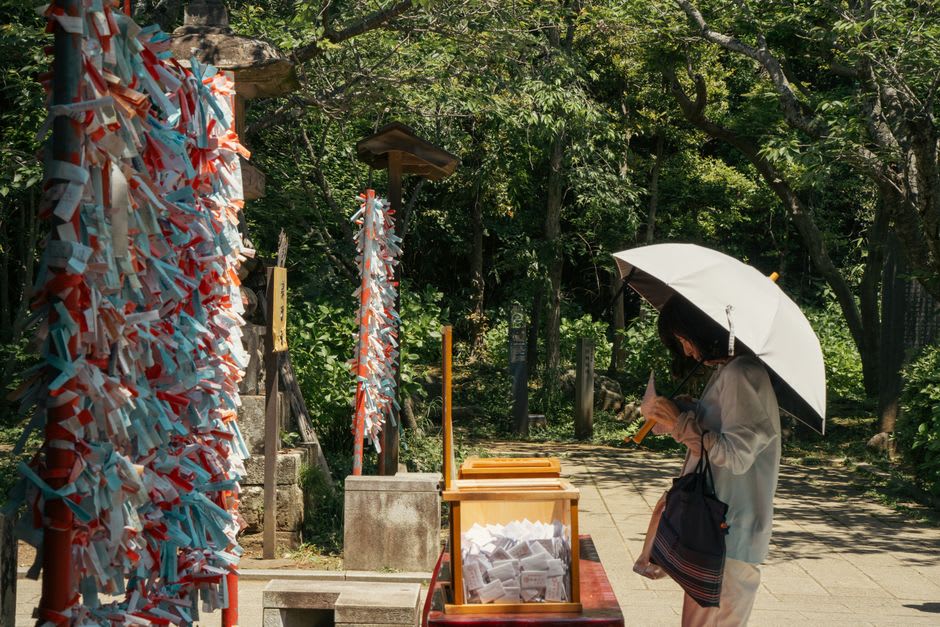
The island climbs, and so do you — up a narrow shopping street of grilled-seafood stalls, past the vermilion gate of Enoshima Shrine, through a garden near the top where a candle-lit sea-view tower stands. The whole place smells of grilling squid; the local specialty is shirasu, the same tiny whitebait we’d eaten in Kamakura, and a pressed cracker called tako-senbei made by flattening a whole octopus between hot iron plates with a bang that makes you jump. We ate one, still too hot, walking. There are escalators for the steep parts, which Lia used without shame and I refused out of pride and regretted immediately.
The caves and the Fuji view
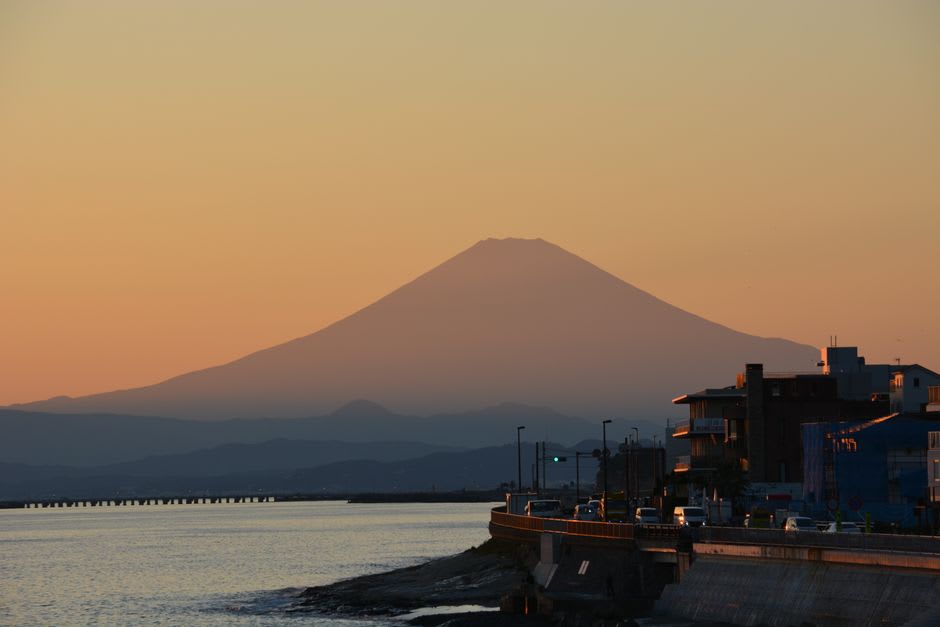
The reward is at the far side, where the island drops to the sea in weathered cliffs and two wave-cut caves, the Iwaya, burrow back into the rock. You walk them by the light of a handed candle-lantern, the stone dripping, small shrines set into the dark — these caves are the old spiritual heart of the place, said to reach, in legend, all the way to Mount Fuji. And Fuji is the last gift Enoshima gives: from the western rocks at day’s end, on a clear evening, the mountain floats grey-blue across Sagami Bay with the sun going down beside it. We didn’t quite get the clear evening. We got a smudged pink cone through haze, and a bench, and the tide coming in, and it was enough.
Getting There
Enoshima sits off the Shōnan coast of Kanagawa, next to Kamakura. From Tokyo, take the Odakyu line from Shinjuku direct to Katase-Enoshima Station in about seventy minutes; alternatively ride the JR Tokaido line to Fujisawa and change to the Odakyu or the little Enoden tram. From Kamakura, the Enoden line runs a lovely coastal half-hour to Enoshima Station. From any of the three stations it’s a ten-to-fifteen-minute walk to the bridge. Come late afternoon in winter for the best odds of Fuji at sunset.
Keep exploring
More of Kantō