Ashikaga
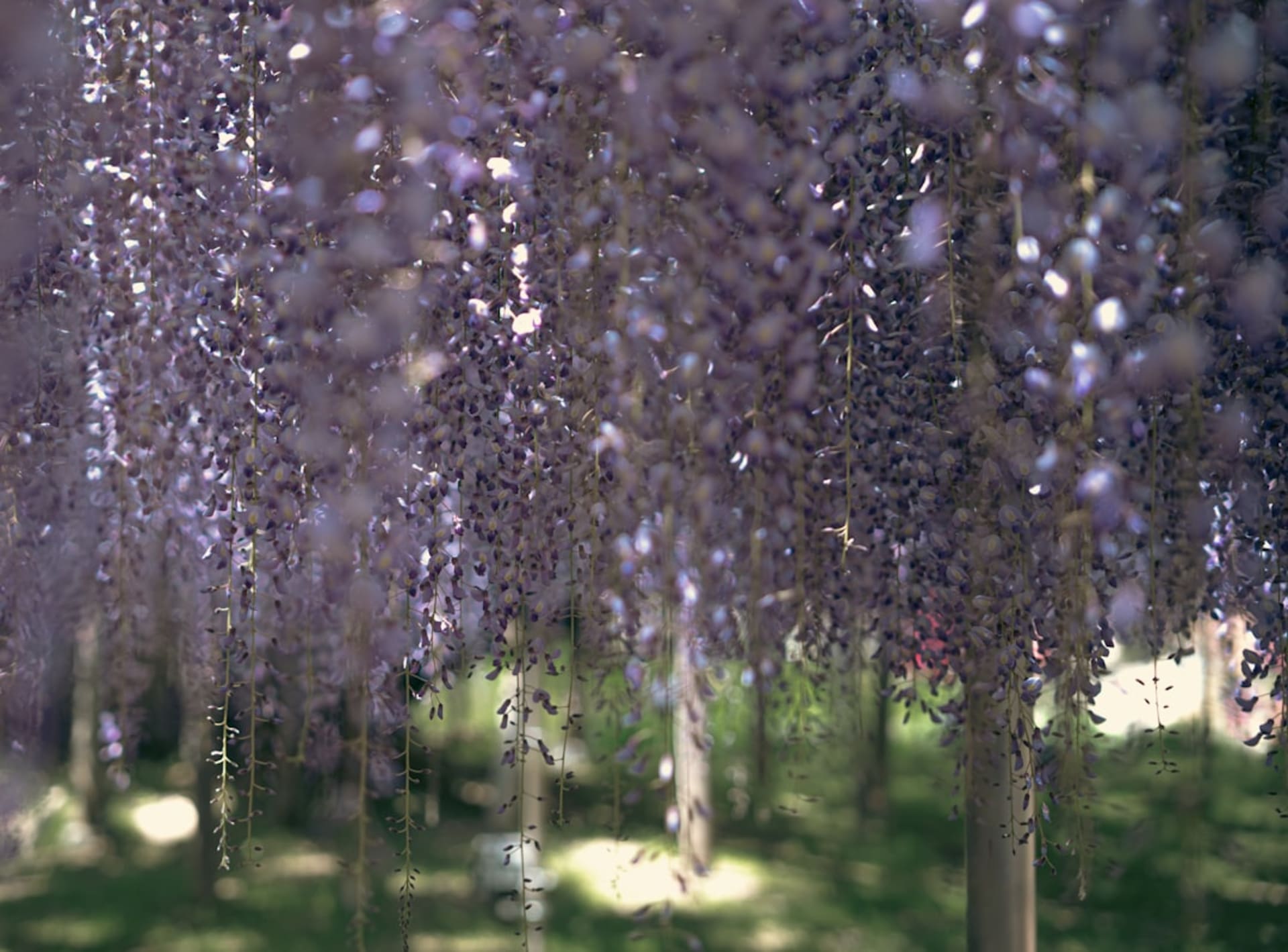
"Lia stopped mid-sentence under the wisteria, and for once neither of us needed to say anything."
A quiet Tochigi town where a single wisteria tree the age of a great-grandmother spills violet across an acre of sky. Beyond the flowers there is Japan's oldest school and a river valley that no tour bus ever seems to reach.
We almost didn’t go. Ashikaga was a name on a train map, an hour and a bit north of the Tokyo sprawl, and everyone we asked shrugged as if we’d suggested visiting a suburb. But Lia had seen a photograph of the great wisteria once, years before we ever met, and she’d carried it around in her head like a promise. So on a grey morning in early May we took the local line up through Tochigi’s rice flats, not really expecting much, and walked into the park just as the clouds thinned.
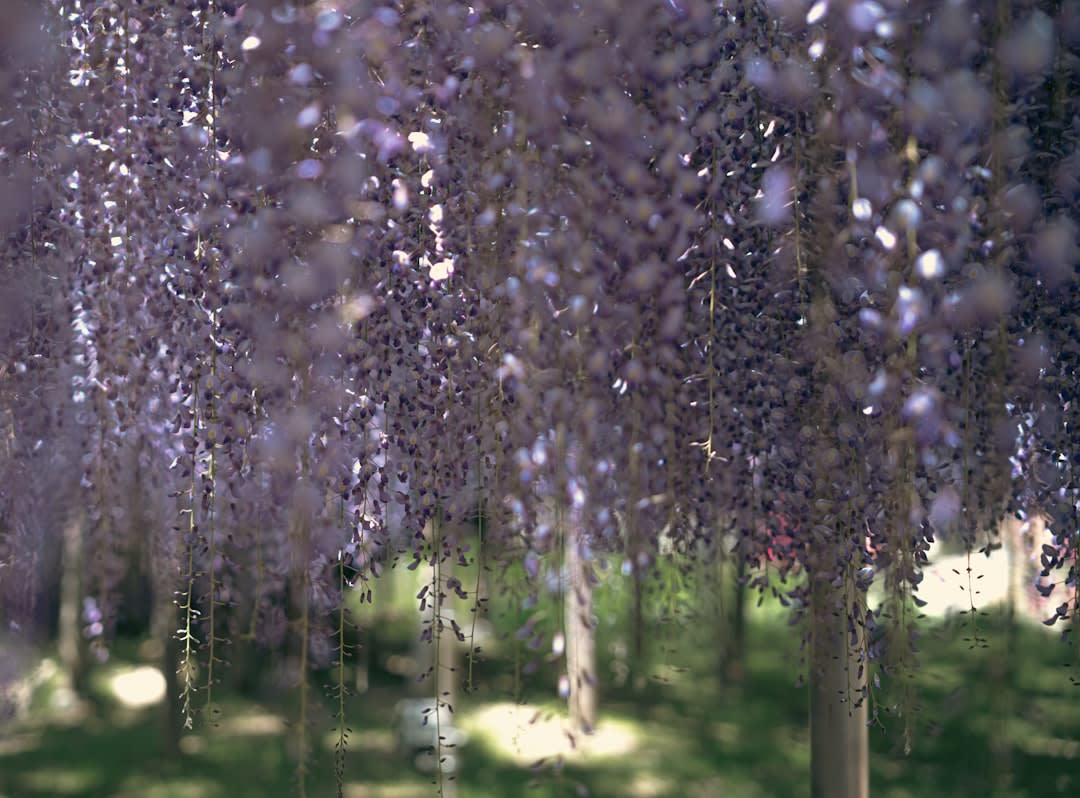
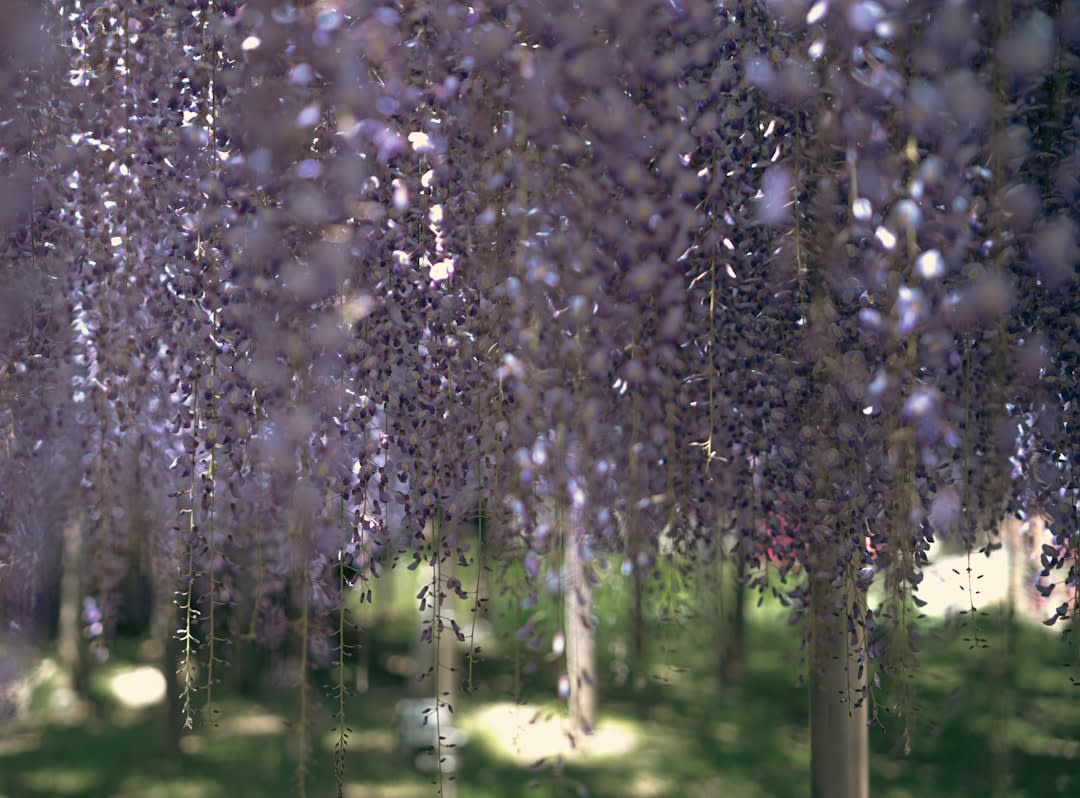
I have stood under cathedral ceilings that moved me less. The old wisteria at Ashikaga Flower Park is more than a century and a half old, its trunk propped and splinted like an elderly relative, and its blossoms trained overhead across a trellis so wide you walk beneath it as though wading into a violet sea. Lia stopped mid-sentence, and for once neither of us needed to say anything.
The wisteria that swallows the sky
The park times its whole year around this bloom, and by mid-May the great tree is joined by a white wisteria tunnel and a hanging wall of yellow laburnum that locals call the golden chain. We arrived early on purpose, before the coaches, and had a good half hour when the light came through the petals and turned the gravel underneath a faint lilac. The scent is the thing no photograph gives you: heavy, almost grape-like, so thick it felt like something you could lean against.
We came back that same evening, because in winter and again around the blooms the park runs an illumination, and the tree lit from below becomes something else entirely, less flower than constellation. Lia said it looked like the whole thing had been dipped in dusk. I didn’t argue.
Japan’s oldest school
The next morning we walked into town proper, and this is where Ashikaga stopped being a flower park with a station attached and became a place with a past. The Ashikaga Gakko is said to be the oldest school in Japan, a seat of Confucian learning with roots reaching back the better part of a thousand years. You pass through a modest gate inscribed with characters, cross a small courtyard, and step into a wooden hall that smells of old cedar and cold ink.
There were maybe six other people there. A volunteer, seeing we were foreign and hopeless, walked us gently through the reading room and mimed a student bent over the classics. I sat on the tatami for a while by the pond garden while Lia sketched the roofline, and the quiet had a texture to it, the specific hush of a place that has been asking the same patient questions for centuries.
The town along the Watarase
What surprised me most was the town itself, which almost nobody stays in. Ashikaga straddles the Watarase river, and we spent our second afternoon simply walking its banks, over the long low bridge, past shuttered old silk-weaving houses from when this was a textile town of some importance. We found a coffee shop run by a man who roasted his own beans and asked, delighted, how on earth we’d found him.
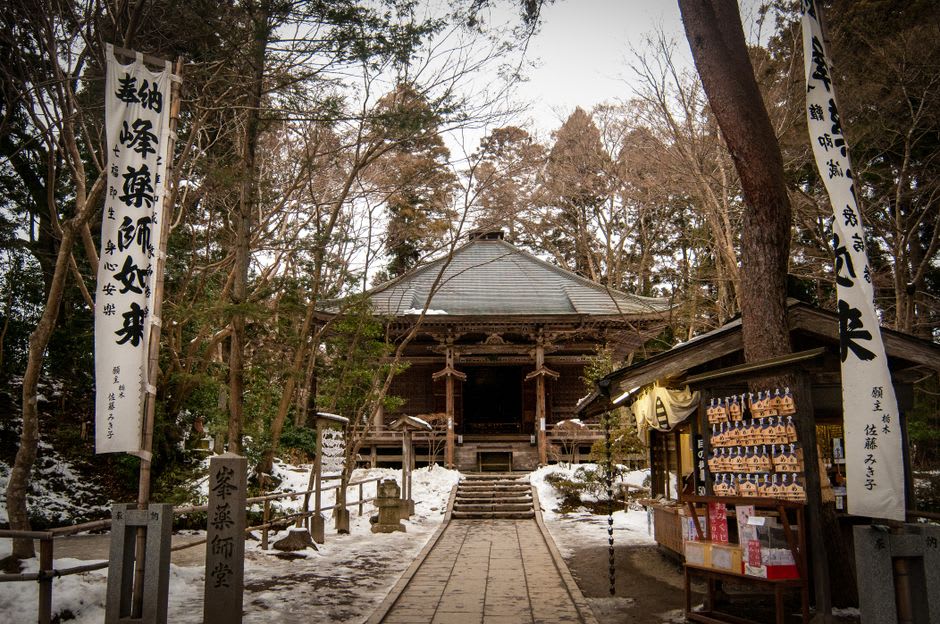
Up on the hillside sits Bannaji, a temple with a broad wooden main hall, and from the slope above it the whole valley opens out. We ate convenience-store onigiri on a bench up there as the light went gold, watching schoolkids cycle home along the river far below. It was the kind of ordinary evening that I remember more clearly, now, than half the famous views we queued for elsewhere.
Getting There
Ashikaga sits in southwestern Tochigi, a straightforward day trip or easy overnight from Tokyo. From Asakusa, the Tobu Isesaki line runs to Ashikmegami and Ashikaga-shi station in roughly an hour and a half; from Tokyo or Ueno the JR Ryomo line reaches Ashikaga station via a change at Oyama. For the Flower Park in wisteria season there’s a dedicated JR station, Ashikaga Flower Park, a short walk from the gates. The town’s sights are walkable from the central stations, though during peak bloom in late April and May the park itself gets busy, so aim for opening time or the evening illumination and give the crowds the middle of the day.
Keep exploring
More of Kantō