
Sōunkyō
"The cliffs leaned in so close I felt the valley had closed its hands around us."
A gorge town swallowed by columnar cliffs in the belly of the Daisetsuzan mountains, where waterfalls fall in silver ribbons and the first autumn colors of all Japan catch fire in early September. A place of steam, stone, and thin alpine air.
We arrived in Sōunkyō by bus at dusk, and I remember Lia pressing her forehead to the window before either of us said a word. The road had been winding up through the dark green of central Hokkaidō for an hour, and then, without warning, the walls went vertical. Columns of grey basalt stood on end like the pipes of some drowned cathedral organ, hundreds of metres high, and between them a river the colour of cold tea. The bus driver did not slow down. He had seen it ten thousand times. We had not, and I think we both understood in that moment that we had come somewhere the earth had done all the deciding.
The Gorge and Its Two Waterfalls
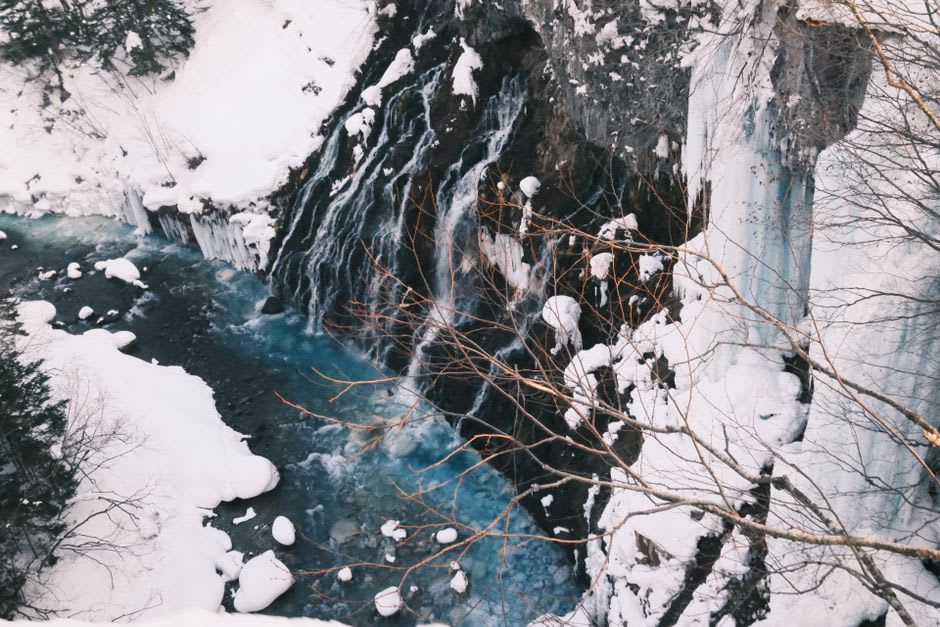
The next morning we walked the gorge road toward the falls, coffee going cold in my hand because I kept forgetting to drink it. Ryūsei, the “shooting star,” comes down in a single narrow rush; Ginga, the “milky way,” fans out beside it in a hundred braided threads. They sit almost side by side, and there is a viewpoint up a steep path where you can hold both in one glance. Lia climbed it faster than me, as she always does, and by the time I reached the top she had already named them. “That one’s shouting,” she said, pointing at Ryūsei, “and that one’s whispering.” I have never been able to see them any other way since.
Up the Ropeway into Alpine Country
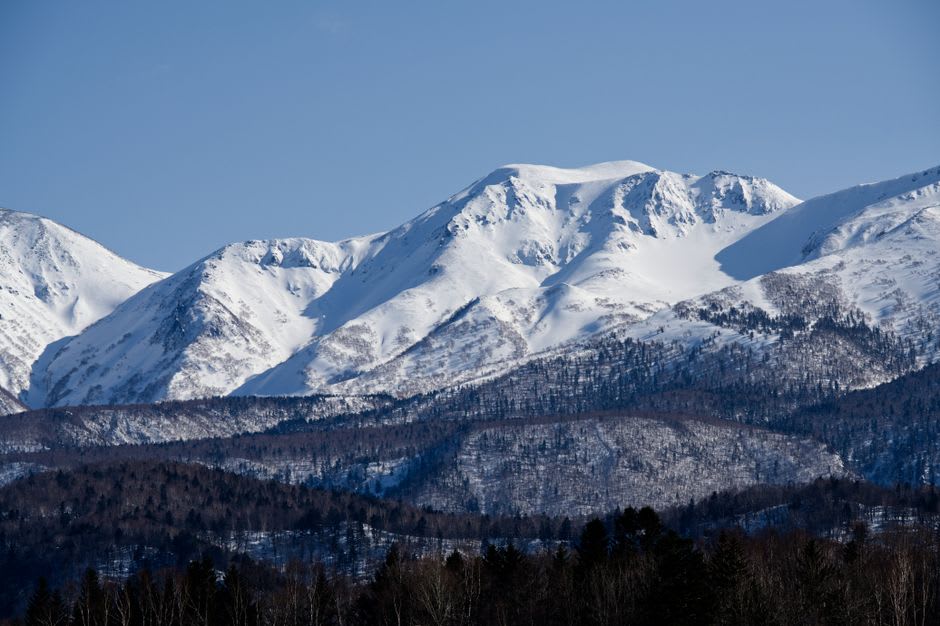
From the town a ropeway lifts you toward Mount Kurodake, and the change is almost violent. You leave the humid gorge and in seven minutes you are among stunted birches and volcanic scree, the whole Daisetsuzan range unfolding grey and green and, in our case, already tipped with the earliest red. This is the roof of Hokkaidō, the first place in Japan where autumn arrives each year, sometimes in the first week of September while the rest of the country still sweats through summer. We took a chairlift higher still and then simply sat on a rock. Lia ate a rice ball. A pika screamed somewhere in the stones. We stayed until the cold came up through the granite and into us.
Steam, Onsen, and the Long Evening
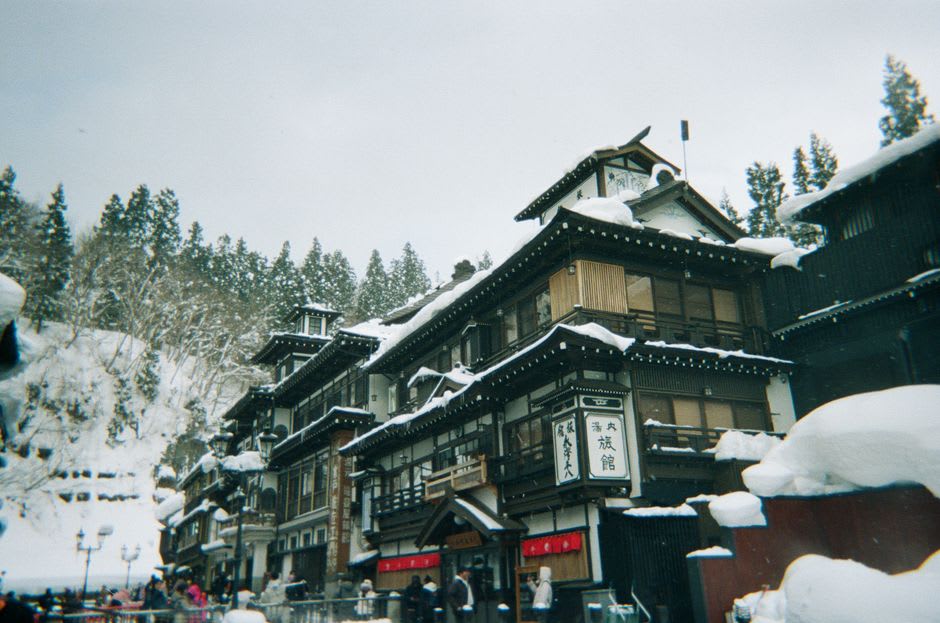
Sōunkyō is an onsen town before it is anything else, and after a day on the mountain the hot water is not a luxury but a repair. We soaked in an open-air bath as the light drained out of the gorge, the cliffs turning from grey to blue to nothing, and the steam rising to meet the first stars. Later we ate in a small place where the owner grilled char over charcoal and asked, in slow careful English, whether we had seen the falls. When we said yes he nodded as if we had passed some test. There is a modest ice festival here in winter, all lit caverns and frozen sculpture, but I confess I loved the town best like this, in the quiet shoulder season, half-empty and entirely itself.
Getting There
Sōunkyō sits inland from Asahikawa, the nearest city of any size. From Asahikawa we took a direct bus that runs a couple of times a day and reaches the gorge in about an hour and a half; the same route continues on toward Abashiri if you are crossing the island. Drivers will find it an easy run up Route 39, though the last stretch through the gorge deserves an unhurried pace and at least one stop for the cliffs. There is no train to the town itself. Come with time to spare, because Sōunkyō rewards the people who stay a night rather than the ones who photograph the falls and flee back down the valley.
Keep exploring
More of Hokkaidō