
A remote UNESCO wilderness peninsula reaching into the sea at the far northeastern edge of Hokkaidō. Brown bears and sea eagles, waterfalls dropping straight into the ocean, the still Five Lakes, and in deepest winter the drift ice grinding ashore.
The road runs out at Shiretoko — that is part of the point. We drove to the far northeast of Hokkaidō, past the last towns, until the peninsula narrowed and the mountains rose green and wild on either side and the pavement simply ended, giving way to a roadless spine of forest and volcano reaching another twenty-odd kilometres into the sea. The name comes from an Ainu word meaning, roughly, the end of the earth, and it feels earned. On our first evening a fox trotted across the road in front of the car without hurrying, and later, from a lookout, we watched a brown bear turning over stones on a distant beach. Lia gripped my arm. We had come to a corner of Japan where the wild still clearly had the upper hand.
The Five Lakes and the Waterfalls
The Shiretoko Five Lakes lie cupped in the forest beneath the peninsula’s volcanic peaks, five still pools that mirror the mountains on a calm morning, linked by boardwalk and trail through bear country. We walked the raised boardwalk first — electrified at its edges against the bears, which rather focuses the mind — and then, when the ground trail was open and guides available, went down among the lakes themselves, quiet and dark and perfectly reflecting Mount Rausu above. Elsewhere on the coast the mountains send their water straight to the sea: at Furepe, a waterfall seeps down a cliff into the ocean, and at Kamuiwakka a whole warm stream tumbles over hot-spring rock. It is a landscape where the water, the forest, and the peaks all press right up against each other with nothing built between.
Bears, Eagles, and Wild Coast
Shiretoko holds one of the densest populations of brown bears in the world, and you feel their presence everywhere — in the warnings, the bells, the closed trails, the sheer aliveness of the forest. The best and safest way to see the wild coast is from the water, so we took a small sightseeing boat down the roadless outer shore, past cliffs and waterfalls no road reaches, and watched bears foraging along the shingle beaches while sea eagles wheeled overhead. In winter these waters draw Steller’s sea eagles and white-tailed eagles in extraordinary numbers, huge birds perched on the ice. Our guide cut the engine beneath a cliff where a waterfall dropped straight into the sea, and in the quiet we could hear the birds, the water, and nothing else at all.
The Drift Ice
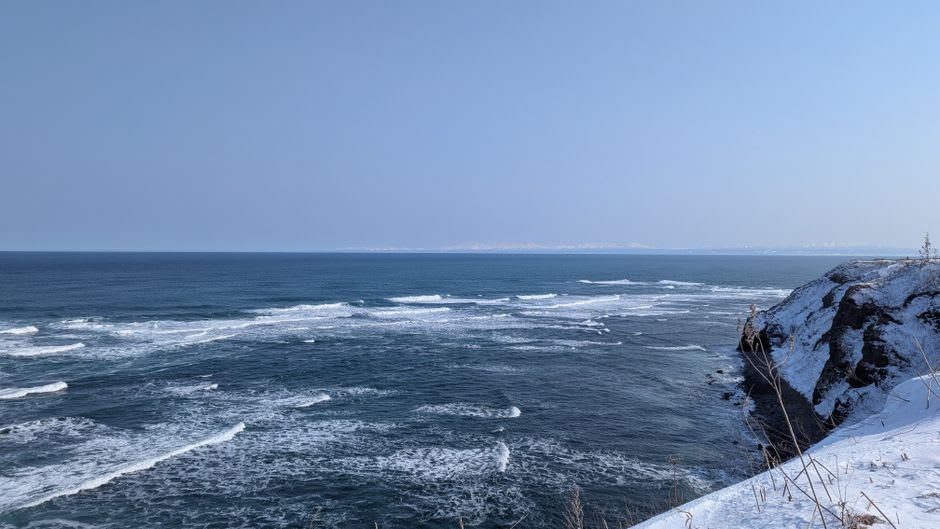
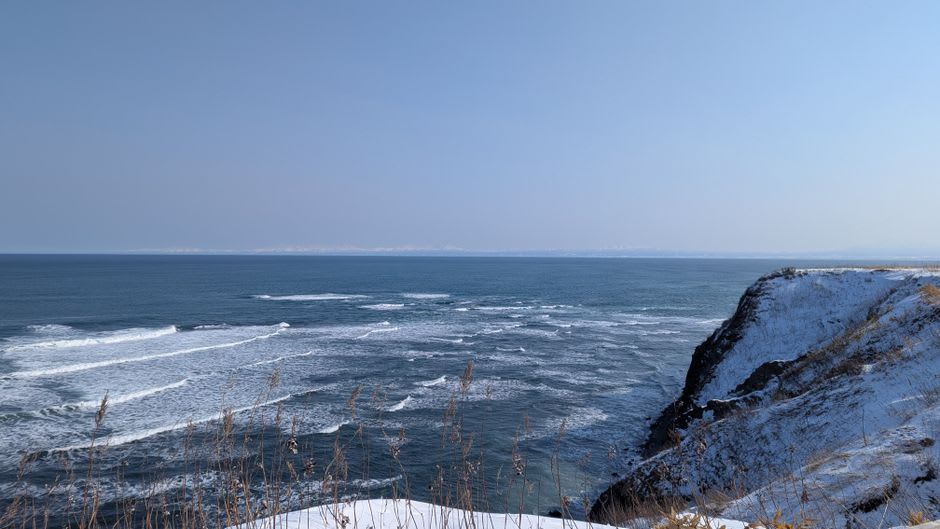
In the depth of winter something extraordinary happens along this coast: drift ice, born far north in the Amur River and the Sea of Okhotsk, is carried south on the currents until it reaches Shiretoko and packs against the shore, turning the sea into a shifting white plain. This is close to the southernmost limit anywhere on earth that sea ice reaches, and the whole ecosystem here — the eagles, the seals, the plankton blooms that follow the melt — turns on its arrival. We didn’t manage the winter crossing ourselves, but we met a guide in Utoro who leads groups out in drysuits to walk and float on the ice, and heard others describe the sound of it: a vast, slow grinding and cracking as the whole frozen sea moves. It is the peninsula at its rawest, and it stayed in my mind long after we’d gone.
Getting There
Shiretoko is genuinely remote, which is the price and the reward of it. Most travellers base themselves in the small coastal town of Utoro on the peninsula’s western side. The usual approach is to fly into Memanbetsu Airport near Abashiri, then drive roughly two hours east, or take a train to Shiretoko-Shari station and a bus onward to Utoro. A rental car is close to essential here: distances are long, buses sparse, and the peninsula road worth having to yourself. Note that the road over the Shiretoko Pass and much of the wilderness is snowbound and closed through winter, so summer and autumn are the seasons for the lakes, hiking, and boat trips; go in February only if the drift ice is what you’re after, and go with a guide.
Keep exploring
More of Hokkaidō