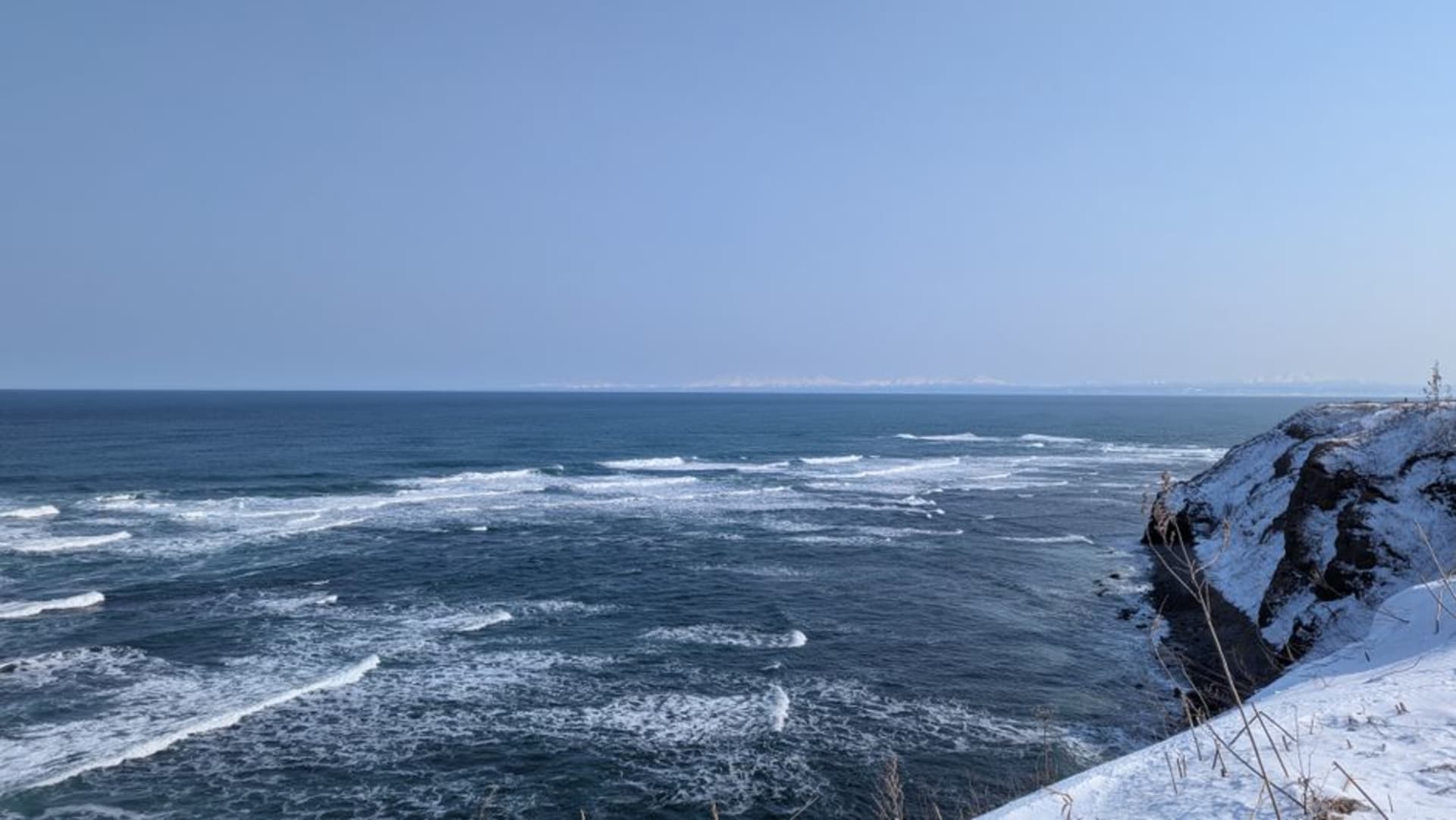
A rugged peninsula west of Otaru where the sea turns a blue so intense it has its own name, cliffs plunge into white surf at Cape Kamui, and summer means fresh sea urchin eaten within sight of the boats that caught it. Wild, windblown, and unforgettable.
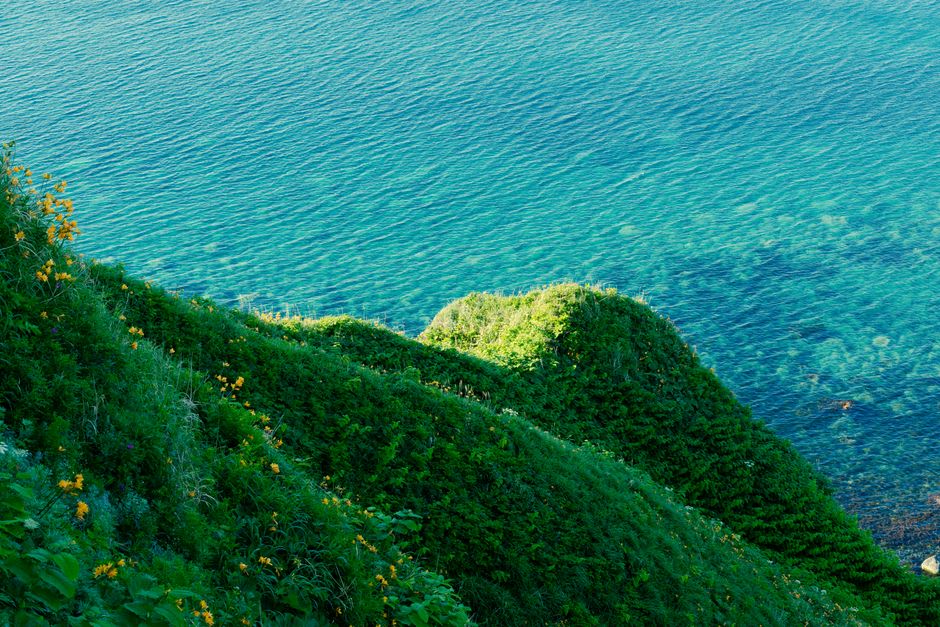
People kept telling us about “Shakotan blue” as though it were a brand of paint, and I nodded politely and assumed it was the usual coastal hyperbole. Then we came over a rise on the peninsula road and there it was, and Lia actually laughed out loud, that surprised bark she does when something exceeds its own reputation. The sea below us was not blue the way the Mediterranean is blue, or the way the Caribbean is. It was a deep, saturated, almost mineral blue, the water so clear you could see the rock ledges dropping away beneath it. We pulled over. Of course we pulled over. Everyone pulls over.
Cape Kamui and the Long Walk Out
Cape Kamui is the reason most people come, and rightly. A grassy ridge runs out toward the sea’s edge, narrowing as it goes, with the water falling away in that impossible blue on both sides. There is a walking path along the spine of it, exposed and windy, that takes maybe half an hour to the tip past an old gate that once barred women from the sacred cape. We walked it slowly, leaning into the wind, Lia’s hair whipping sideways, both of us stopping every few steps because every few steps the view rearranged itself into something better. At the end there is only rock, and surf, and the white shape of a lighthouse, and a great deal of sky.
Uni Season
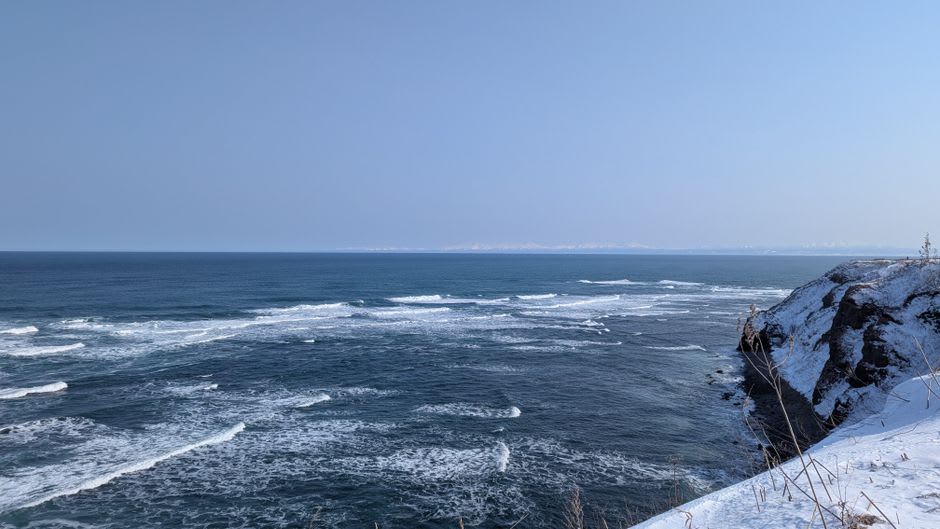
If you come in summer, and we did, you come for the uni. Shakotan is famous for its sea urchin, hauled in through the short warm months, and the town of Bikuni serves it in bowls over rice so fresh it tastes of the sea itself, sweet and briny and gone too soon. We sat in a small family place near the harbour and ate ours in a reverent silence broken only by Lia declaring, spoon in the air, that she was ruined for all future uni. The old woman who served us seemed to expect this reaction. She had the look of someone who had watched a great many foreigners fall in love over a single bowl.
The Coast Road and Its Wild Edges
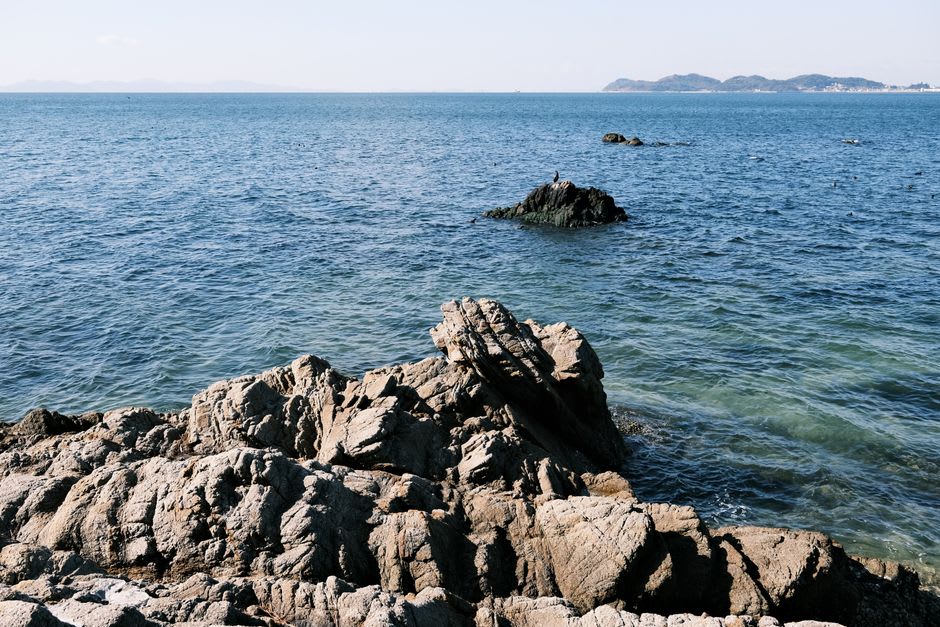
The rest of the peninsula rewards anyone willing to just drive and stop. The coast road threads past sea stacks and hidden coves, past the crag known as Cape Shimamui reached down a long tunnel and stair, past fishing hamlets where nets dry in the sun. We spent an afternoon simply following it, no destination in mind, scrambling down to a stony beach where the waves came in loud and cold and the blue went on forever. It is not a manicured place. The wind is real, the surf is real, the rock is sharp underfoot. That is exactly why I loved it. Shakotan feels like the raw western edge of Hokkaidō, holding nothing back.
Getting There
Shakotan reaches out into the sea northwest of Otaru, and Otaru is where any visit really begins. From there it is a drive of ninety minutes or so along the coast, and a car is genuinely the best way, since the sights are strung out along the peninsula with the freedom to stop wherever the blue demands it. Buses do run from Otaru toward Bikuni and on to Cape Kamui in the warmer months, but they are infrequent and the timetable will shape your whole day. Otaru itself is easily reached by train from Sapporo in half an hour, so many people, like us, base there and make Shakotan a long and salt-sprayed day out.
Keep exploring
More of Hokkaidō