
Hokkaidō's wide, grid-planned capital, where the streets run straight and the winters run deep. Beer brewed on the spot, ramen thick enough to stand a spoon in, and a frontier openness you feel the moment you step off the train.
Lia and I came north expecting Japan and found something adjacent to it. Sapporo does not curl and fold the way older Japanese cities do — it opens. We stepped off the train into a city laid out on a grid, streets numbered like coordinates, the sky suddenly enormous overhead. After weeks of Kyoto’s tangled lanes and Osaka’s density, it felt like unbuttoning a collar. There was a bite in the March air even as the snow along the gutters was going soft and grey, and somewhere under the smell of cold there was already the faint sweetness of malt drifting from the direction of the old brewery.
Odori Park and the Grid
Odori Park runs like a green spine straight through the middle of the city, a boulevard nearly a mile long that splits Sapporo neatly north from south. We walked its full length on our first afternoon, past the TV Tower at the eastern end, past fountains still switched off for the cold, past office workers eating lunch on benches with their coats zipped to the chin. In February this corridor becomes the stage for the Snow Festival — enormous sculptures carved from packed snow, some the size of buildings — but we had missed it by a few weeks, and I found I didn’t mind. The empty park had its own quiet dignity. Lia bought a corn-on-the-cob from a stall near the tower, buttered and blackened over coals, and we ate it standing up, watching our breath.
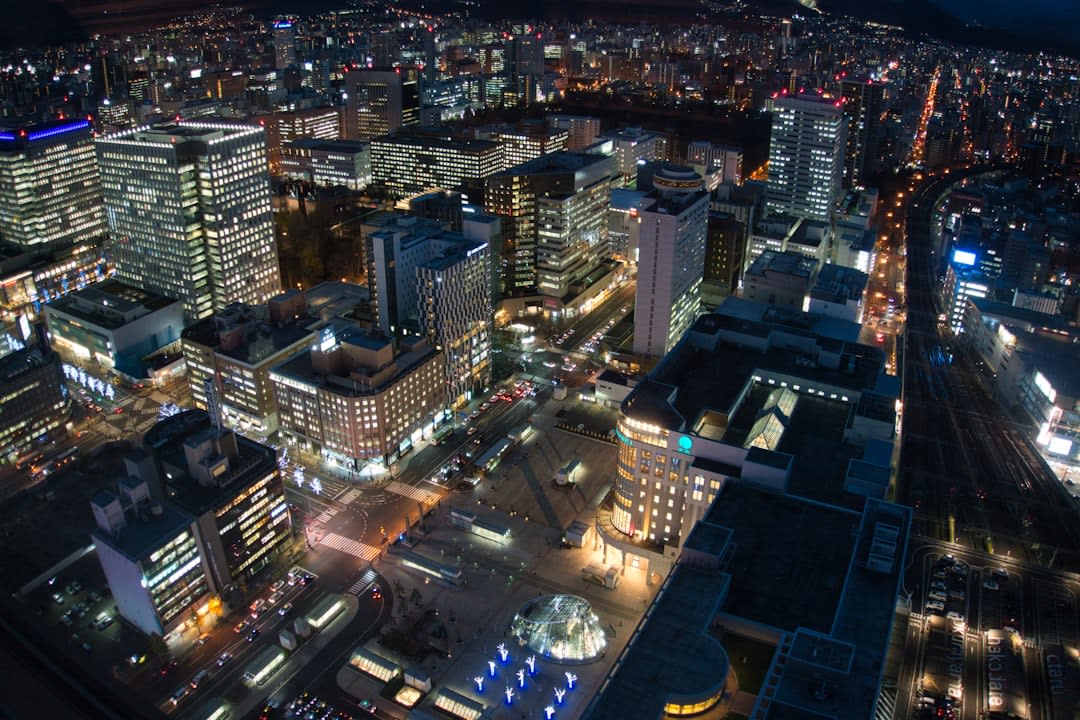
Beer, Ramen, and the Cold
Sapporo is a city built to be eaten and drunk in, especially when it’s cold. We spent an evening at the old red-brick Sapporo Beer Museum on the eastern edge of town, where the brewing kettles gleam under warm light and a glass of the black lager costs almost nothing. But the meal I keep returning to in memory was ramen. In a narrow alley off Susukino — the neon district that comes alive after dark — we found a counter serving miso ramen, a Hokkaidō invention: broth thick and cloudy with fermented soybean, a slick of butter melting on top, a scatter of sweetcorn, noodles that fought back. Lia said it was less a bowl of soup than a small act of survival. Outside, the cold pressed against the steamed-up windows, and inside the whole room smelled of pork fat and garlic and warmth.
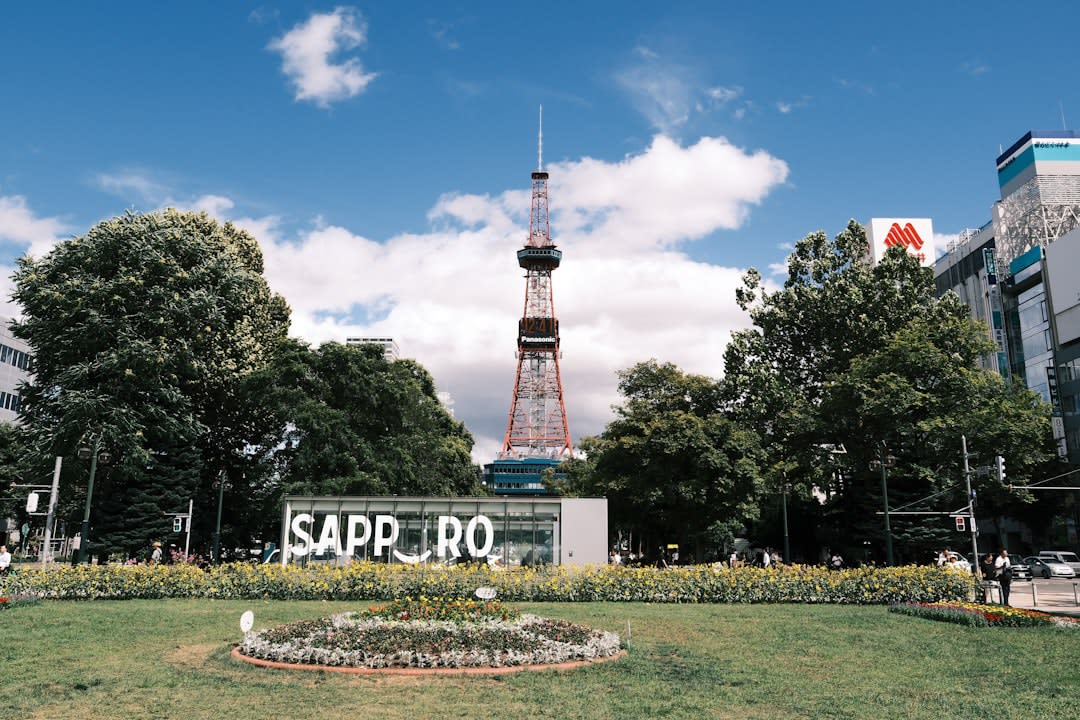
The Frontier Feeling
There is something in Sapporo that feels less like the rest of Japan and more like a place that decided, only recently, to become a city at all. It was planned in the 1870s with American advisors, which is why the grid feels almost Midwestern, and why the older buildings — the clock tower, the botanical garden’s wooden halls — carry a whiff of the nineteenth-century frontier. On our last morning we took a local train a short way toward the mountains that ring the city, close enough to see ski runs threading down white slopes. Sapporo is a gateway as much as a destination: the whole wild interior of Hokkaidō begins just past its edge. We stood on the platform, mountains ahead, grid behind, and I understood why people who move here rarely seem to want to leave.
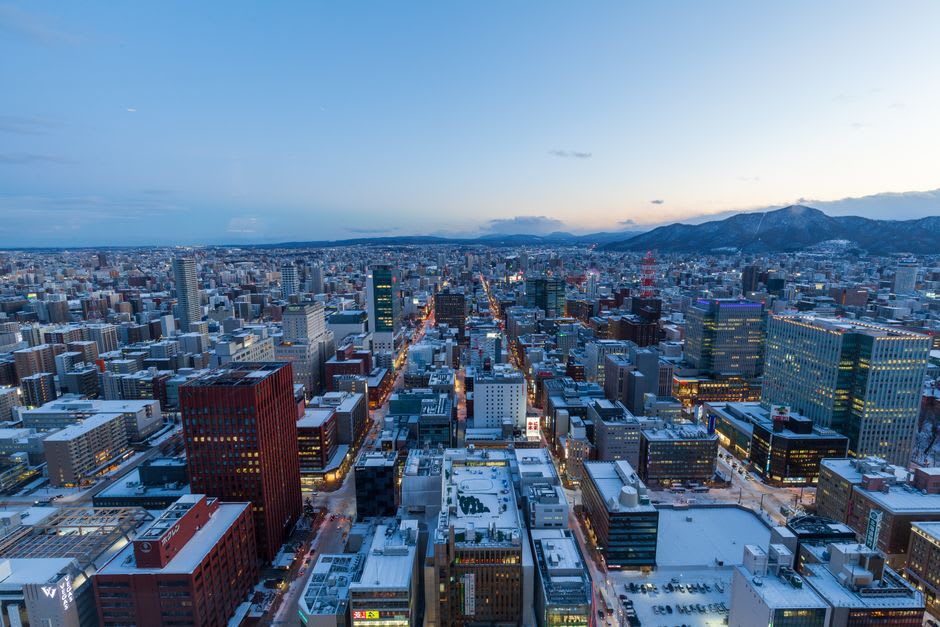
Getting There
The fastest route is by air — Shin-Chitose Airport, about forty minutes south of the city by rapid train, connects to Tokyo and most major Japanese hubs many times a day. From Tokyo you can also ride the rails the whole way, taking the shinkansen north through the undersea Seikan Tunnel to Hakodate and changing to a limited express onward to Sapporo, though it makes for a long, scenic day. Once you arrive, the subway and the flat, walkable grid make the city easy to navigate. Go in February for the Snow Festival if you can bear the deep cold; go in summer for cool, green days when the rest of Japan is sweltering.
Keep exploring
More of Hokkaidō