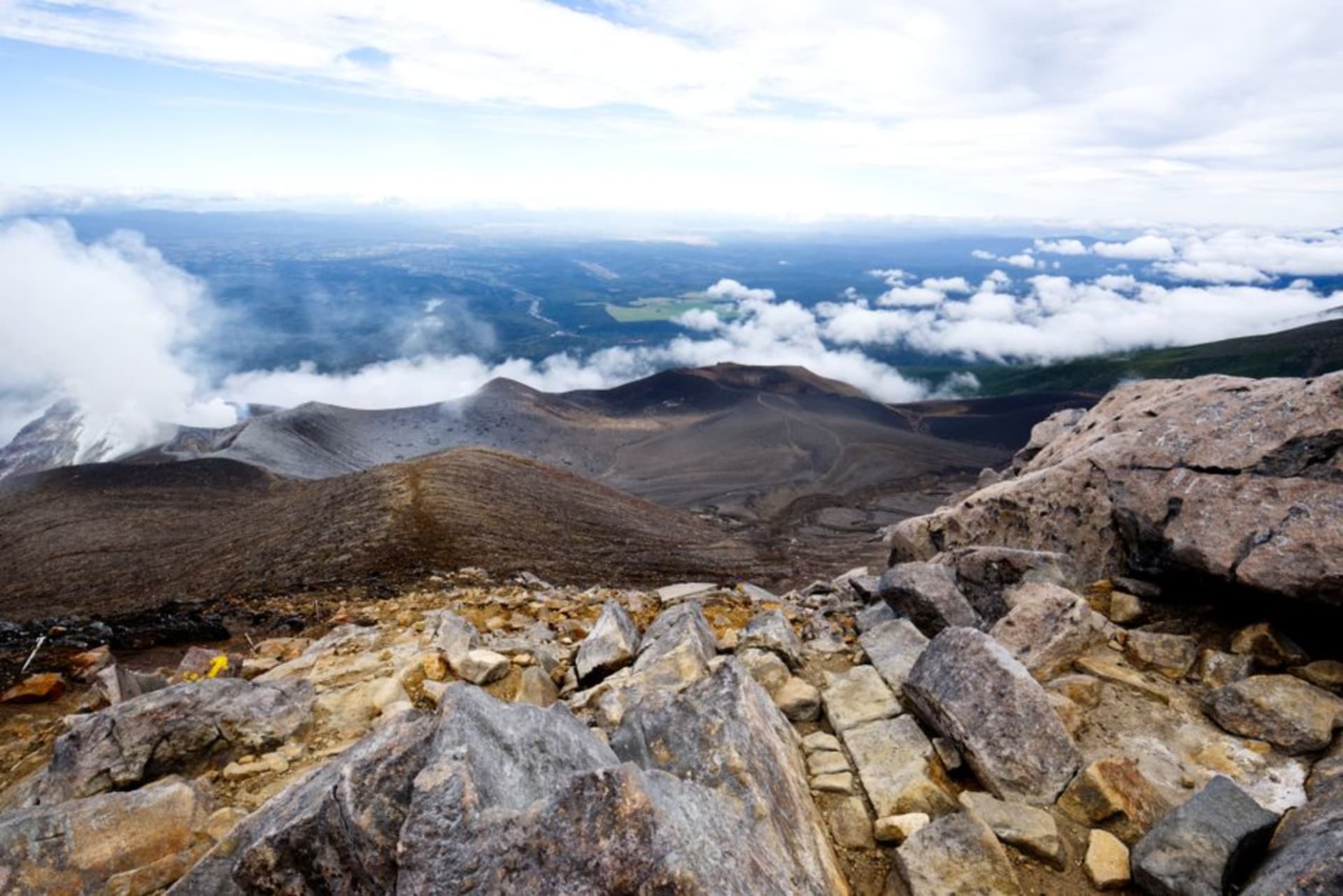
A remote island off the northern tip of Hokkaidō, built almost entirely around the near-perfect cone of Mount Rishiri. Summer wildflowers, kelp drying on the shingle, prized sea urchin, and clear ponds that hold the mountain upside down.
We saw Rishiri before we reached it — a single blue cone standing out of the sea from the ferry deck, so symmetrical it looked drawn rather than grown. Lia said it looked like a child’s idea of a mountain, and she wasn’t wrong. As the boat closed the last few kilometres the cone kept growing until it filled the sky, and I understood that the island really is the mountain: a volcano that rose from the water off the far northern edge of Hokkaidō, with a thin ribbon of villages and kelp-drying yards clinging around its foot. People call it Rishiri Fuji, and for once the borrowed name feels honest rather than touristy. We stepped off the ferry into cold clean air and the smell of the sea, and spent the next days walking in the shadow of the thing.
The Mountain and Its Ponds
Mount Rishiri is a serious climb — a long, steep, all-day haul from sea level to a 1,721-metre summit, the kind of ascent where the weather can turn on you halfway up. We didn’t summit; we did the gentler thing and walked to the ponds that hold it. Himenuma, ringed by low forest, gave us the whole cone reflected on still water one windless morning, the real mountain above and its double below joined at the shoreline. Further round, Otatomari-numa sits in marsh and dwarf pine, and the trail between viewpoints kept handing us the peak from new angles. If you do climb, people start before dawn and treat it with respect; if you don’t, the ponds are where the island quietly shows off.
Uni, Kombu, and the Working Coast
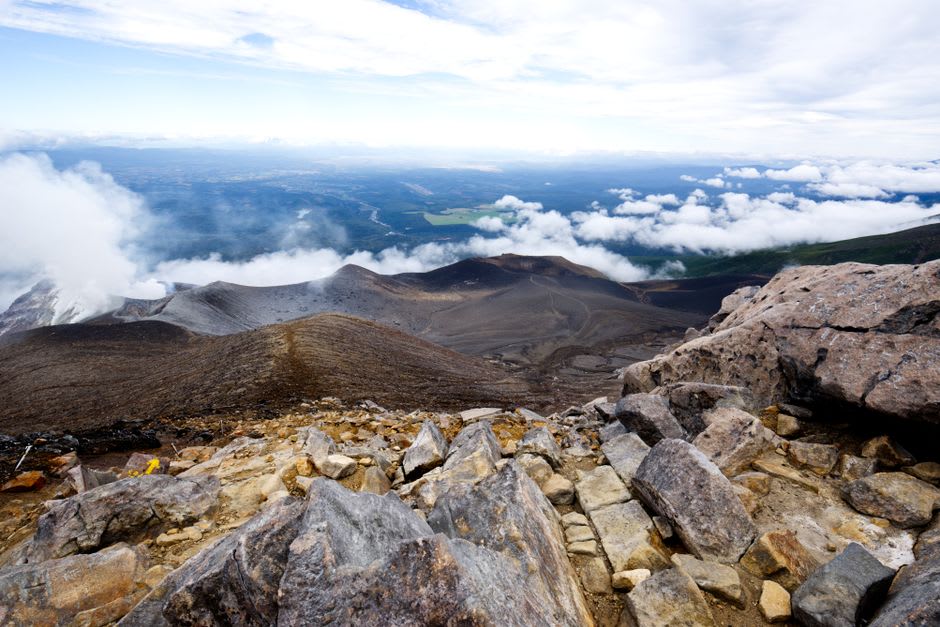
Rishiri’s other fame is edible. The cold northern water grows some of Japan’s most prized kombu kelp, and you see it everywhere — laid out in long dark ribbons on the shingle to dry, weighted with stones, tended by people who have done it all their lives. That same water feeds the sea urchin, and the uni here is spoken of with reverence across Japan. We ate a bowl of it fresh at a small harbour stall, cold and sweet and tasting of the sea it came out of an hour before, and I finally understood what the fuss was about. This is a working coast, not a resort — fishing boats, kelp, weathered sheds — and eating here means eating what the island actually does.
Wildflowers and the Northern Light
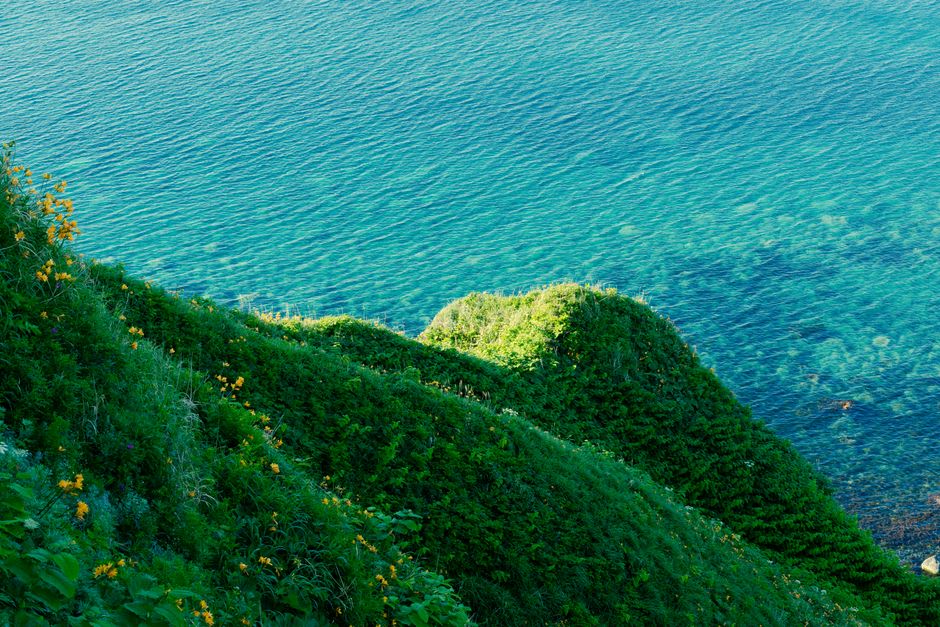
We came in summer, and the lower slopes and coastal meadows were full of flowers — the island lies far enough north that alpine species come down almost to the sea, and Rishiri has a few, like the pale Rishiri poppy, that grow nowhere else. Cycling the flat coast road around the base, we passed banks of colour with the cone always there over our shoulder, and the light had that long, cool, northern quality that never quite hardens into midday. In the evening it stretched golden across the water for hours. There is a bareness to being this far north — the wind, the low sun, the sense of the map running out — that made the flowers feel almost defiant.
Getting There
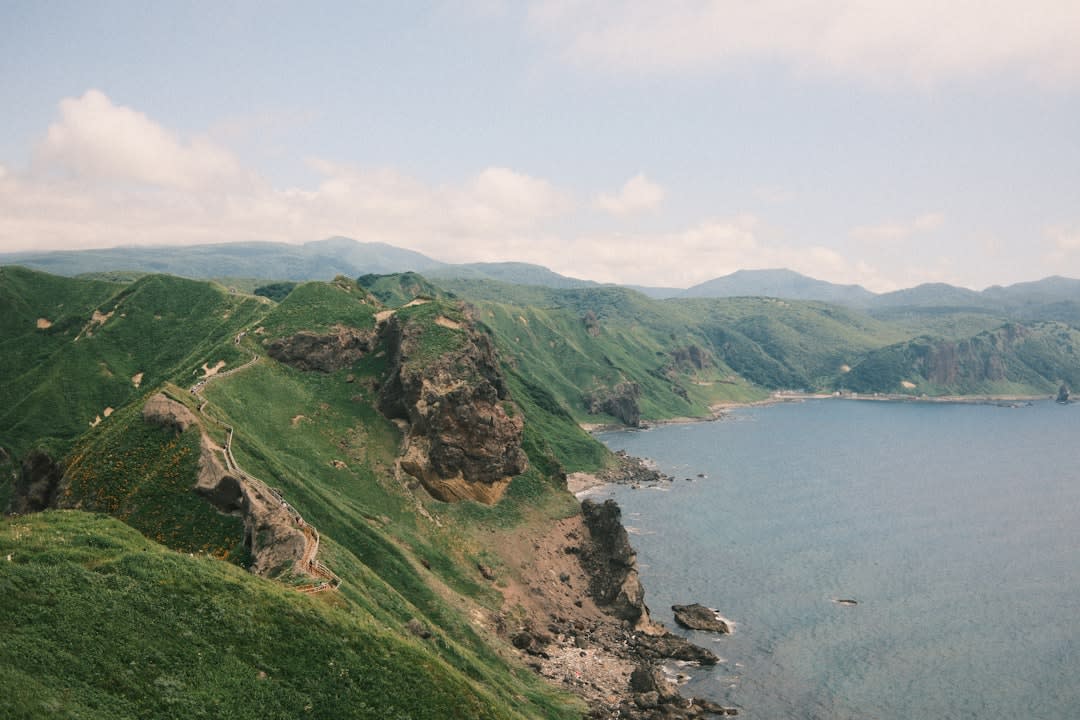
Rishiri sits off the northwest tip of Hokkaidō and takes some getting to, which keeps it quiet. Most people reach the port town of Wakkanai first — by air from Sapporo, or a long train up the middle of Hokkaidō — then take the ferry across, about an hour and a half to Oshidomari, the island’s main harbour. In summer there are also direct flights to the tiny island airport. Once there, the flat coast road makes cycling a genuine option, and buses loop the island, though a rental car helps with the ponds and trailheads. Come between June and September for the flowers, the climbing, and running ferries; outside that window the weather and the schedules both thin out fast.
Keep exploring
More of Hokkaidō