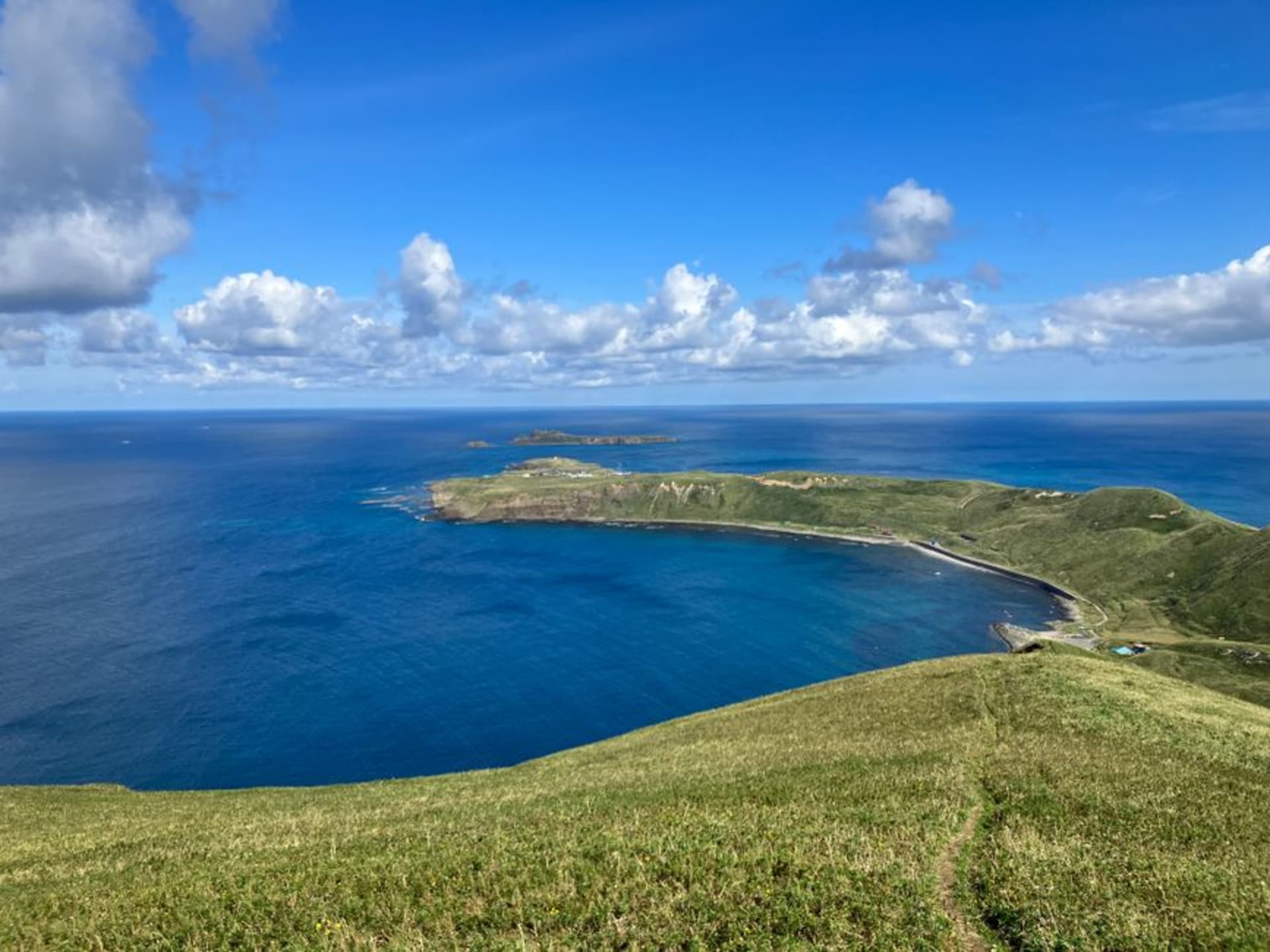
The flat 'island of flowers' at Japan's northern edge, lying just across the water from Rishiri. Rare alpine wildflowers bloom here almost at sea level, and a long cliff-and-meadow trail runs the wild western coast.
Rebun is the low island, and after a few days beside the great cone of Rishiri the flatness felt like a held breath let out. We took the short ferry across and found a long green ridge of an island, no towering peak, just rolling meadow tipping down to cliffs and sea. What Rebun has instead of a mountain is flowers — an astonishing number of them, including alpine species that anywhere else in Japan would demand a hard climb to reach, but which here bloom almost at the level of the waves because the far-north cold does the work that altitude does elsewhere. Lia crouched over the first patch we found, small pale things nodding in the wind off the sea, and we stayed far longer than the flowers strictly warranted, just because it seemed impossible they should be there at all.
The Island of Flowers
People call Rebun the island of flowers, and in the short northern summer it earns it. The cool maritime climate pulls alpine plants right down to sea level, and the meadows fill with them — the pale, ghostly Rebun us’ yuki-sō (the local edelweiss) among them, along with lady’s slipper orchids and dozens of others, some found nowhere else on earth. We were here in late June and the slopes were quietly ablaze, not in showy garden banks but scattered through the grass the way wild things grow. Small trails thread the flower fields, and we walked them slowly, the guidebook naming things faster than we could find them. It is a modest kind of spectacle, low to the ground, easy to miss if you hurry — so we didn’t.
Walking the Wild Western Coast
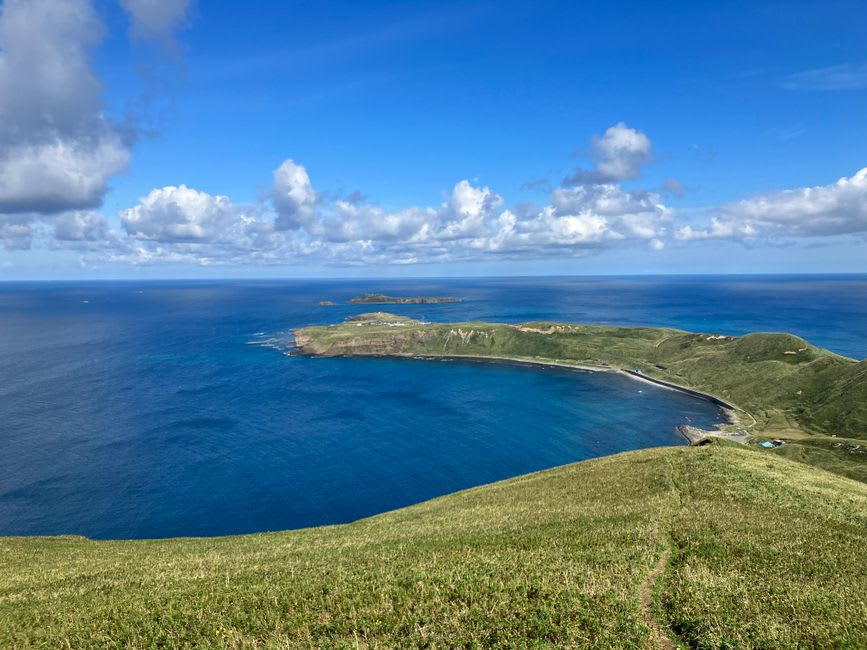
The great walk here is the long trail down the wild western side of the island — a full-day traverse the locals call the eight-hour course, running along cliff tops and through coastal meadow with the Sea of Japan crashing below and, on a clear day, Rishiri floating on the horizon behind. We didn’t do the whole thing; we took a shorter section out to Cape Sukoton, the northern tip, where the land simply gives out into grey water and a scatter of rock, about as far north as you can stand on Japanese soil. The wind up there was constant and cold even in summer, the horizon empty, and it had the plain, bracing feeling of an edge. Walking back through the meadows with the flowers bending in the same wind, I felt we’d reached one of the ends of the country.
The Northern Sea Table
Being this far north, Rebun eats from the cold water around it, and eats well. The kelp beds and rich currents give up sea urchin, and the uni here — as on Rishiri across the strait — is prized the length of Japan, served fresh and cold in small harbour restaurants. We had it heaped on rice at a plain place near the ferry port, sweet and briny, alongside grilled atka mackerel and cold beer, the whole meal tasting of the northern sea. Kelp dries on the shingle here too, and the fishing rhythm sets the pace of the villages. It is unfussy food in an unfussy place — you come to Rebun for the flowers and the walking, and the sea urchin is the island’s quiet reward at the end of the day.
Getting There
Rebun lies at the very northern edge of Japan, just beyond Rishiri, and is reached the same way: first to the port of Wakkanai at the top of Hokkaidō — by air from Sapporo or a long northbound train — then by ferry, about two hours across to the island’s main harbour at Kafuka. Many travellers pair Rebun and Rishiri on one trip, hopping between them by inter-island ferry, and that combination is the natural way to do it. On the island, buses run to the main trailheads and capes, though timing them around a full day’s hiking takes some planning. Go in the short window from June to August for the wildflowers, running ferries, and the long coastal walk; the season here is brief and the weather can be raw even at its height.
Keep exploring
More of Hokkaidō