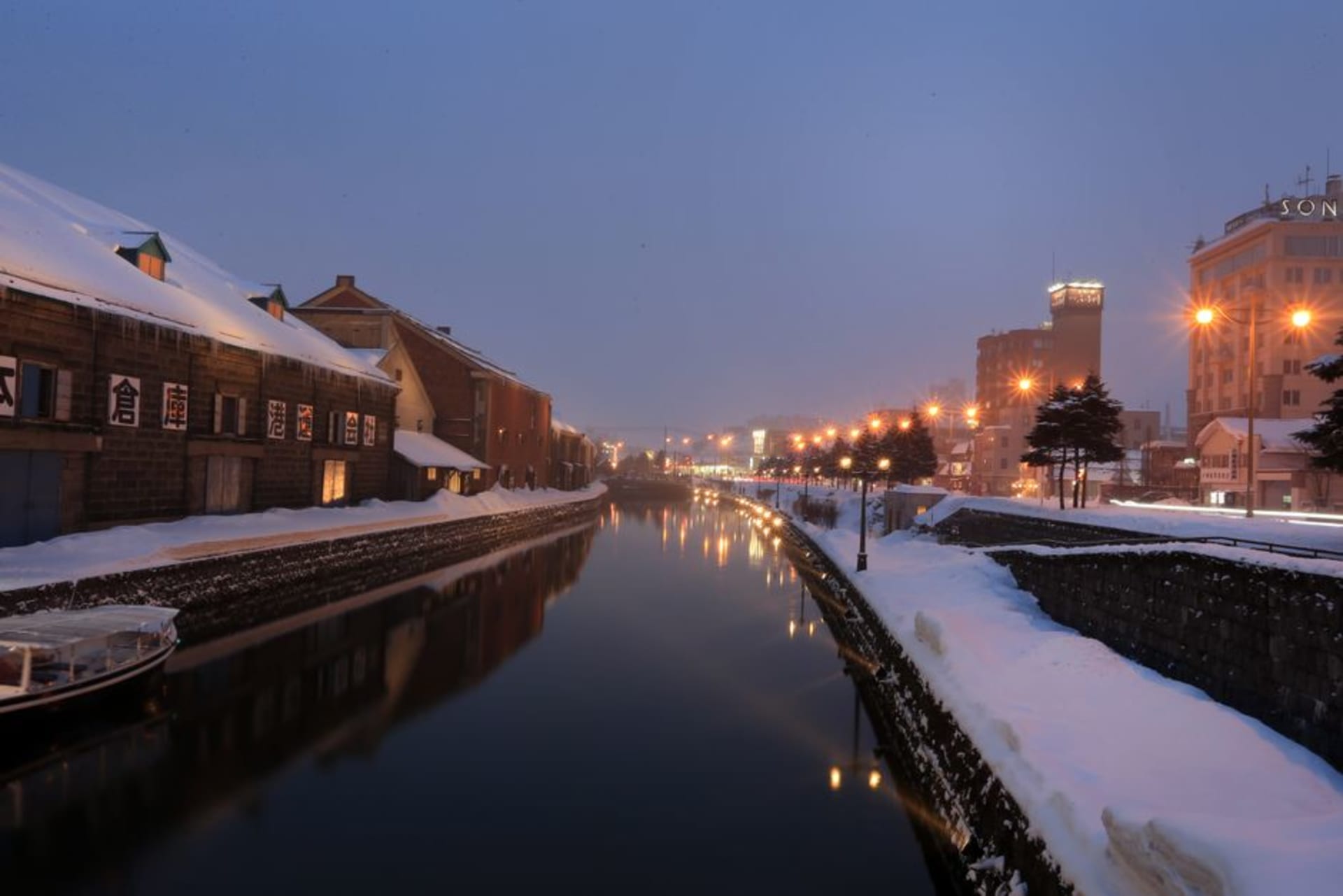
A small Hokkaidō port town gathered along a stone-warehouse canal, its gas lamps lighting the snow at dusk. Glassblowers and music-box makers, herring wealth turned to nostalgia, and sushi eaten within sight of the harbor.
We took the local train from Sapporo out along the coast, and Otaru arrived slowly — the sea on one side, low hills on the other, and then a huddle of old stone buildings pressed against a curve of water. It was snowing when we got off, the soft kind that falls straight down and muffles everything, and Lia slipped her arm through mine without saying anything. Otaru is small in a way that changes how you move through it. We walked from the station down toward the canal, past shops selling glass and music boxes, and by the time we reached the water the gas lamps were already coming on, one by one, throwing gold across the snow.
The Canal at Dusk
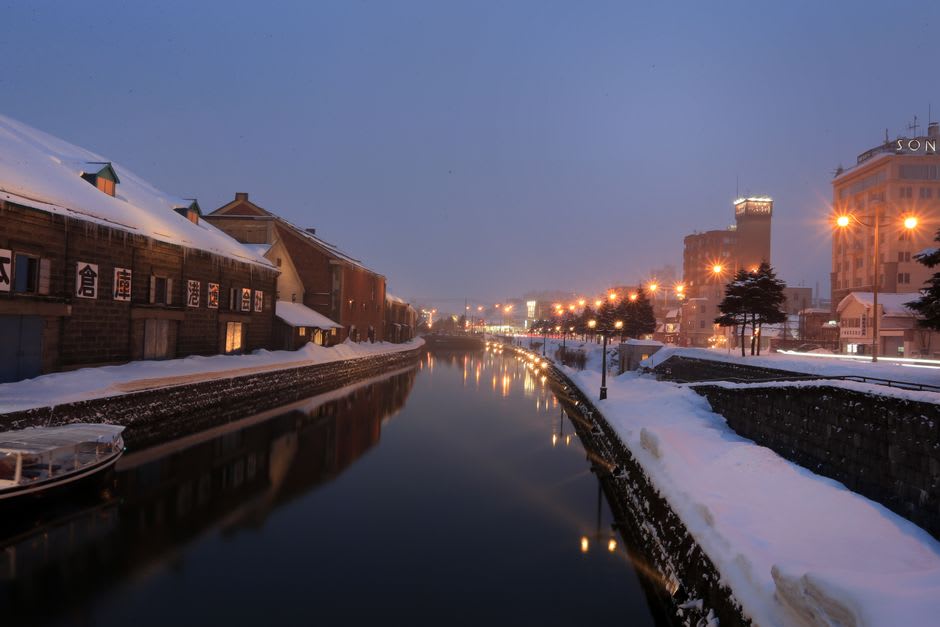
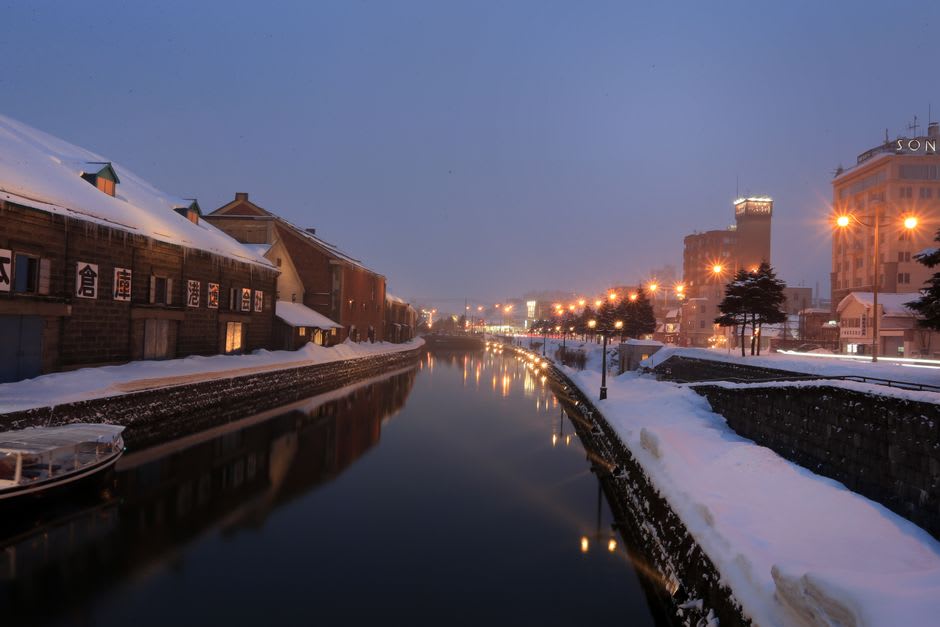
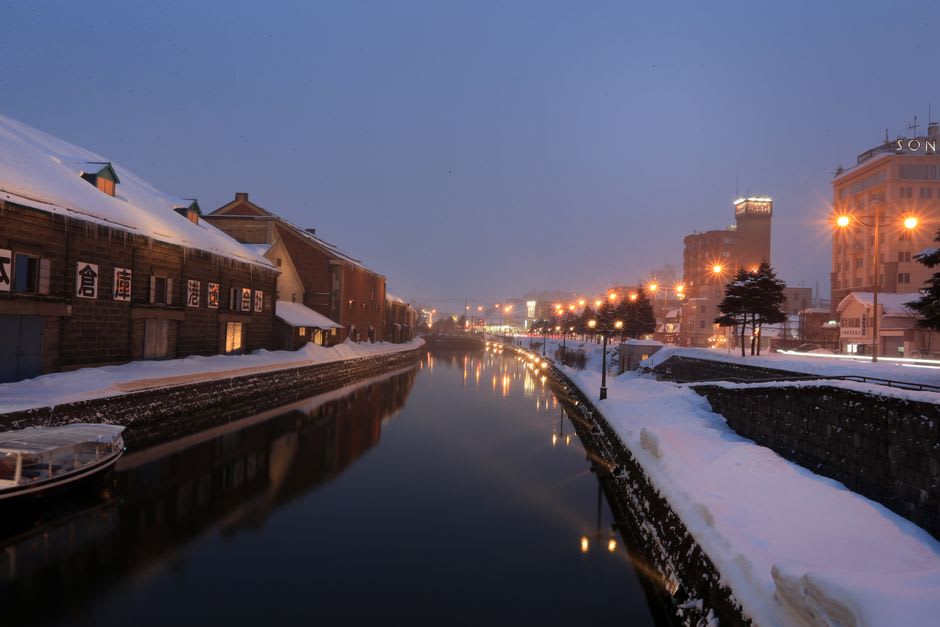
The Otaru Canal is the town’s whole heart, and it is smaller than the photographs suggest — which is exactly its charm. Built in the early twentieth century when Otaru was a booming herring and coal port, the canal once carried barges to the warehouses that still line its far bank, thick-walled buildings of stone and brick now softened into restaurants and galleries. We came back to it three times in two days, and the best was at dusk in the falling snow, when the gas lamps caught the flakes mid-air and the old warehouses glowed from within. A street artist was selling charcoal sketches under an umbrella. Lia bought one. We stood a long while at the railing, saying almost nothing, watching the light lie down on the water.
Glass, Music Boxes, and Slow Craft
Otaru’s herring fortunes faded, and the town reinvented itself around craft — glass, first made here as fishing floats and oil lamps, and later the delicate blown pieces that fill the shops along Sakaimachi street. We spent a slow morning drifting between workshops, watching a glassblower gather a molten bead on the end of a rod and turn it into a small blue bird while we held our breath. At the corner stands the Music Box Museum, its old steam clock hissing on the hour outside, and within, thousands of music boxes chiming faintly all at once — a sound like a memory you can’t quite place. Lia wound one after another. I bought her a tiny one that played a tune neither of us knew, and it sits on our shelf still, and we still don’t know the tune.
Sushi by the Harbor
For a town this size, Otaru takes its sushi with startling seriousness, and with good reason — the boats come in a short walk from the counters. There is even a street known locally as Sushiya-dori, sushi alley, where small family restaurants sit shoulder to shoulder. We chose one almost at random, squeezed onto two stools at the counter, and let the chef decide. Scallop still sweet with the cold of the sea. Sea urchin from the nearby coast, unnervingly rich. Salmon roe that burst like small warm lamps. It was mid-afternoon, the light outside going blue with more snow, and we ate slowly, and the chef told us, in careful English, which fish had come in that morning and which the day before. In Otaru even the smallest meal feels close to its source.
Getting There
Otaru is an easy trip from Sapporo, about thirty to forty-five minutes by rapid train along the coast — sit on the sea side of the carriage for the view of the Sea of Japan. Coming from farther afield, fly into Sapporo’s Shin-Chitose Airport and take the train in via Sapporo. The town itself is small and walkable, sloping gently from the station down to the canal and the harbor, so leave the taxis alone and go on foot. Winter is Otaru at its most romantic, snow on the warehouse roofs and the lamps lit early; if you visit in February, the Snow Light Path festival fills the canal and back streets with hundreds of candle lanterns set into the snow.
Keep exploring
More of Hokkaidō