
Noboribetsu
"You smell Noboribetsu before you see it — sulfur, and under it, the promise of hot water."
Hokkaidō's greatest hot-spring town, built beneath a steaming red-rock crater called Hell Valley. Sulfur on the wind, water so mineral-rich it comes in a dozen kinds, and demon folklore watching over the streets.
We knew we were close when the smell reached the car — that eggy, mineral sulfur that means the earth is doing something just below the surface. Noboribetsu announces itself that way, honestly and without apology, and by the time we parked and stepped out, steam was drifting between the buildings and a red-painted demon the size of a house grinned down at us from the roadside. Lia laughed out loud. We had come for the baths, worn thin from weeks of travel, and the whole town seemed built around a single promise: that whatever ached in you, the water here would draw it out. We dropped our bags and, almost before unpacking, went to find the source of all that steam.
Jigokudani, the Hell Valley
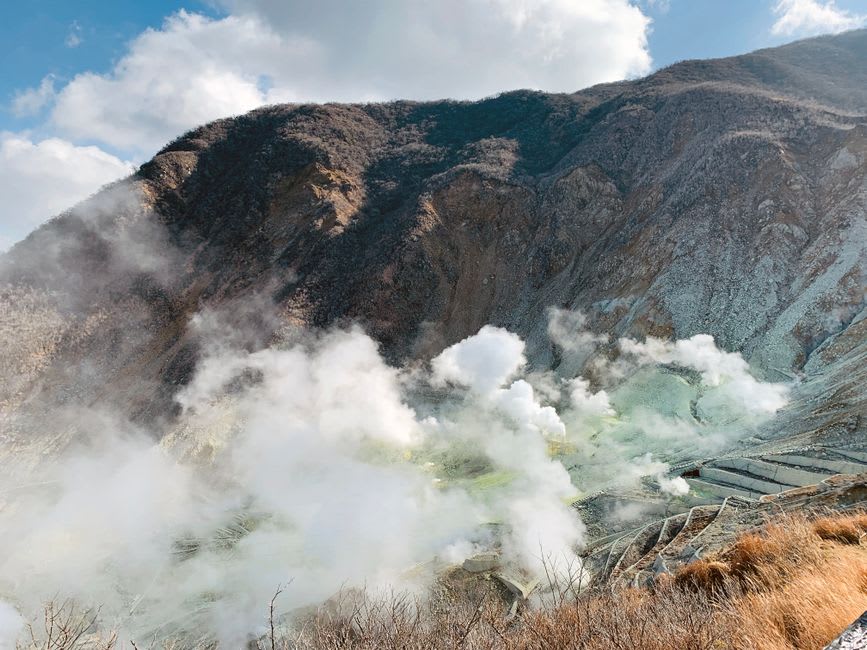
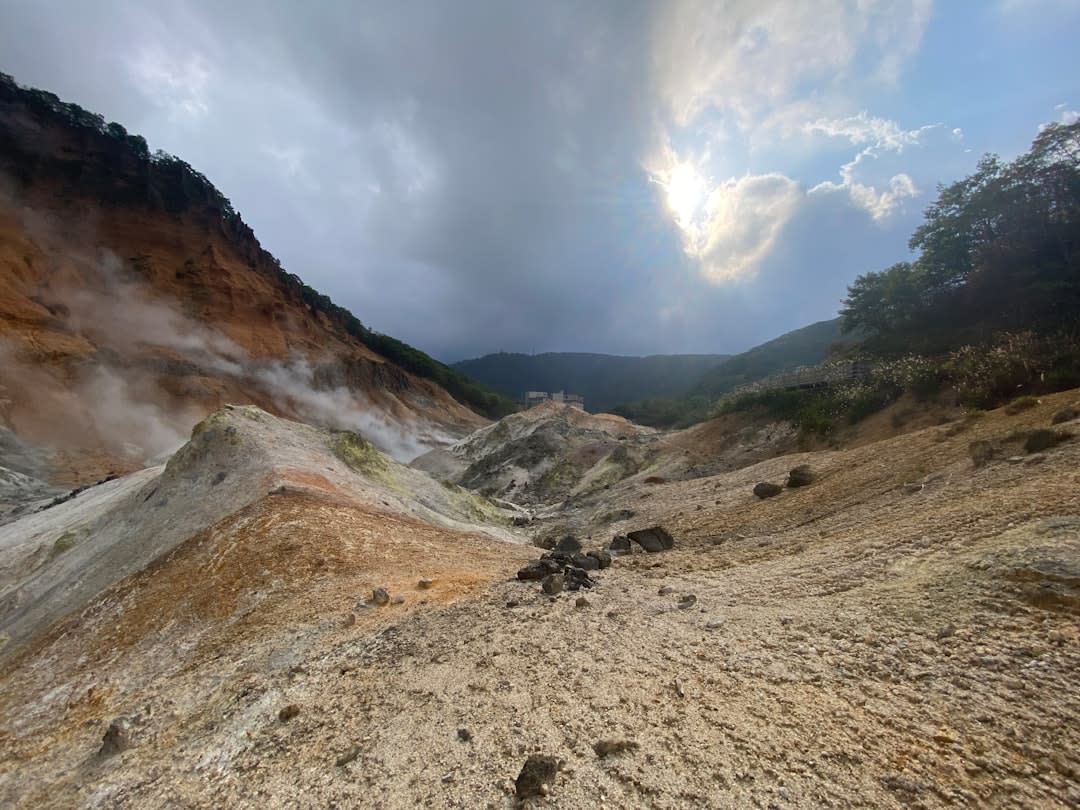
Above the town gapes Jigokudani — Hell Valley — a raw volcanic crater of red and ochre rock where nothing grows and everything fumes. Boardwalks lead you out over ground that hisses and steams, past vents crusted yellow with sulfur and a bubbling pond that mutters at the far end, and it does genuinely feel like a hole into somewhere older and hotter than the green hills around it. This crater is the engine of the whole town: roughly ten thousand tonnes of hot water a day well up here and feed the baths below. We walked the loop trail in the late afternoon as the light turned the rock a deeper red, steam catching gold in the low sun, and stood a long while at the overlook while the valley breathed and grumbled beneath us.
The Onsen
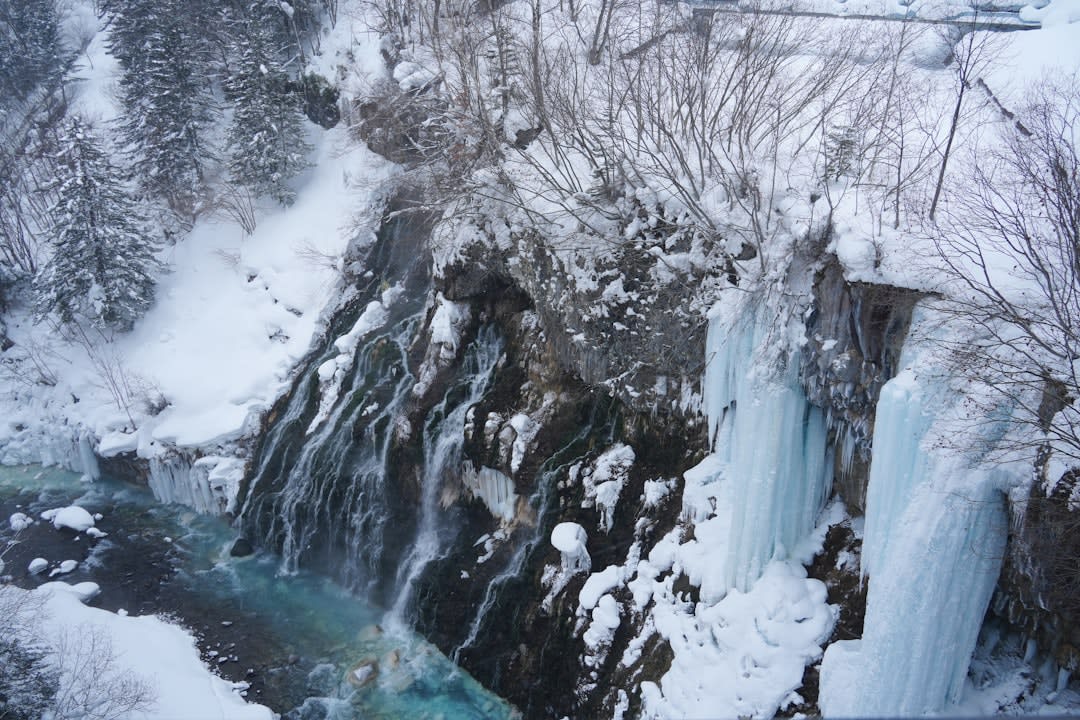
Noboribetsu is one of Japan’s great hot-spring towns, and what sets it apart is the sheer variety welling up out of that crater — sulfur springs, iron springs, salt springs, several distinct kinds of mineral water, more than almost anywhere else in the country. We soaked that evening in a big bathhouse fed straight from Hell Valley, moving between pools of different waters, one milky and sharp with sulfur, one rust-coloured and faintly metallic, all of them scaldingly, wonderfully hot. Outside, in the rotenburo, snow had begun to fall, hissing as it met the steam off the water, and Lia and I sat in separate baths on our separate sides of the wall and each, we agreed afterward, felt entirely emptied of every mile we’d carried. I slept that night better than I had in weeks.
Demons and Folklore
The demons are everywhere in Noboribetsu, and once you notice them you can’t stop. Statues of oni — the horned ogres of Japanese folklore — stand at the town’s entrances, guard the bridges, and loom in red and blue at the head of the main street, and the connection is old: the hellish look of the steaming valley made the oni its natural guardians, half fearsome, half protective. Local legend casts them as bringers of good fortune and health, and the town leans into it with a genuine warmth — there are oni festivals, oni charms in every shop, an oni to touch for luck at the shrine. We climbed the little path to Enma-do, where a mechanical statue of the king of hell changes his face on the hour, and waited in a small crowd for the show. It is folklore worn lightly, half serious, half in fun, and it suits the strangeness of the place.
Getting There
Noboribetsu sits in southwestern Hokkaidō, roughly halfway between Sapporo and Hakodate. From Sapporo it is a little over an hour by limited express train to Noboribetsu station, and from Shin-Chitose Airport under an hour by rail. The hot-spring town itself, Noboribetsu Onsen, lies up in the hills a further ten to fifteen minutes by bus from the station, so plan on that last connection — or many ryokan will collect guests if you arrange it ahead. Once you’re up in the onsen town everything, including the walk to Hell Valley, is on foot. It’s a fine trip any season, but winter, with snow falling into the steam and the baths hottest against the cold, is when Noboribetsu is at its most unforgettable.
Keep exploring
More of Hokkaidō