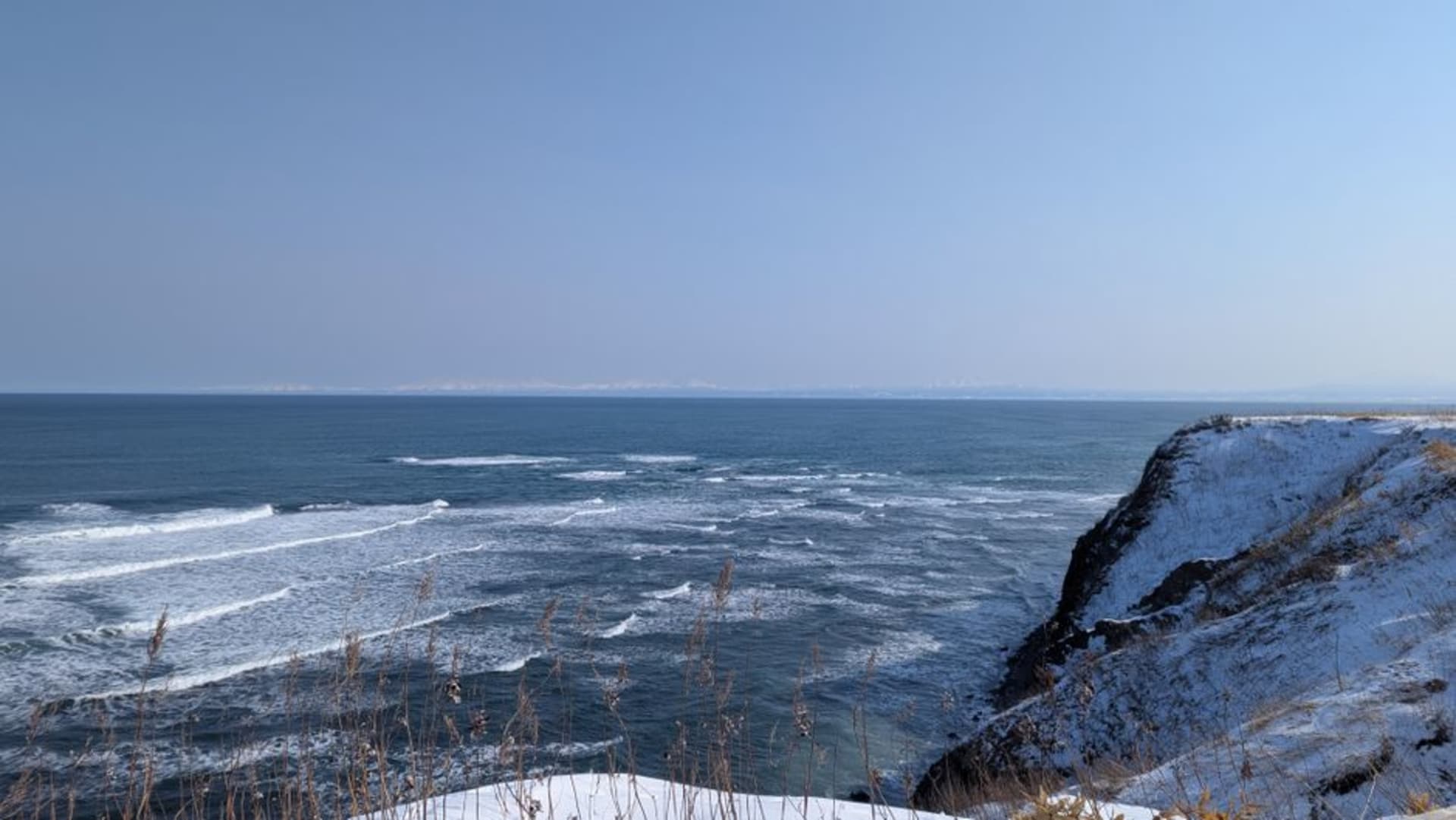
Muroran
"Lia said it best: a town where the factories glitter like a second sky and the cliffs remember they were here first."
A working port on Hokkaidō's southern coast where heavy industry and raw sea cliffs share the same shoreline. White lighthouses on wind-scoured capes, a strange blue archway of rock at Cape Chikyū, and a night skyline of steel and steam that glows like a small galaxy.
We came to Muroran almost by accident, chasing a rumor that it was ugly and beautiful at the same time, and that turned out to be exactly right. It sits on a fist of land punching out into the sea off Hokkaidō’s southern coast, half of it given over to shipyards and refineries and steelworks, the other half to some of the most dramatic cliffs Lia and I saw on the whole island. Most travelers skip it. We stayed two nights and left reluctantly, having learned that a place can be industrial and windswept and tender all at once.
Cape Chikyū and the Cliffs
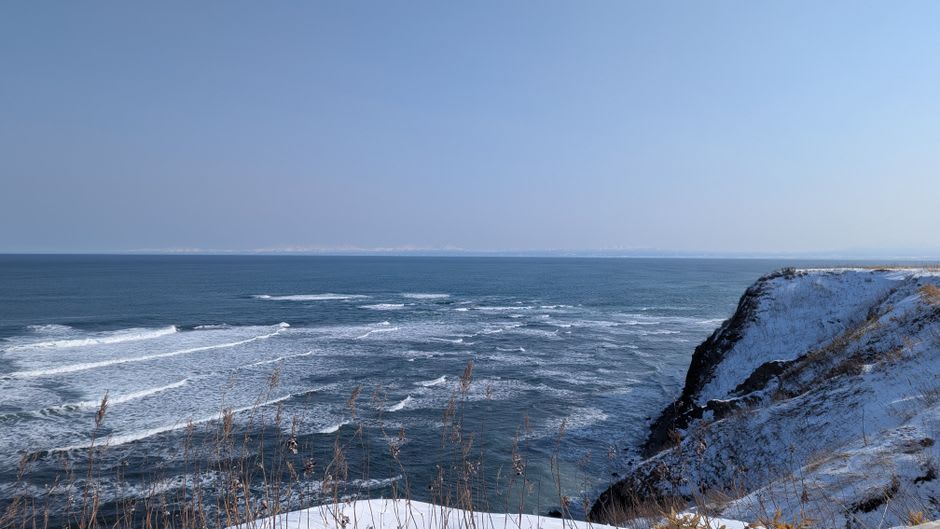
Cape Chikyū — the name means “Cape of the Earth” — is the reason to come. A slim white lighthouse stands at the end of a green headland, and below it the land falls away in sheer walls to a sea so deep and blue it looked almost bruised. We walked out to the viewing platform in a wind that kept trying to take Lia’s hat, and stood at the railing watching the swell break far below, the horizon curving just enough that the cape’s name felt earned. There’s a small white arch nearby, a bell people ring, and a long line of hills folding away to the north. We saw no other cliffs in Hokkaidō quite like these, and we stayed until the light went gold and the wind finally drove us back to the car.
The Factory Night View
After dark Muroran becomes a different animal. The industrial belt around the harbor — the refineries and steelworks and the great arc of the Hakuchō Bridge — lights up in a tangle of white and amber, steam rising slow off the towers, and the whole thing reflects in the black water of the inlet. We drove up to the Sokuryōyama observation point and looked down at it, and I understood why people photograph this. It has none of the prettiness of a temple or a garden; it’s all pipe and flame and cold light, and yet it glittered like something alive. Lia said it looked like a city that never sleeps because it isn’t allowed to, and we stood in the dark a long time watching the steam drift and the bridge glow above the harbor.
The Harbor and the Eight Scenic Spots
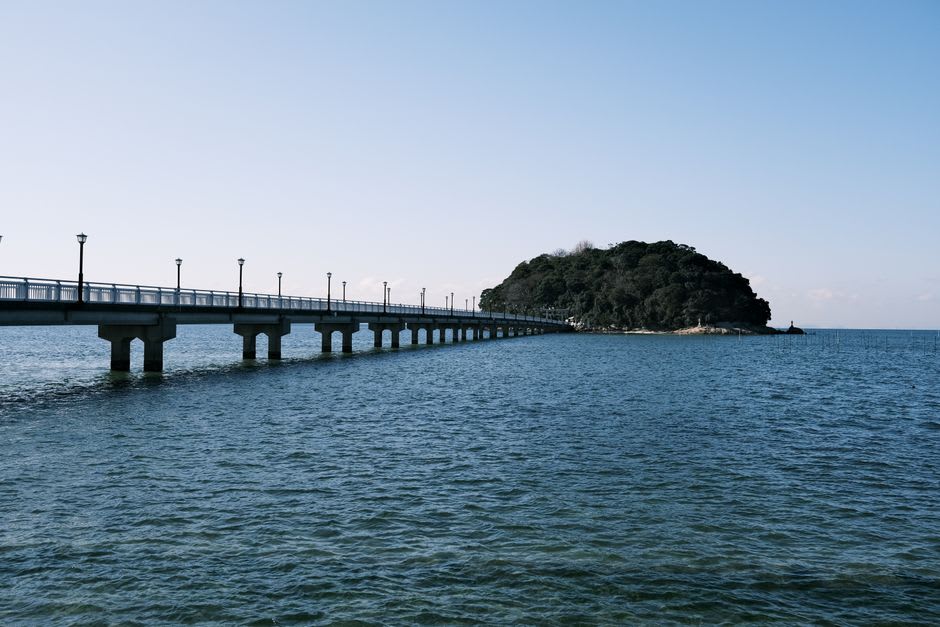
By day the port is quieter and easier to love. The Hakuchō Bridge — a long white suspension bridge, one of the biggest in eastern Japan — sweeps across the mouth of the bay, and beneath it fishing boats and ferries come and go. Muroran markets a set of “eight scenic spots” around its peninsula, and we spent a slow morning chasing a few of them: a rock shaped like a sitting cat, a little cove, a shrine on a bluff. We ate a bowl of curry ramen, which the town claims as its own, thick and dark and good against the sea wind. Nobody was performing for tourists here. It was simply a port going about its work, and we liked it the more for that.
Getting There
Muroran sits on Hokkaidō’s southern coast, roughly midway between Hakodate and Sapporo. By rail, a limited express on the Muroran Main Line reaches Higashi-Muroran station in about an hour and a half from Sapporo; from there a local train or a short drive brings you out onto the peninsula where the capes and the harbor are. The scenic spots are spread around the headland and are far easier with a rental car — Cape Chikyū and the Sokuryōyama night-view point in particular are a long way from the station. Come on a clear day for the cliffs and stay for the dark, when the factory belt lights up. Bring a windproof layer; the capes are exposed and the sea air has teeth even in summer.
Keep exploring
More of Hokkaidō