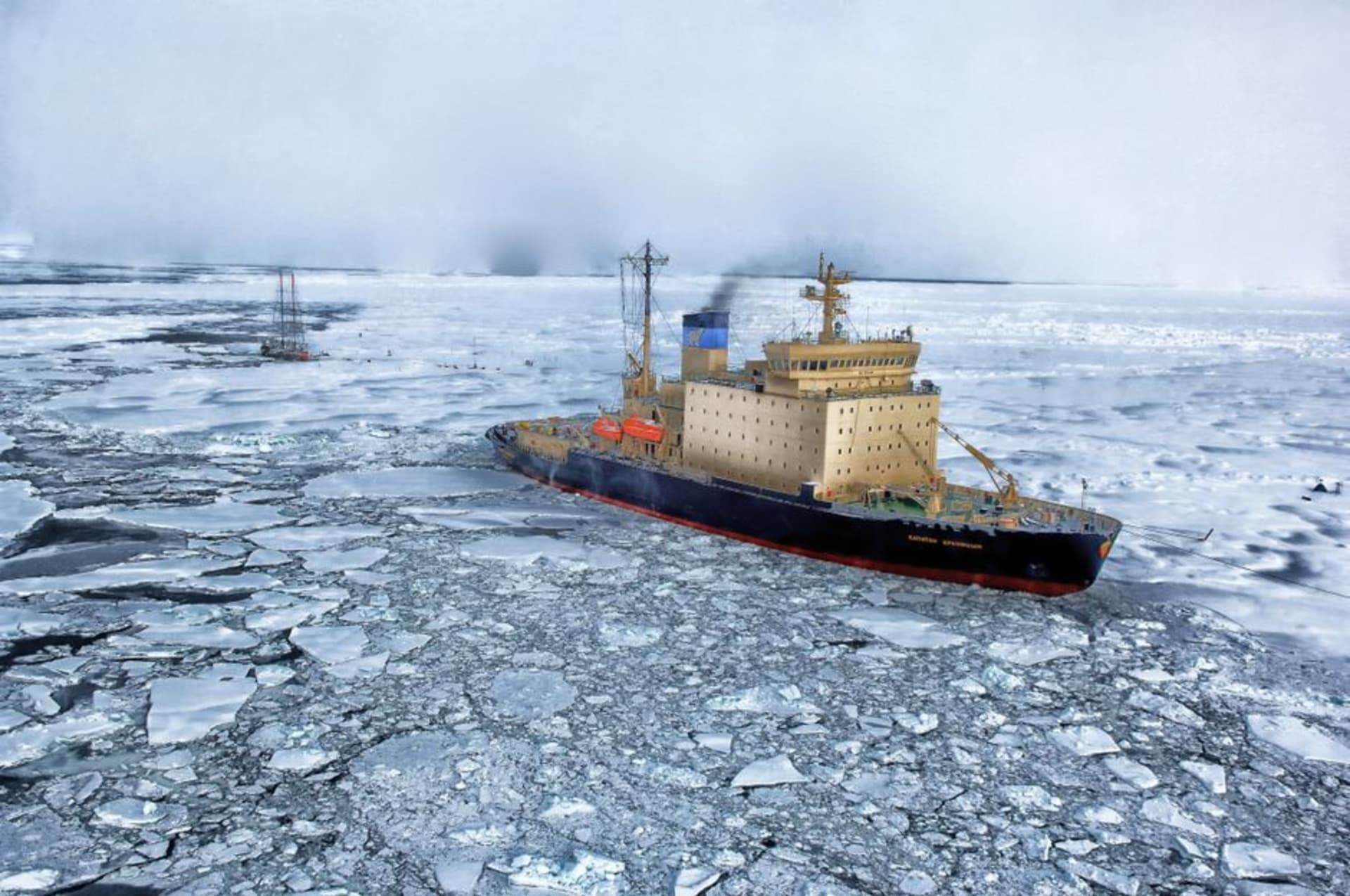
A working port on the Sea of Okhotsk where, for a few weeks each winter, the whole horizon turns to broken white ice. Monbetsu doesn't dress itself up for visitors — it lets the drift ice do the talking. We came for the Garinko icebreaker and stayed for the strange quiet of a town at the edge of a frozen sea.
Lia woke me before six because the man at our minshuku had said the ice looked good, and in Monbetsu that is the kind of sentence you get out of bed for. We walked down to the harbour in the dark with our collars up, breath freezing on our scarves, and there it was — the Sea of Okhotsk, which the day before had been ordinary grey water, now packed to the horizon with jostling white slabs. I had read about the ryuhyo, the drift ice that floats down from the Amur River in Russia, but reading is nothing. Lia just said “oh” very softly, and we stood there letting the cold get into our boots.
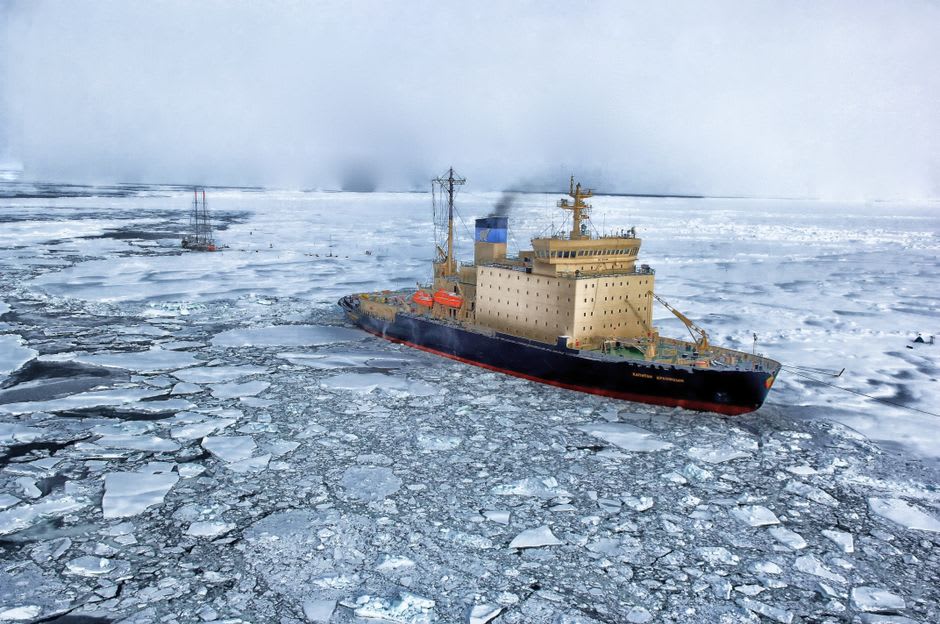
Riding the Garinko out into the floes
The Garinko II is not elegant. It’s a stubby red-and-yellow boat with a giant auger screwed to its bow, and it grinds forward by literally drilling the ice apart. We booked the first sailing, mostly alone with a handful of bundled-up locals and a very cheerful crew. The sound is what I remember — a deep crunching groan under your feet as the ice cracks and tips, floes the size of dining tables sliding up against the hull and turning over to show their blue-green undersides. Lia leaned over the rail the whole time, pointing at every seal that surfaced in the black leads of open water between the slabs. When a white-tailed eagle passed overhead the Japanese grandmother beside us grabbed my sleeve and beamed like we were sharing a secret.
The Okhotsk Ryu-hyo Museum and the science of frozen sea
Afterwards, half-frozen, we thawed out at the Okhotsk Ryu-hyo Museum on Mount Otakone above town. I expected something dry and instead loved it — there is a cold room kept below minus fifteen where you swing a wet towel and it stiffens into a board in seconds, and Lia twirled hers like a lunatic. Downstairs, tanks hold the clione, the tiny “sea angels” that live in this ice, translucent little creatures beating their wing-feet in the dark water. The museum explains, patiently, why the Okhotsk freezes when seas much further north don’t: the Amur’s fresh water floats on the salt and gives up its warmth first. From the observation deck the whole white expanse spread out below, and I finally understood the scale of the thing we’d been floating in.
A port town that lives by the sea
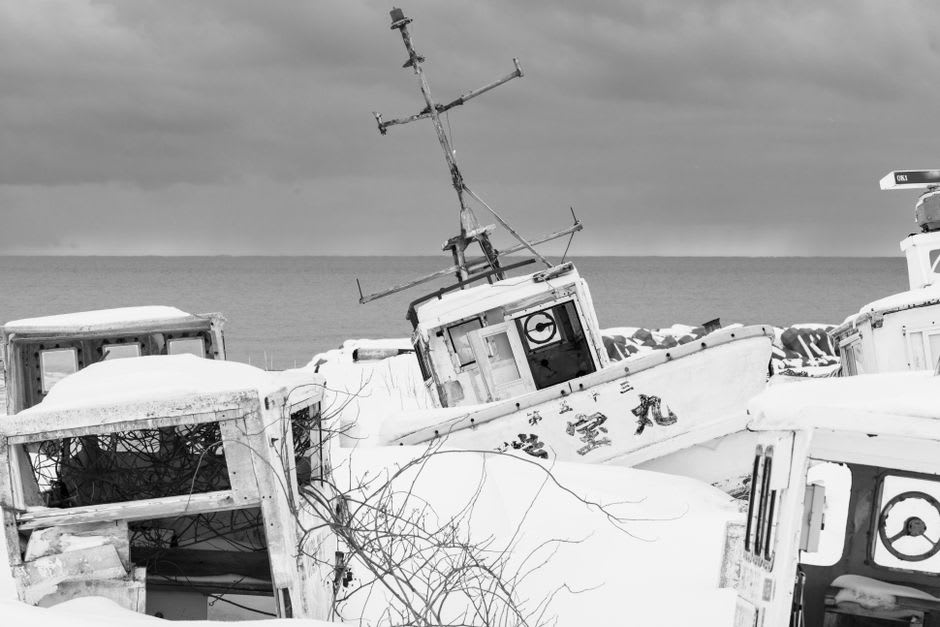
Monbetsu isn’t a resort, and that’s the whole charm. It’s a fishing and scallop town where the ice is just part of the year, and in the evening we ate at a tiny counter place where the owner grilled us hotate scallops the size of my palm and poured Lia far too much local sake “for the cold.” We wandered past the giant crab-claw monument on the waterfront — kitschy, enormous, beloved — and out to the pier where the sunset turned the drift ice pink and then a bruised purple. There were no crowds, no queues, no one selling us anything. Just a town that happens to sit where the sea freezes, getting on with its winter.
Getting There
Monbetsu sits on Hokkaido’s northeast Okhotsk coast and takes some committing to, which is part of why it stays quiet. The easiest route is the direct highway bus from Sapporo, around five hours across the interior — we did it there and back and it was a fine way to watch Hokkaido’s snowfields roll past. There’s a small airport (Monbetsu / Okhotsk-Monbetsu) with a daily flight from Tokyo’s Haneda if you’d rather not spend the day on a bus. Drift ice season runs roughly late January to March, and the Garinko sailings do sell out on clear weekends, so book ahead. Rent studded boots or bring proper grips — the harbour paths are pure ice, as we learned the hard way.
Keep exploring
More of Hokkaidō