Lake Mashu
"The locals call it the lake of fog, and on our first visit it lived up to the name completely."
One of the clearest crater lakes on earth, cupped in a steep caldera in eastern Hokkaido and hidden more days than not behind a wall of fog. Lake Mashu has no inlet, no outlet, and almost no way down to its water. We went twice before it showed itself, and the wait was the point.
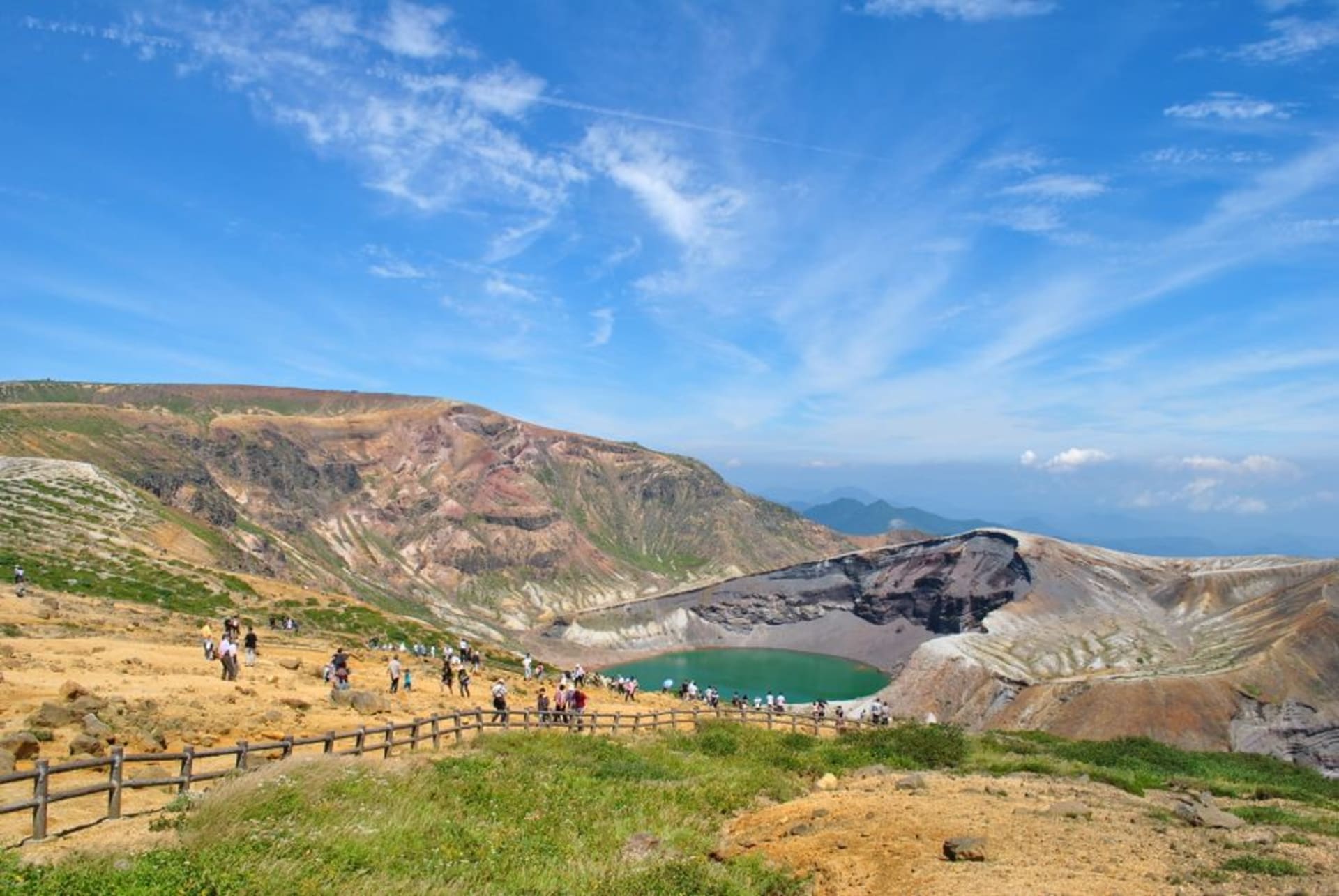
The first time we drove up to Lake Mashu we saw nothing at all. We stood at the observation deck with a busload of other hopefuls, staring into a grey soup where a world-famous view was supposed to be, and a Japanese man beside us laughed and said something his friend translated as: “Mashu is shy.” Lia loved that. We came back two days later at dawn, on a hunch and a clear forecast, and this time the caldera fell away below us into a bowl of impossibly deep blue water, so still and so intensely coloured it looked less like a lake than a hole cut through the mountain into the sky.
The clearest water and no way to touch it
Mashu’s fame is its transparency — measurements in the twentieth century recorded visibility down past forty metres, rivalling the clearest water ever measured anywhere, and even now it stays astonishingly clear because nothing flows in to muddy it. It sits in a closed caldera with no rivers feeding it, fed only by rain and snow, which is also why the blue is so saturated. There’s a catch that I came to love: you cannot go down to the shore. The walls are sheer and access is forbidden, so the lake stays perfectly, deliberately untouched. You only ever look. Lia found this maddening at first and then, standing at the rail as the light shifted, admitted it was probably why the place still felt sacred rather than ruined.
Three viewpoints and the little island
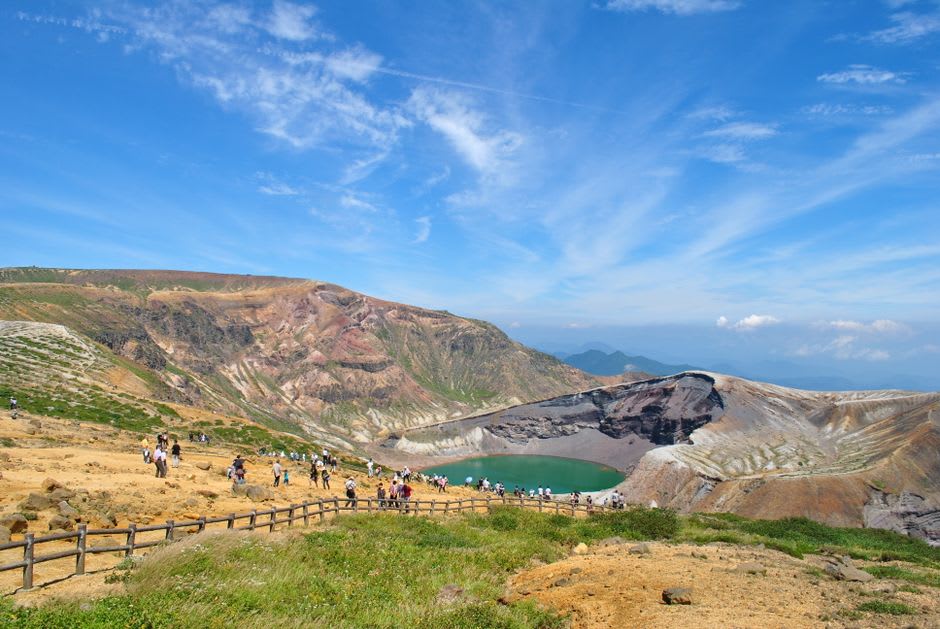
There are three main observation decks around the rim, and it’s worth seeing more than one. Observatory No. 1 has the buses and the souvenir stand and, honestly, a fine view; No. 3 is quieter and higher, with the cleaner sweep across the whole caldera. From every angle you see Kamuishu, the tiny island near the centre — barely a rock breaking the surface, but geologically it’s the tip of a volcano, the peak of a mountain drowned in its own crater. The Ainu name for the lake, roughly “the lake of the mountain god,” suits it. We spent a long time at the far deck as the morning fog crept back in from one edge, watching it swallow the blue metre by metre until Mashu had drawn its curtain again and the crowd politely gave up.
Mount Mashu and the road across the caldera country
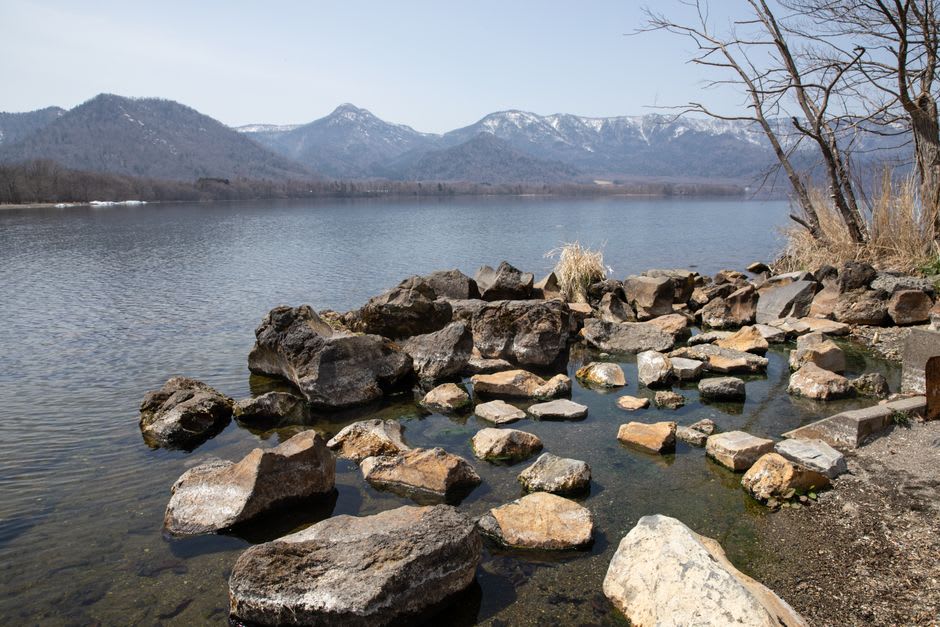
For anyone with the legs, the trail up Mount Mashu on the outer rim gives you the lake without the crowds — a straightforward ridge walk with the caldera on one side and, on a clear day, the whole plateau of eastern Hokkaido rolling away on the other. We only did part of it, turning back when the wind picked up, but even the lower stretch was worth it for the wildflowers and the sudden emptiness once the car park was out of sight. This is Akan-Mashu National Park, and Mashu pairs naturally with nearby Kussharo and the sulphur vents of Mount Io just down the road, all of it steaming, blue, and volcanic. We drove between them with the windows down, and Lia kept a running tally of how many shades of blue Hokkaido could produce in one morning.
Getting There
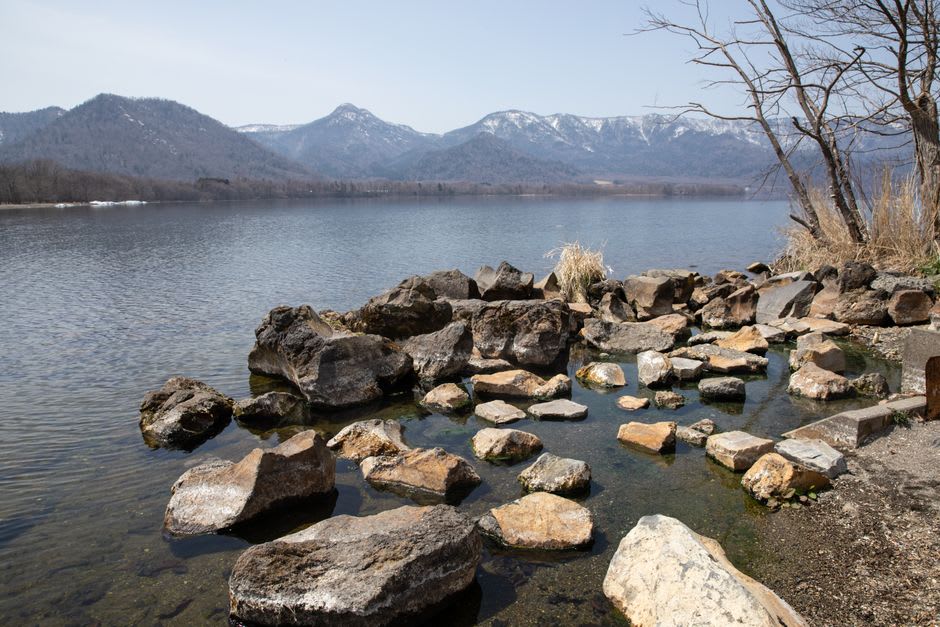
Lake Mashu is in Akan-Mashu National Park in eastern Hokkaido, and you really want a car — the observation decks are spread around the rim and public transport is thin. Most visitors base at Kawayu Onsen or in Teshikaga, both a short drive away, or come up from Kushiro (about ninety minutes) which has air links to Tokyo. In the warmer months there are sightseeing buses looping the park sights from Kushiro and Mashu stations, which is a workable fallback. A word of honest advice: Mashu is genuinely, famously foggy, especially in summer afternoons. Come early, come on a clear-forecast morning, and be ready to try more than once — the reward for patience here is real.
Keep exploring
More of Hokkaidō