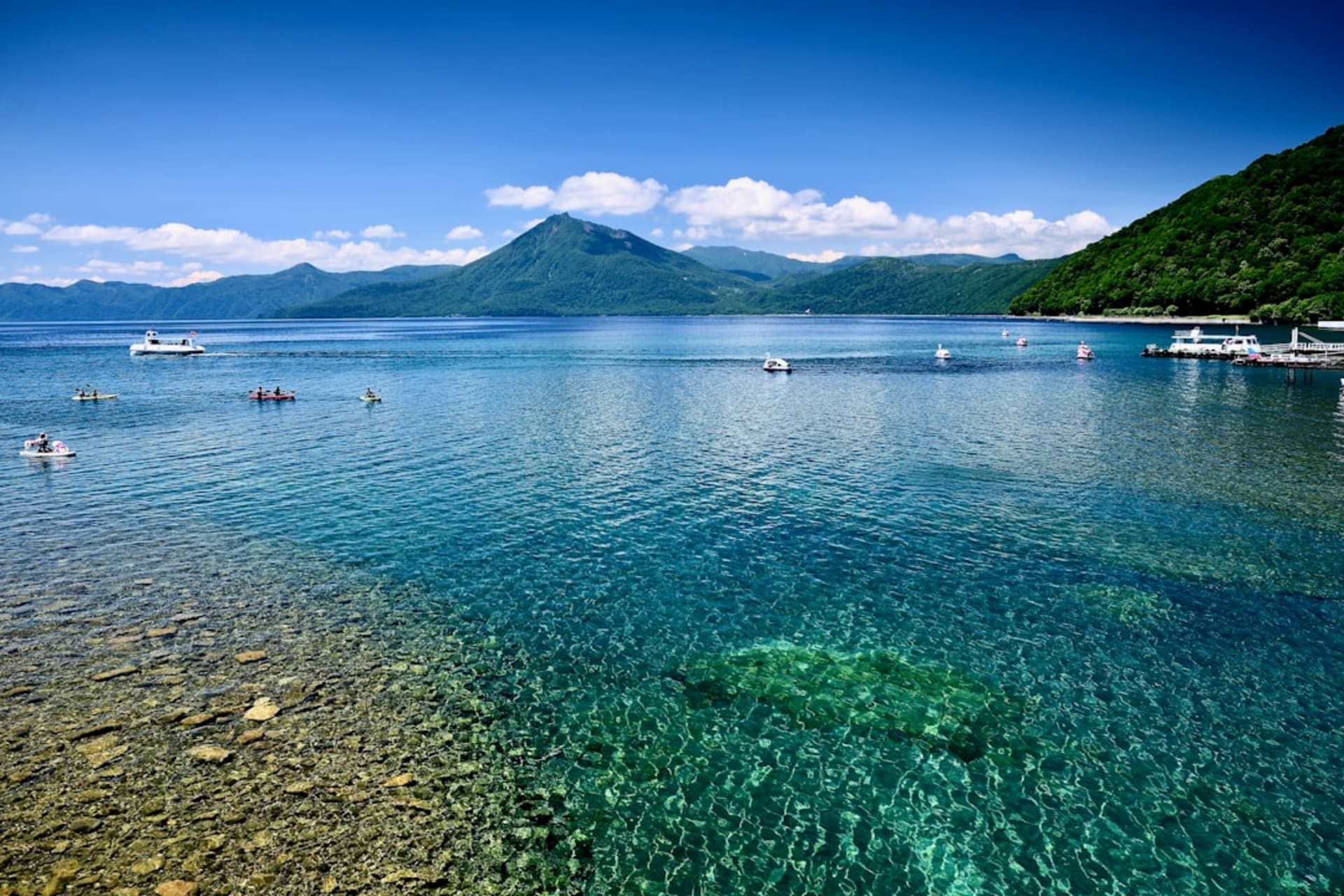
Lake Toya
"A perfect ring of water with an island at its heart, and a volcano still breathing at its shoulder."
A near-perfect circular caldera lake in southwest Hokkaidō, cradling a wooded central island and ringed by hot-spring resorts. Steaming shores beneath the still-restless Mount Usu and its young sibling Shōwa-Shinzan, and fireworks blooming over the water on summer nights.
Lake Toya is so round it looks designed, a great blue coin of water dropped into the hills of southwest Hokkaidō, with a cluster of islands sitting exactly in the middle like the yolk of an egg. It is a caldera, the drowned throat of an ancient eruption, and the land around it is anything but settled — one of the mountains on its rim, Mount Usu, has erupted several times in living memory, most recently in 2000. Lia and I came for two nights in early summer, drawn by the promise of an onsen town on the shore and fireworks over the lake every night, and we left slightly in awe of a place so beautiful and so plainly, geologically alive.
The Lake and Its Island
The best thing we did at Toya was the simplest: we took the little sightseeing boat out to Nakajima, the wooded island at the lake’s center. The boat itself is built to look like a medieval castle, which is faintly ridiculous, but once you’re on the water none of that matters — the lake opens around you, ringed by soft green hills, the volcanoes rising behind, the water an astonishing deep blue. Nakajima has a quiet forest trail and a population of wild Ezo deer that drift out of the trees without much fear of people. We walked a loop under the trees, came out at a small shore, and sat looking back at the resort town, tiny across the water. The lake is one of the northernmost that never fully freezes, and even in the cool morning air it gave off a sense of enormous, patient depth.
Living with the Volcanoes
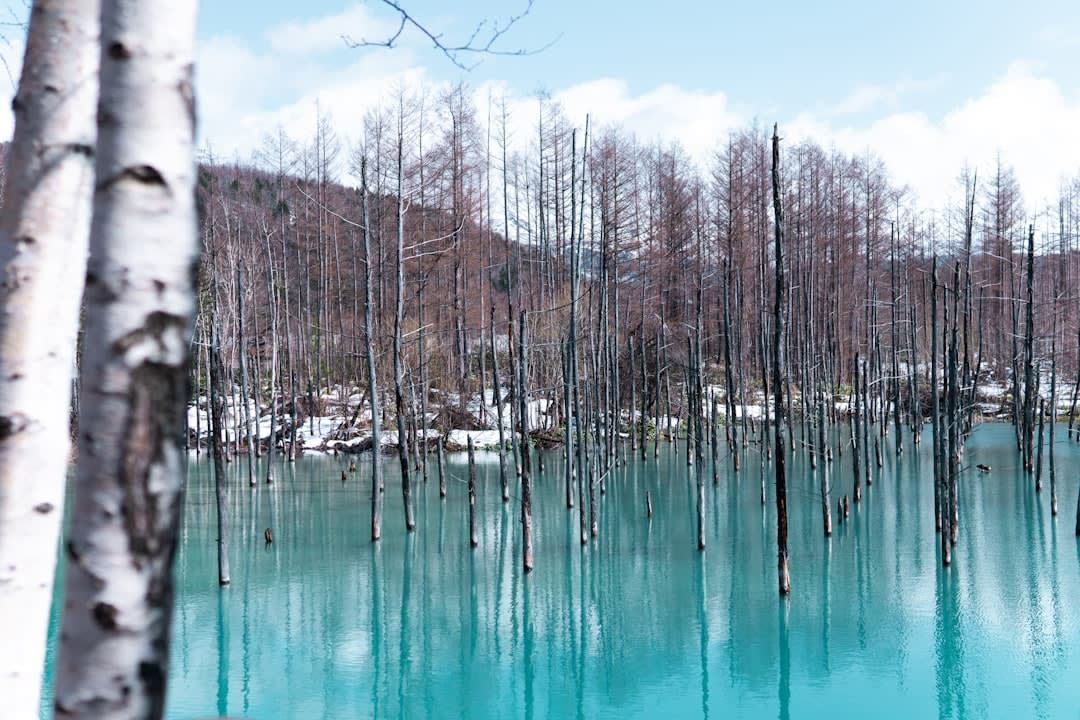
You cannot ignore the volcanoes here, and the town has decided not to try. Beside Mount Usu stands Shōwa-Shinzan, a lumpen red-brown dome that did not exist before 1943 — it pushed up out of a farmer’s wheat field over the course of two years, a brand-new mountain born in the middle of the war, still steaming faintly at its cracks today. We took the ropeway up the shoulder of Usu and walked out to a viewpoint, and the whole story of the place laid itself out: the round lake on one side, the ragged crater and Shōwa-Shinzan’s smoking hump on the other, and far below, the wide Pacific. Most affecting was the volcano trail near town, where the 2000 eruption’s ruins are left exactly as they fell — a buckled road, a kindergarten with mud to the windows, a bridge snapped in half. Lia walked it very quietly. It is a rare thing to stand somewhere so lovely and so honest about its danger.
Onsen Nights and Fireworks
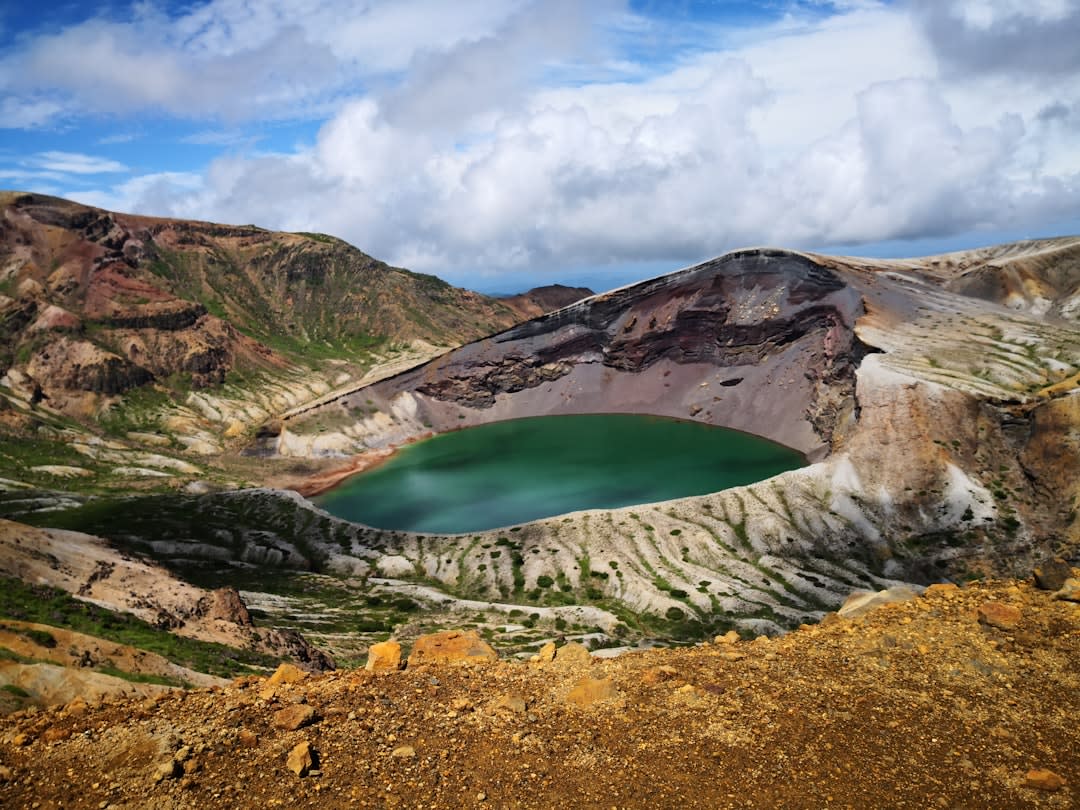
The shore town is a string of hot-spring hotels, and our room had a small balcony that looked straight out over the water. Toyako runs fireworks over the lake every night through the long summer season — a boat moves slowly along the shore setting them off so that everyone gets a view — and there is something wonderfully unhurried about it, no crowds jostling, just the whole town soaking in outdoor baths while flowers of light open above the black water and echo off the hills. We sat in the rotenburo with the steam rising off our shoulders, the lake dark below, and watched the whole show from the water, our shoulders warm and the night air cool on our faces. Afterward Lia said it was the most relaxed she’d felt in weeks, and I believed her, because I felt it too.
Getting There
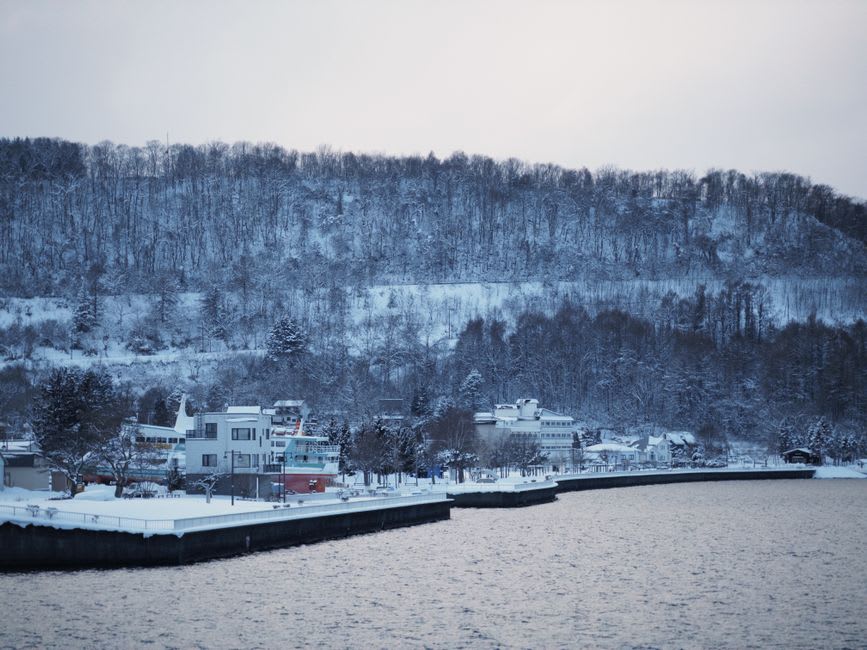
Lake Toya lies in southwest Hokkaidō, conveniently between Sapporo and Hakodate. Limited express trains run to Toya Station from Sapporo in about two hours and from Hakodate in around two hours as well; from the station a short bus ride drops you at the lakeside onsen town of Toyako Onsen. If you’re driving, it’s an easy and beautiful stop on the route between Sapporo and the south, near the Noboribetsu hot springs. The summer fireworks run nightly from late April into October — an unusually long season — and the lake is loveliest from late spring through autumn. Stay a night at a lakeside ryokan with an outdoor bath if you can; watching the fireworks from the water is the whole point.
Keep exploring
More of Hokkaidō