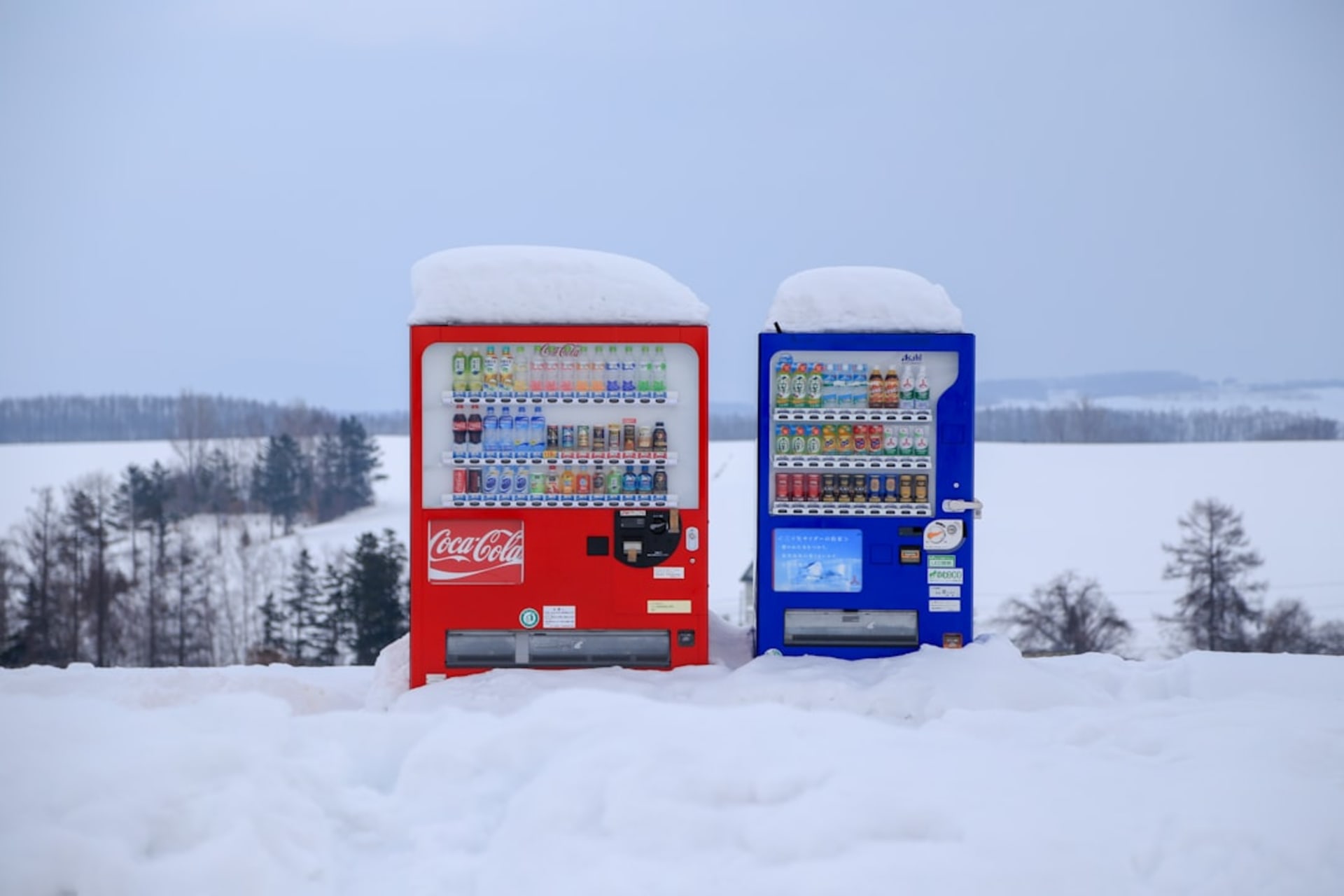
Hokkaidō's second city, a hearty inland hub buried in winter snow. A famous zoo where penguins march through the drifts, a dark and warming shoyu ramen, and a gateway to the Daisetsuzan peaks and the rolling Biei and Furano countryside.
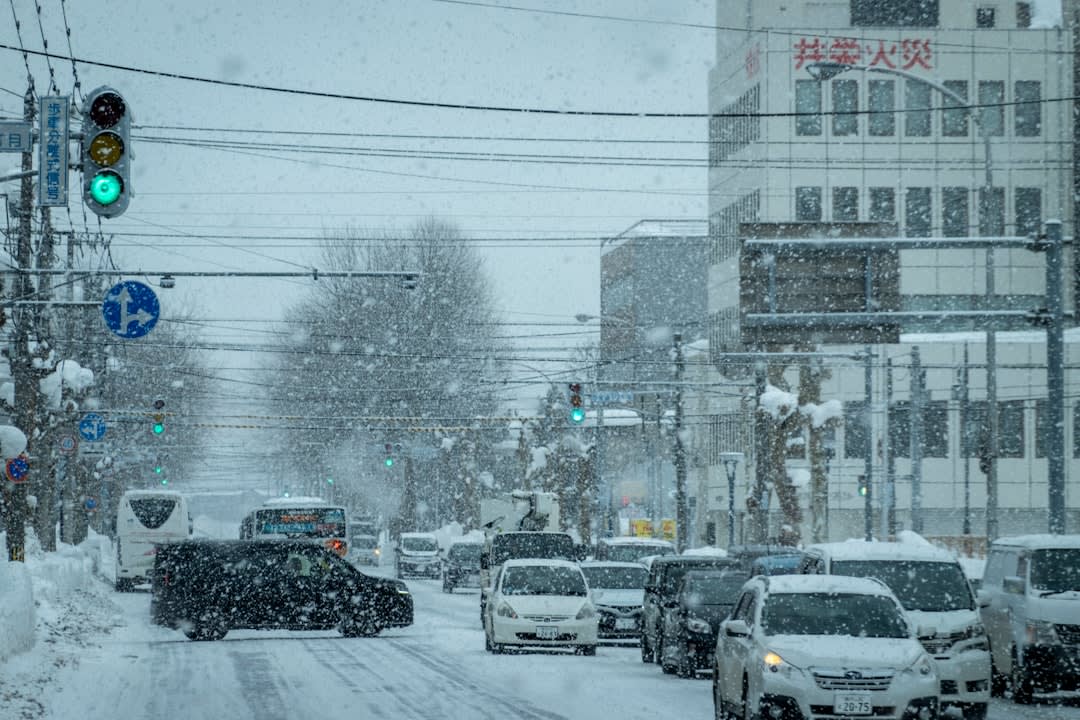
We came to Asahikawa in the depth of February, mostly because Lia had seen a photograph of penguins walking single file through the snow and refused to leave Hokkaidō without seeing it for herself. The city met us at minus fifteen, the coldest air either of us had ever stood in, the kind that makes the inside of your nose prickle and your breath hang in front of your face like a held note. It is not a pretty city in the postcard sense — it is a working inland hub, wide streets and low buildings under a heavy grey sky — but it turned out to be one of the warmest places we visited, in every way that counts.
The Zoo in the Snow
Asahiyama Zoo is the reason most travelers make the trip, and I arrived a little cynical, expecting a sad municipal zoo dressed up for tourists. I was wrong. In winter they let the king penguins out for a walk, and a keeper leads them on a loop through the snowy grounds while a couple of hundred bundled-up people watch them waddle past close enough to touch. It is absurd and completely wonderful. The penguins seem entirely unbothered, tipping forward on their little feet, occasionally stopping to consider the crowd. The zoo’s whole design is built around letting animals behave like animals — seals shooting up through a glass tube, snow leopards prowling above your head — and Lia, who had come for the penguins, ended up standing longest at the polar bears, watching one flop belly-first into the drifts.
A Bowl of Asahikawa Ramen
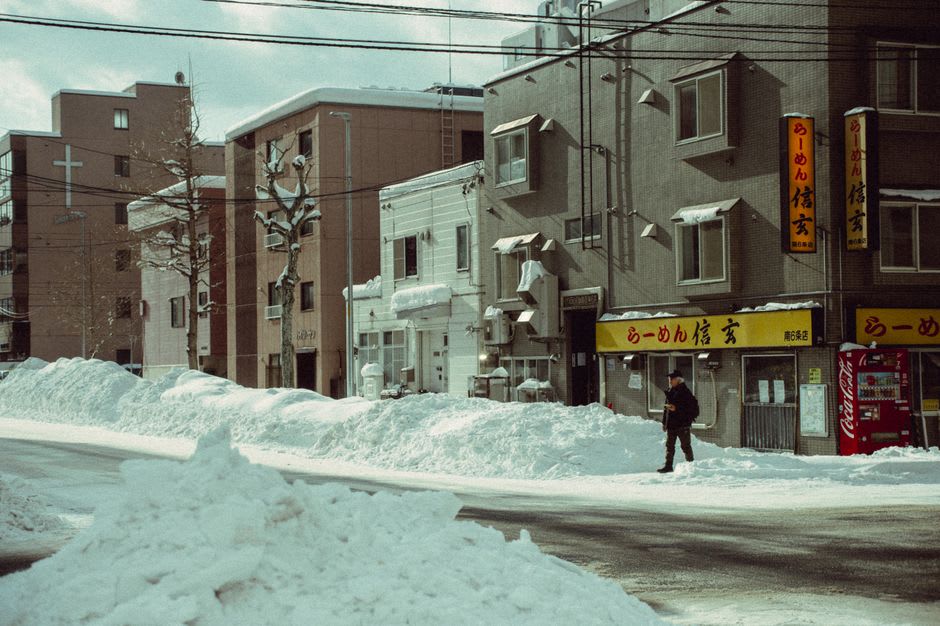
There is a specific ramen here, and after a morning in that cold I understood exactly why it exists. Asahikawa ramen is a shoyu broth, dark and deep, blended with seafood and pork stock and topped with a film of lard that seals the heat in so the soup stays scalding to the last sip — a small genius born of brutal winters. The noodles are firm, curly, made to grab the broth. We ducked into a narrow shop off a side street, steamed windows, six seats at a counter, and I ate mine too fast and burned my tongue and did not care in the slightest. Lia added a soft egg and a heap of menma and pronounced it the best bowl of the whole trip. The owner, seeing two frozen foreigners revive over his soup, gave us each a small extra scoop of noodles without a word.
Gateway to Daisetsuzan and the Countryside
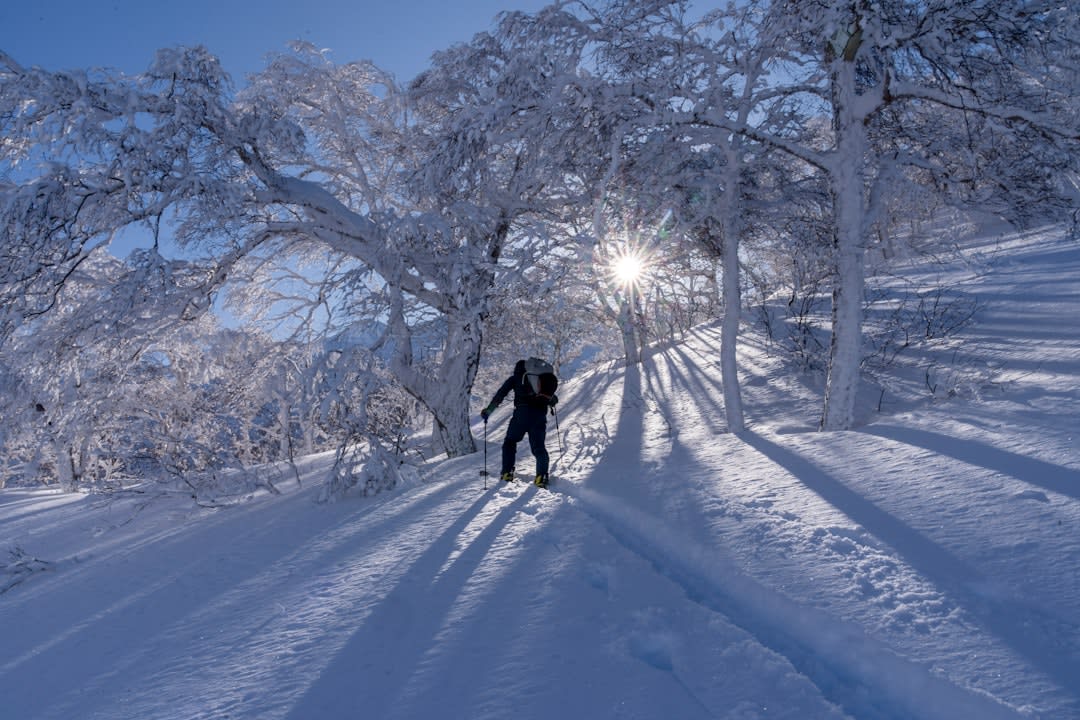
Asahikawa sits at the foot of Daisetsuzan, the vast national park at Hokkaidō’s roof, and even from the city you can see the white spine of the mountains on a clear day. We didn’t have the gear to go deep into the snow, but we took a slow drive south toward Biei and Furano, and the landscape did something I hadn’t expected — it emptied out into these long, clean, rolling fields, every rise and hollow smoothed white, a single row of trees breaking the horizon here and there like a brushstroke. In summer this is the country of lavender and patchwork farmland; in winter it is pure geometry, black trees on white ground. We stopped the car on an empty road just to stand in the silence, and the only sound was the tick of the cooling engine and the wind moving loose snow across the fields.
Getting There
Asahikawa sits at the center of Hokkaidō and is easy to reach. Limited express trains run from Sapporo in about an hour and twenty minutes, a straightforward and scenic ride across the island’s interior. Asahikawa Airport, a short bus ride from the city, has domestic connections and is also the handiest gateway for Biei and Furano. In winter, buses run directly from the station to Asahiyama Zoo; check the timing, as the penguin walks happen only a couple of times a day and only in the coldest months. Dress far warmer than you think you need to — this is genuinely one of the coldest cities in Japan — and build in time for a bowl of ramen the moment you come back indoors.
Keep exploring
More of Hokkaidō