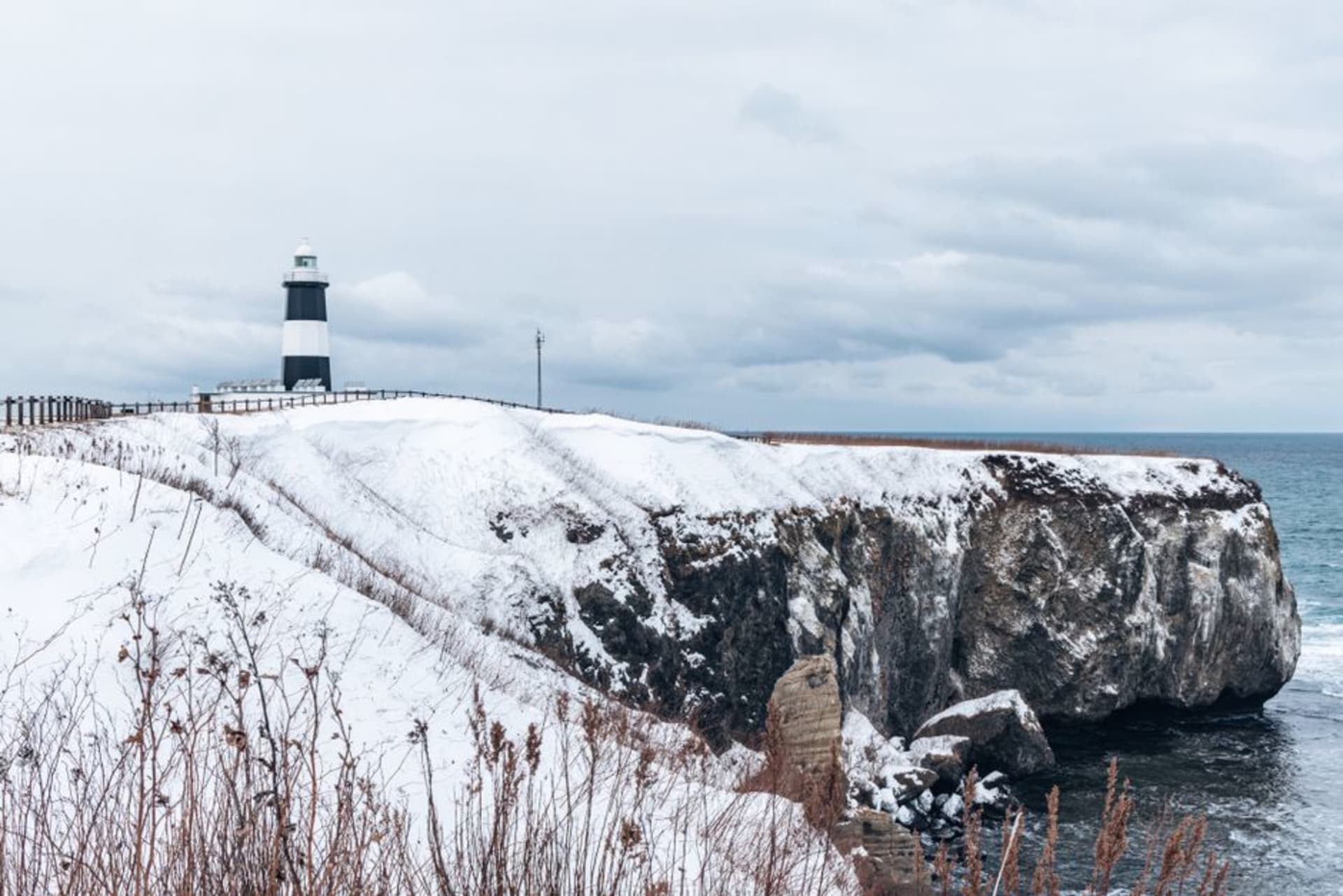
Abashiri
"The whole sea had turned to broken white, and our ship simply pushed it aside."
A port on the far northeastern edge of Hokkaidō where the Sea of Okhotsk freezes into a moving field of drift ice each winter. Icebreaker cruises that shoulder through the floes, a stark former-prison museum on a hill, and a light so pale and clean it feels like the end of the map.
We came to Abashiri in February for one reason, and I want to be honest that it is a slightly mad reason: we wanted to sail through frozen sea. Lia had read about the ryūhyō, the drift ice that the Amur River pushes down from Siberia until it packs against Hokkaidō’s northeastern shore, and once she’d seen a photograph of it she couldn’t be talked out of going. So we took the long trains north and east, further than either of us had ever been in Japan, to a small port town at what genuinely felt like the edge of everything. The wind off the Okhotsk cut straight through my supposedly serious coat. Lia just grinned and pulled her hood tighter.
The Icebreaker and the White Sea
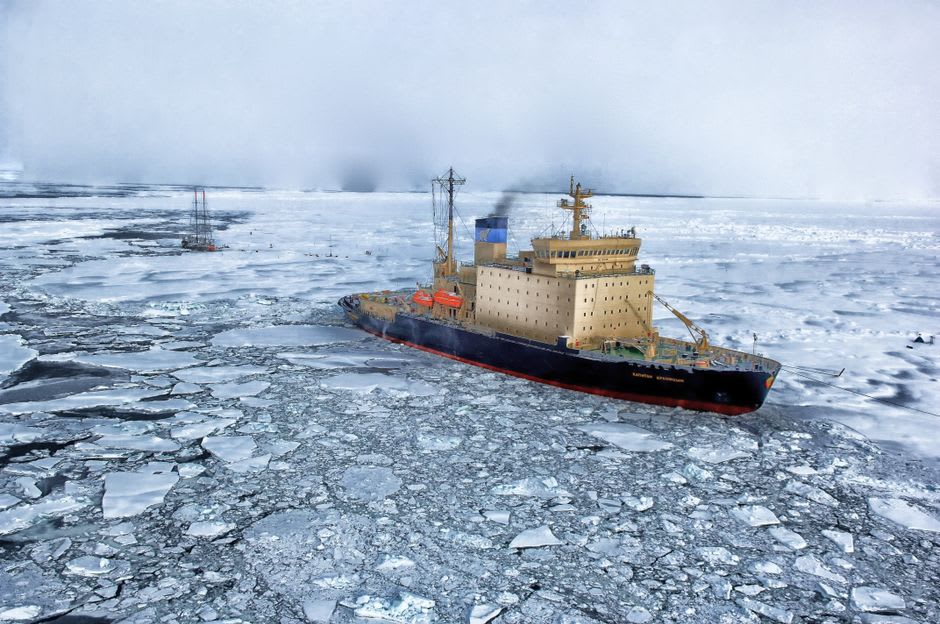
The Aurora icebreaker leaves from the harbor a few times a day in winter, and we boarded ours mid-morning with a deck full of people already too cold to talk. For the first stretch there was only grey water, and I began to worry we’d come all this way for nothing. Then the ice appeared — first scattered plates, then more, then a solid shifting field of white that ran to the horizon and swallowed the sound of the sea. The ship didn’t cut through it so much as climb onto it and let its weight crack the floes apart, a deep groaning crunch you felt through your boots. We stood at the bow gripping the freezing rail, and Lia pointed silently at a Steller’s sea eagle perched on a distant slab, huge and unbothered. It was one of the strangest, most beautiful hours I’ve spent anywhere.
The Prison on the Hill
Abashiri was, for most of its history, a place people were sent rather than a place people chose, and its old prison is now a museum that doesn’t flinch from that. The Abashiri Prison Museum preserves the original Meiji-era wooden cell blocks, moved and restored on a hillside above the river, and walking through them on a bitter afternoon was genuinely sobering. The radial wings of cells, the frozen exercise yard, the mannequins hunched over thin meals — it tells the story of convicts sent to build roads through Hokkaidō’s wilderness in conditions that killed many of them. Lia and I went quiet in there. There’s a reconstructed punishment cell you can step into, and standing in that cold wooden box for even a few seconds, imagining a winter, told me more than any placard could. We came out into the pale light chastened and grateful for our warm gloves.
Okhotsk Light and the Drift Ice Museum
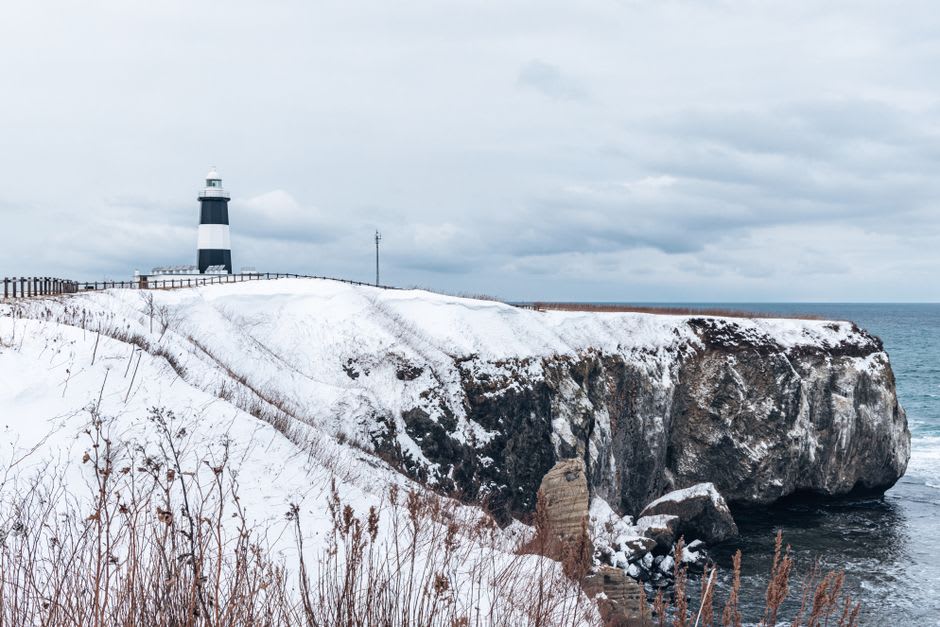
Up on Mount Tento above the town sits the Okhotsk Ryūhyō Museum, and we went partly to warm up and partly because we wanted to understand what we’d sailed through. Inside there’s a room kept at around minus fifteen degrees where you can handle real drift ice and watch a towel freeze solid when you whirl it in the air — a silly, delighted moment that Lia insisted we do twice. But what stayed with me was the view from the observation deck: the whole white expanse of the frozen Okhotsk laid out below, the town small and hunched against it, and beyond that nothing but ice all the way to a country we couldn’t see. Abashiri gives you that feeling constantly — of standing at a threshold, at the top corner of the map, looking out at something vast and cold and indifferent and lovely.
Getting There
Abashiri sits in far northeastern Hokkaidō and takes some commitment to reach. From Sapporo, a limited express train runs to Abashiri in around five and a half hours, so many people fly into Memanbetsu Airport instead, about a forty-minute bus ride from town, with connections from Sapporo and Tokyo. The drift-ice season is short and weather-dependent — roughly late January into March — so book the Aurora icebreaker ahead and keep your dates flexible, since strong winds can push the ice offshore or lock it in entirely. In winter a local sightseeing bus loops between the station, the prison museum, and the drift-ice museum, which saves you standing at frozen bus stops. Dress far warmer than you think you need to; the wind off the Okhotsk is the real thing.
Keep exploring
More of Hokkaidō