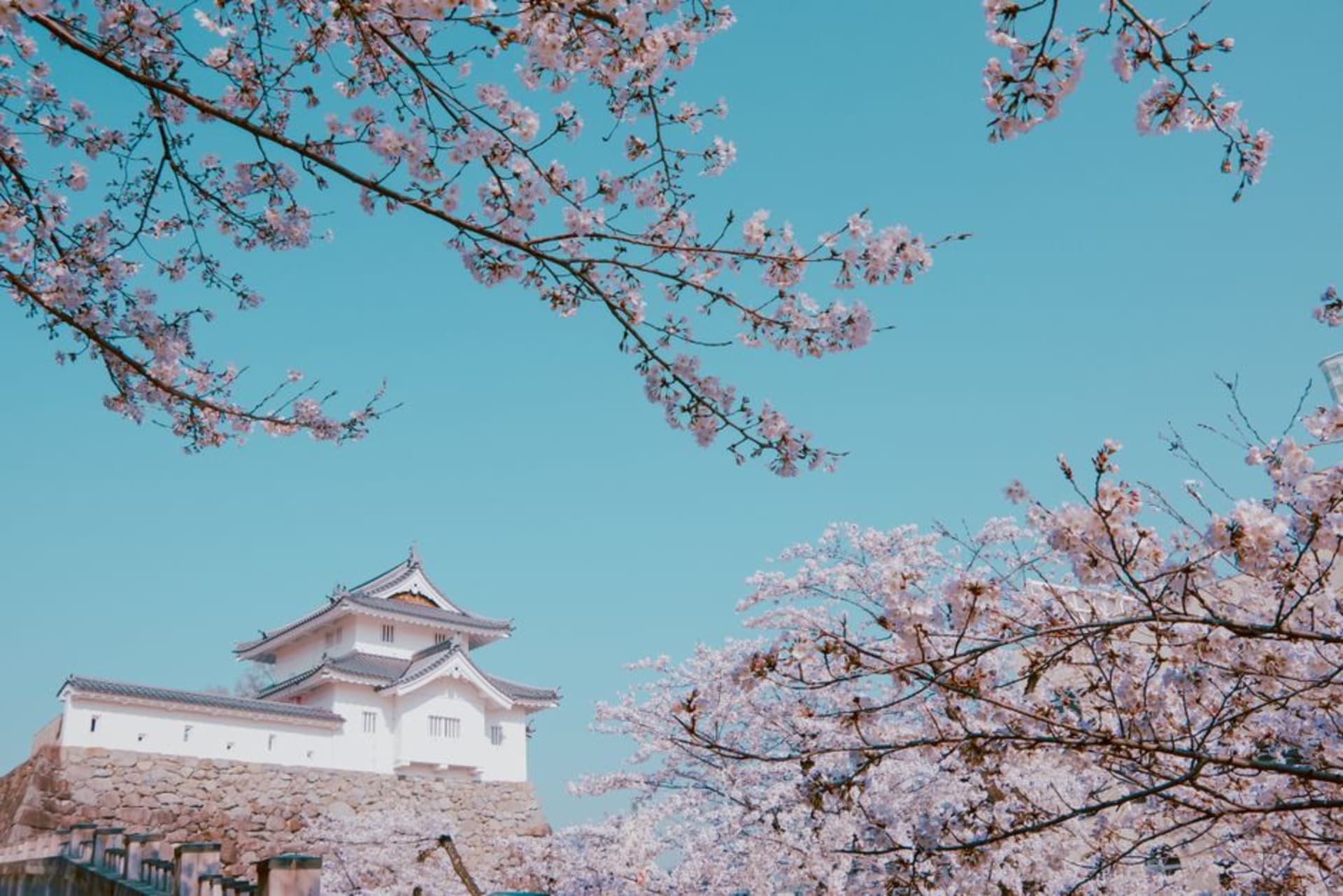
Tsuyama
"The keep is long gone, but standing on those stone walls under the blossom I felt the whole vanished castle around me."
An inland Okayama castle town on the Yoshii river, where colossal stone walls climb a hill that fills with cherry blossom every spring. Add a preserved merchant quarter, a cheerfully unrefined food culture of horse meat and offal-udon, and you have one of the most underrated stops in western Japan. We ate things I couldn't have named and loved most of them.
We nearly skipped Tsuyama. It was a name on a rail map deep inland from Okayama, and every guide gave it three lines. But Lia had seen a photograph of its cherry blossom and decided, with the certainty she brings to these things, that we were going. So we took the slow local train up the Yoshii river valley, rice fields and low mountains sliding past, and arrived in a town that felt pleasantly forgotten by the modern rush. From the station you can already see the great stepped stone walls of the castle rising over the roofs, and even empty of their keep they stopped me in the street. We dropped our bags and walked straight up, and the blossom was just breaking.
The Castle of Stone
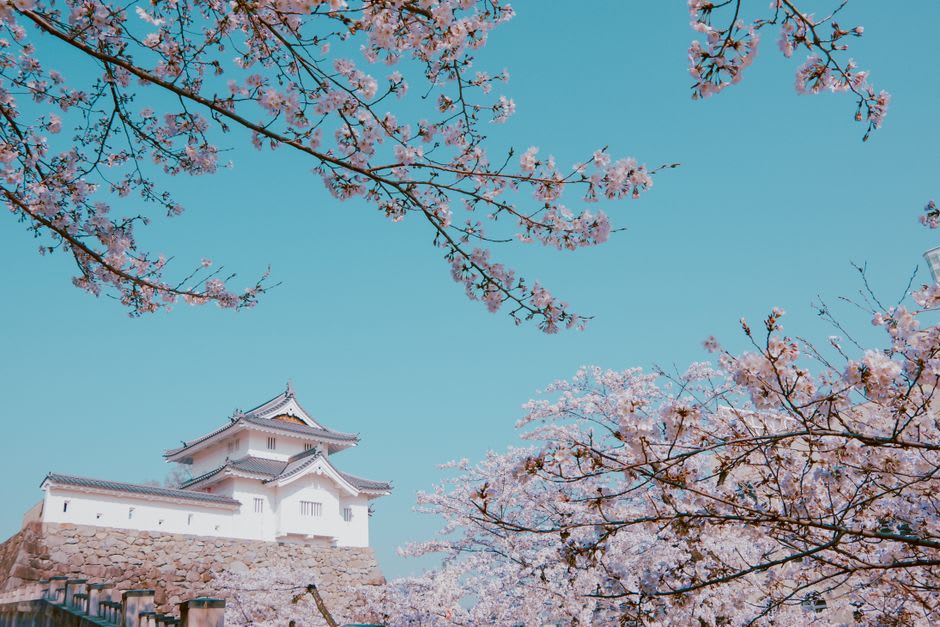
Tsuyama castle was once one of the grandest in all Japan, its buildings torn down in the Meiji years, but what nobody could tear down was the stonework — vast tiered ramparts that climb the hill in terrace after terrace, some of the finest surviving castle masonry in the country. In early April the grounds become one of the most celebrated cherry blossom sites in western Japan, thousands of trees frothing pink against the grey stone. We climbed slowly, level by level, the whole town opening below us and the mountains beyond, and at the top where the keep once stood we sat on the warm stone among the petals with hundreds of quietly happy locals. A single reconstructed turret gives you a sense of the scale of what was lost. I found the absence more moving than any intact castle I’d seen.
The Old Merchant Streets
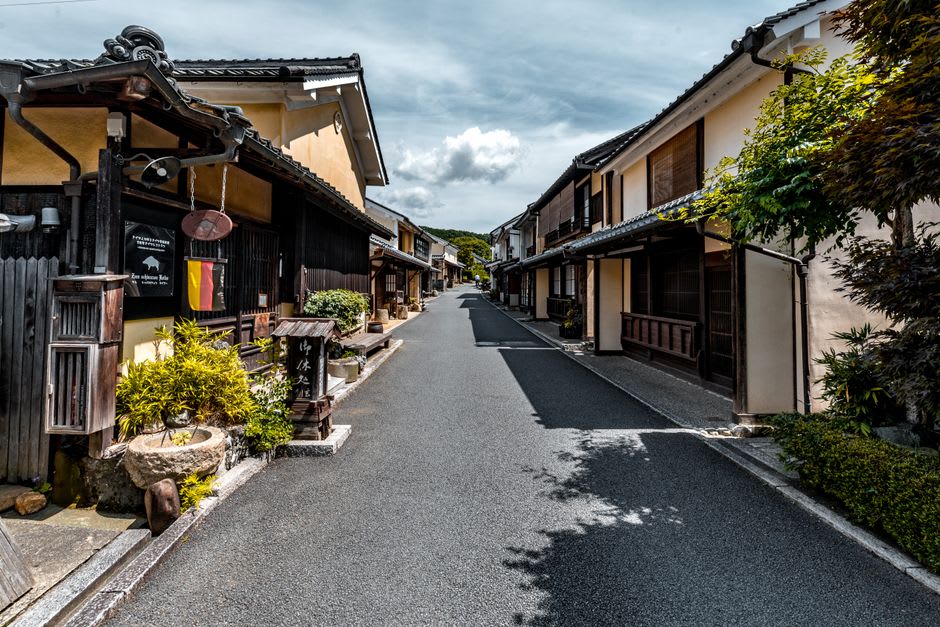
Below the castle, Tsuyama keeps a genuinely lived-in old quarter, the Joto district, a long street of Edo-period merchant houses with dark lattice fronts and heavy tiled roofs, running east from the centre. Unlike the polished heritage towns, this one is still ordinary — people live behind those old facades, a few have become small shops or a sake brewery you can visit, and there’s none of the theme-park feel. We wandered it in the late afternoon with the light going amber down the street, ducked into a tiny museum in a former merchant’s home, and bought a bottle from a brewery whose owner talked us through the local rice with real affection. Tsuyama, we were learning, does not dress up for visitors. It just gets on with being itself.
Horse Meat and Hormone Udon
Then the food, which is where Tsuyama becomes genuinely singular. This is one of the few Japanese towns with an old, unembarrassed taste for horse meat — served here as soro-soro-yaki and in thin sashimi slices — a legacy, they say, of the region’s history. And its famous local dish is horumon udon: thick udon noodles stir-fried with grilled offal in a sweet-savoury sauce, “horumon” meaning the innards that were once thrown away. I will be honest: I hesitated at the menu, and Lia did not, and by the second bite I was a convert. Charred, chewy, rich, deeply unglamorous — it was some of the best cheap food we ate in Japan, in a smoky counter shop full of workers and laughter, the griddle roaring in front of us. We went back the next night.
Getting There
Tsuyama sits inland north of Okayama, reached on the Tsuyama Line in roughly one hour and twenty minutes of pleasant local-train riding through the river valley — there’s no Shinkansen here, and that’s part of the charm. From the San-in side you can also come down via the Inbi Line from the Tottori direction. Once in town everything worthwhile is walkable: the castle, the old merchant street, and the food shops all cluster within a compact centre. Time your visit for early April if you possibly can, but honestly, the stone walls and the horumon udon are reason enough in any season.
Keep exploring
More of Chūgoku