Tsuwano
"There are more carp in the gutters here than people in the town — and I mean that as the compliment it is."
The 'little Kyoto of the San-in' — a white-walled old street tucked in a mountain valley in western Shimane, where fat koi carp swim in the roadside canals and a tunnel of a thousand red torii climbs the hillside to Taikodani Inari shrine.
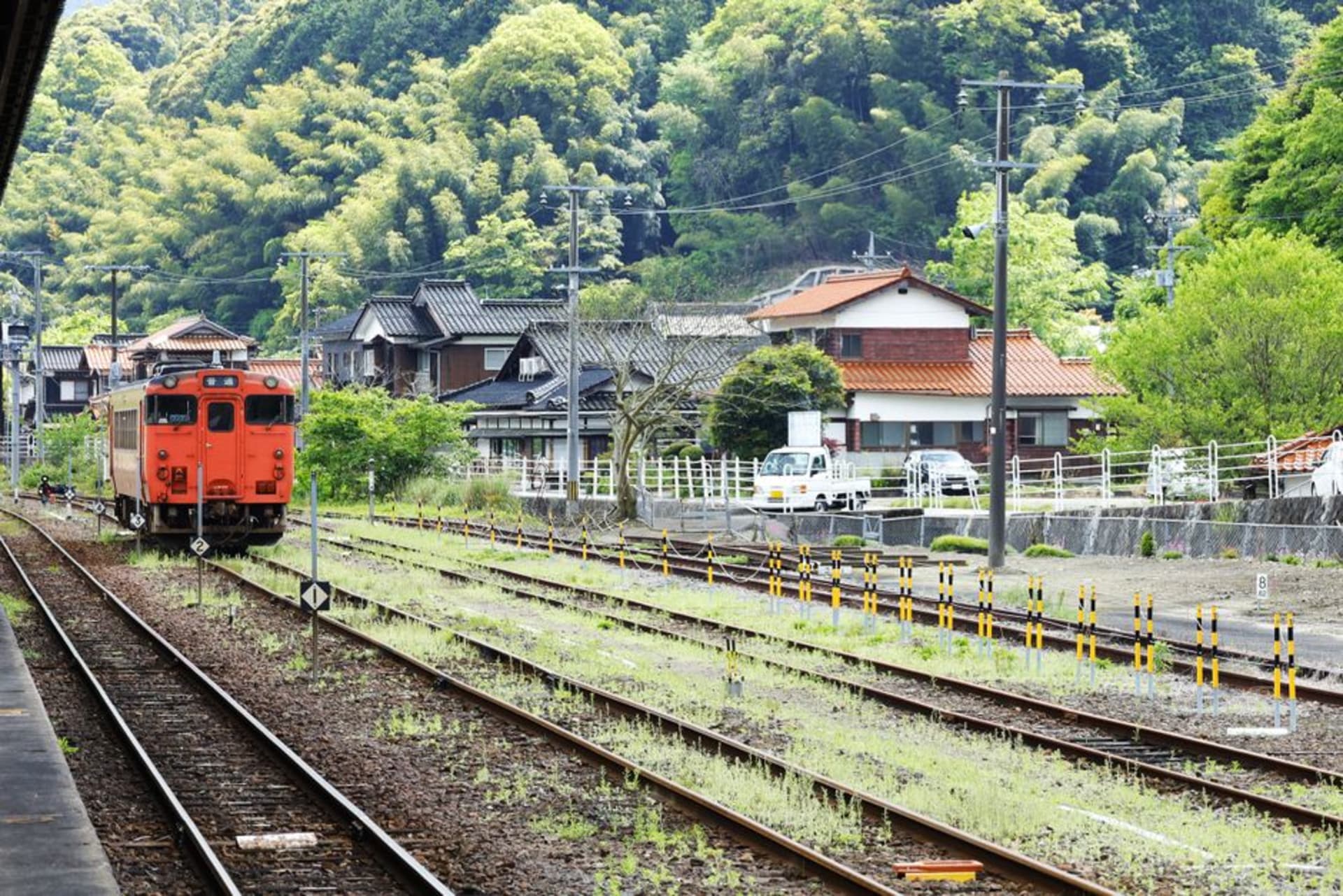
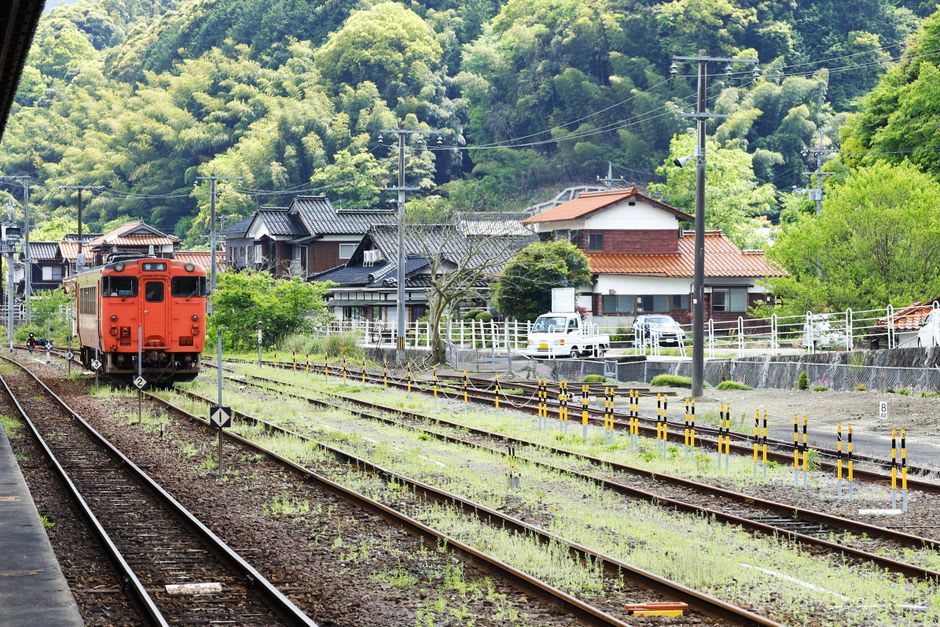
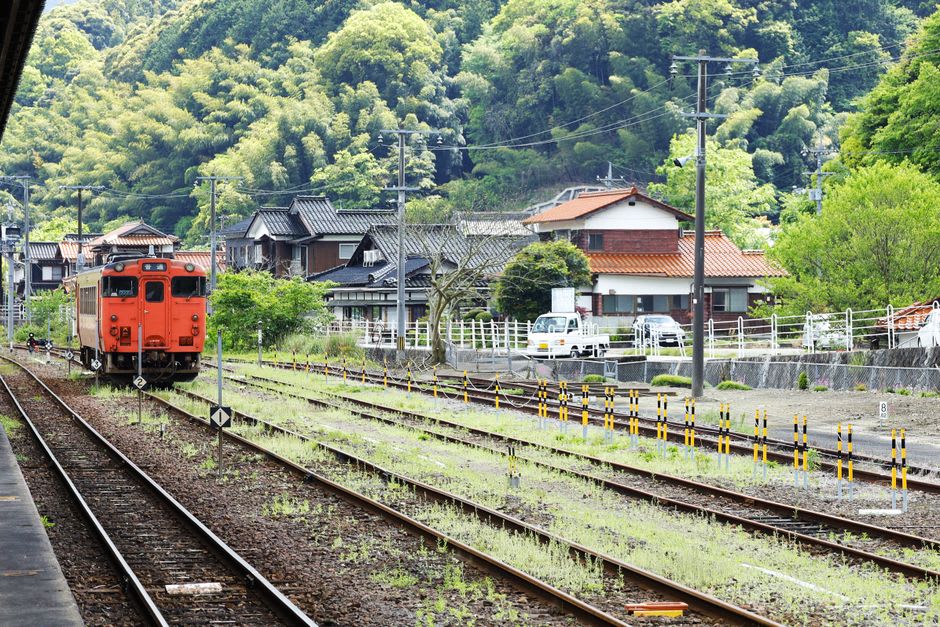
Tsuwano nearly didn’t happen. It’s a long way down a single-track valley in the far west of Shimane, off every efficient route, and the practical part of me kept suggesting we skip it. Lia overruled me on the strength of a single photograph she’d seen — a narrow street with fat orange carp swimming in the roadside gutter — and she was right, as she usually is about these things. We took the slow train through the mountains and stepped off into a town that felt like it had been quietly forgotten by the century, in the best possible way.
The carp in the canals
Tsuwano’s old quarter, Tonomachi, is one white-walled street running dead straight through the middle of town, samurai residences and merchant houses behind earthen walls, and along each side runs a clear stone canal. And in the canals: koi. Thousands of them — fat, lazy, jewel-coloured carp, orange and white and black and gold, drifting in the roadside water where you’d expect a gutter. The story goes they were bred there as a living food reserve in case of famine, and now vastly outnumber the townspeople. There’s something wonderfully absurd about strolling a historic street while shoals of enormous ornamental fish glide along at your feet, nosing under the little stone bridges. Lia bought a scoop of fish food and the water boiled up orange around her hand. We spent a ridiculous amount of time just watching them.
They call Tsuwano the “little Kyoto of the San-in,” and while every pretty old town in Japan seems to get called a little Kyoto, here the white walls, the mountain backdrop and the sheer quiet make the name feel earned rather than borrowed.
A thousand red gates
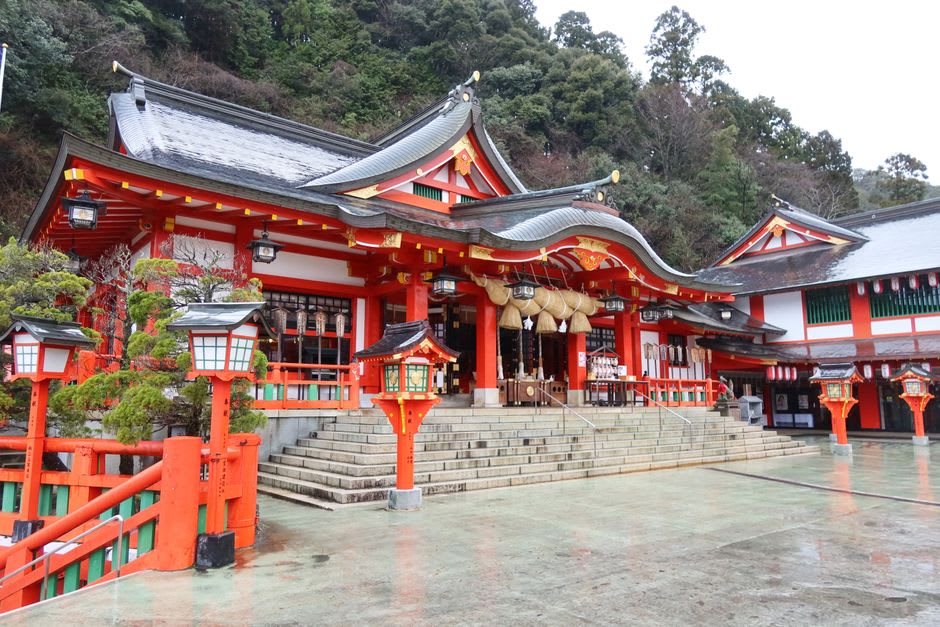
On the hillside above town stands Taikodani Inari, one of the five great Inari shrines of Japan, and to reach it on foot you climb a tunnel of vermilion torii gates — around a thousand of them — zigzagging up through the trees. It’s the same effect as the famous one at Fushimi Inari in Kyoto, but here you climb it very nearly alone, your footsteps and the birds the only sound, the red gates glowing where the sun cuts through. We went up slowly in the morning cool, the town dropping away below through gaps in the gates, and arrived at the top sweating and quiet. The shrine itself is a blaze of red and gold, and from its terrace the whole Tsuwano valley opens out — the straight old street, the river, the green mountains folding away.
At the top a shrine cat watched us with total indifference, and Lia declared it the guardian of the place, which felt about right.
The valley and its castle ghost
High above the shrine, on the crest of the ridge, are the ruins of Tsuwano Castle — only the great stone walls remain, the keep long gone. A little single-cabin chairlift creaks you most of the way up, and then it’s a short climb through the trees to the ramparts. What you go for is the view: the whole valley laid out below, the town a thin ribbon of grey roofs along the silver river, terraced fields climbing the slopes, mist snagging on the higher peaks. We had it entirely to ourselves, sitting on the old stones with our legs dangling, eating konbini onigiri in the sun. Down in the valley a train crawled through like a toy. It’s the kind of view that makes a long detour retroactively obvious.
Back in town we ate genji-maki, a local sweet, and Lia reminded me — not for the last time — that she’d been the one to insist on coming.
Getting There
Tsuwano lies in a mountain valley in the far west of Shimane. The scenic route is the SL Yamaguchi steam train up from Shin-Yamaguchi on the San’yō Shinkansen line (seasonal), a lovely ride through the hills; otherwise local trains connect from Masuda on the San-in coast or from Yamaguchi. It’s small and walkable — the old street, canals and torii climb are all within an easy stroll of the station. Remote enough to stay overnight if you can, when the day-trippers leave and the town goes quiet along its carp-filled canals.
Keep exploring
More of Chūgoku