Tsunoshima
"Lia thought the photos were faked. Then we crested the hill and the sea really was that colour."
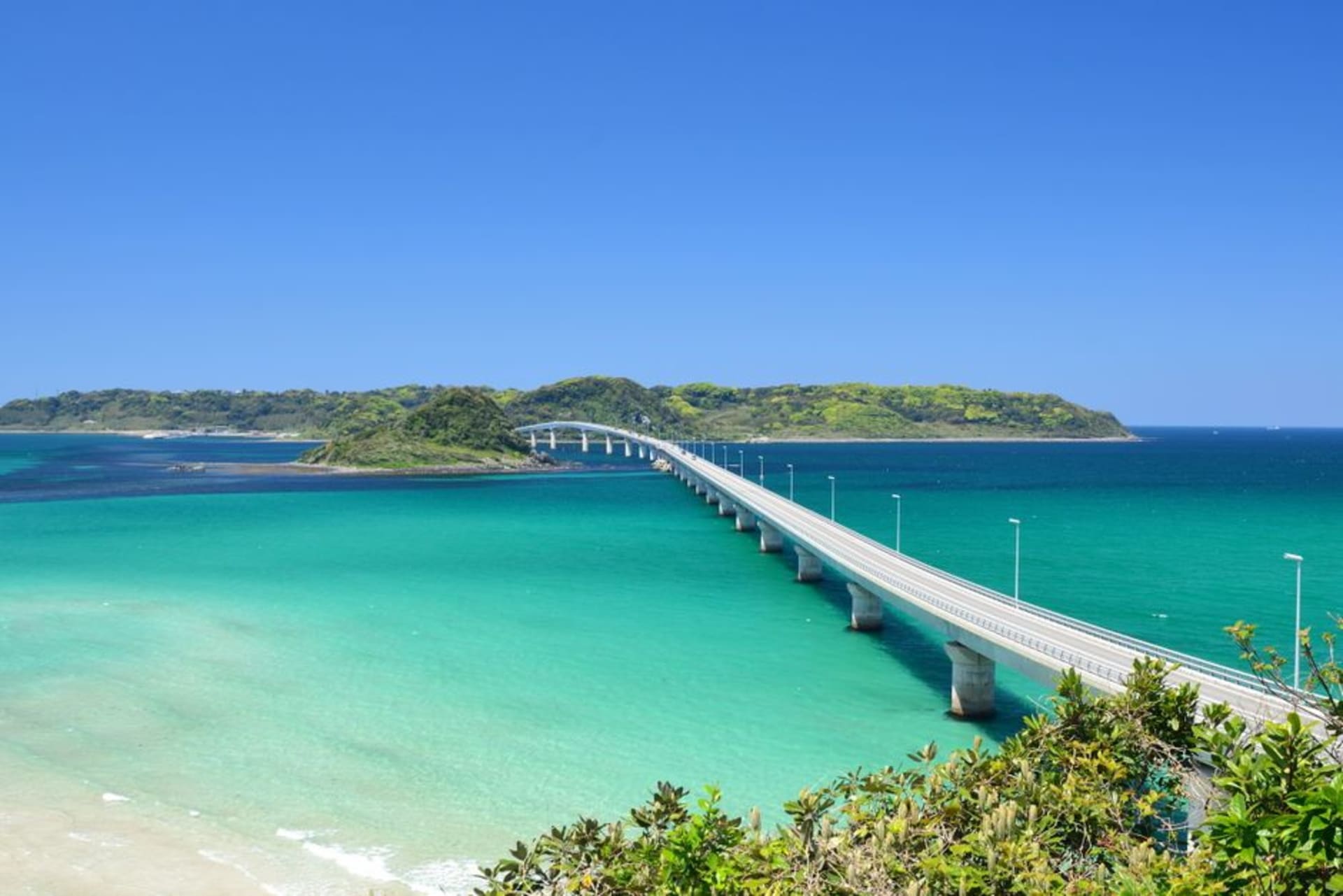
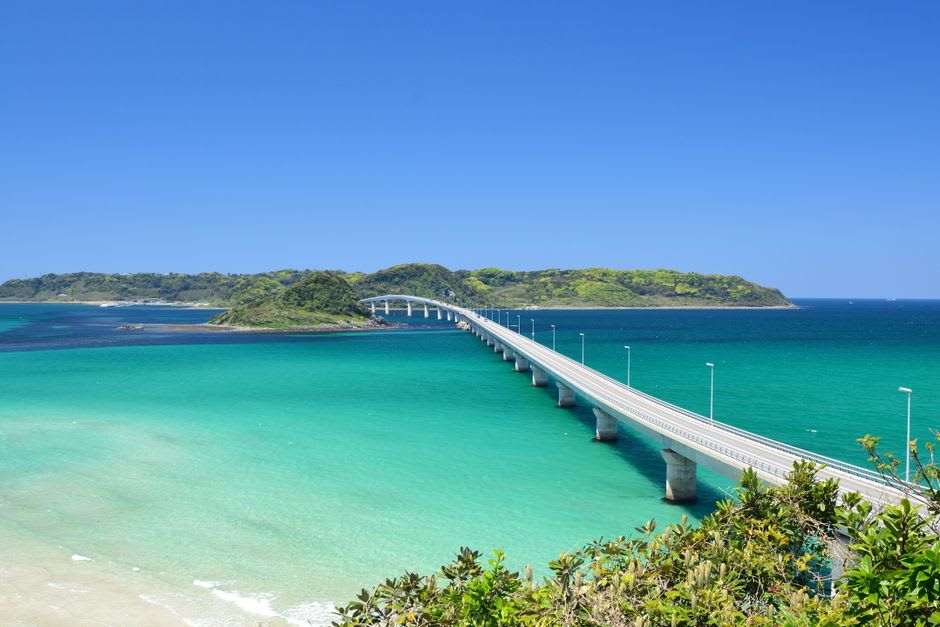
A small island off the northern tip of Yamaguchi, reached by a bridge that arcs low across water so improbably emerald it looks retouched. The kind of place you drive to just for the crossing, and stay for the empty white beaches at the far end.
Lia had shown me a photo of the Tsunoshima Bridge weeks earlier and I’d assumed the saturation had been cranked to sell postcards. No sea is that green. So there was a genuine, childish thrill in cresting the last rise on the mainland approach, the rental car climbing, and seeing it laid out below us exactly as advertised: a low white bridge nearly two kilometres long, curving out across water that shaded from turquoise to a deep bottle-green, an islet dotted in the middle like a full stop. We pulled into the viewpoint car park with about twenty other people who’d clearly had the same reaction, everyone slightly giddy, and just looked. Some places over-promise. This one, absurdly, delivers.
The crossing everyone comes for
The bridge itself, opened in 2000, is the whole event — one of Japan’s longest toll-free sea crossings, and beloved of car commercials for exactly the reason you’d guess. We drove it slowly with the windows down, the green flashing past on both sides, then turned straight around and drove it back to do it again. There’s a proper viewpoint on the mainland side, at Amagase Park, where you get the classic elevated shot with the little islet of Hatoshima framed dead centre. Lia took roughly four hundred photographs. I don’t blame her. The colour comes from the shallow, white sandy seabed and the clarity of the water off this stretch of the Japan Sea, and it shifts hour to hour with the light — greener at midday, bluer toward evening.
The far end of the island
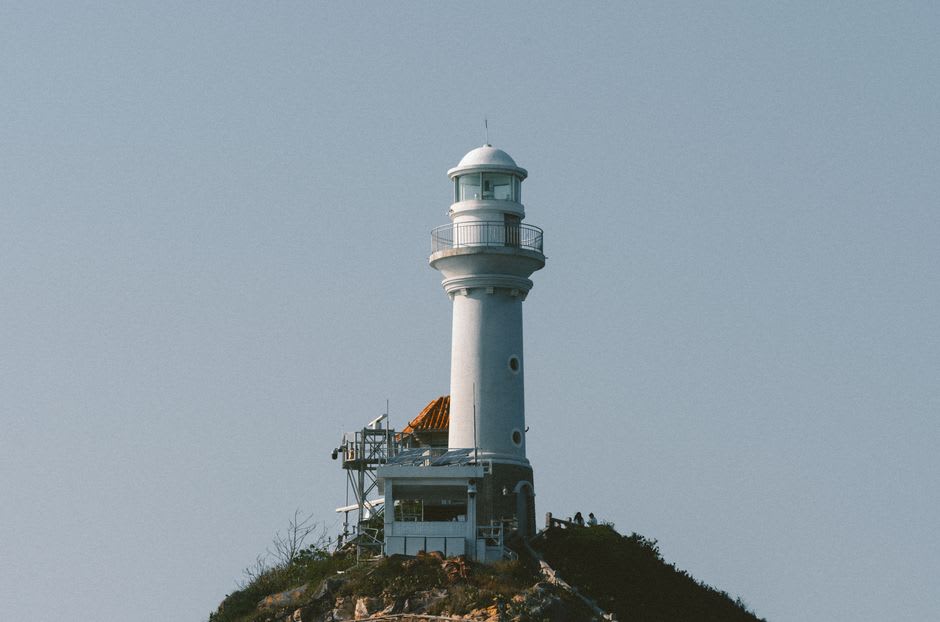
The mistake most day-trippers make is crossing the bridge, taking the photo, and leaving. We drove on across the island to its western tip, and it was the best decision of the day. There’s a white-painted lighthouse from 1876, one of the few in Japan you can climb, built of local granite by a British engineer — Lia and I hauled ourselves up the spiral for a wind-blasted view of the whole island and the sea beyond. Below it, Sunset Beach and the surrounding coves were nearly empty, fine pale sand and that same clear water, a scatter of families and no crowds at all. We ate convenience-store onigiri on the sand and I fell asleep in the sun, which I never do. The island rewards the people who bother to reach its edges.
Squid, and the pace of a fishing island
Tsunoshima is, underneath the scenery, a working fishing island, and its speciality is squid — you’ll see them drying on racks in the small harbour village, and the couple of restaurants near the port serve it about as fresh as it comes. We had a bowl of squid so recently caught it was still faintly translucent, sweet and snapping, and a plate of the local wakame seaweed. The village itself is a quiet handful of lanes, weathered houses, a shrine, an old man mending nets who nodded as we passed. After the theatre of the bridge, this ordinary island life felt like the real reward — proof that the emerald water isn’t a set piece but just the front yard of somewhere people actually live.
Getting There
Tsunoshima is in the far northwest corner of Yamaguchi, and a car makes it enormously easier — the whole point is driving the bridge. It’s about 40 minutes by car from Shimonoseki, or you can pair it with a coastal run down from Hagi. Without a car, take the JR San’in line to Kottoi station, the nearest stop, then a local Blue Line bus across to the island; buses are infrequent, so check return times carefully. Come on a bright day if you possibly can — the colour of the water is everything, and cloud dulls it. Midday sun gives the most electric green.
Keep exploring
More of Chūgoku