
A tiny, time-stopped port on the Seto Inland Sea, where a stone-lantern lighthouse still stands over a harbour that hasn't much bothered to modernise. We walked its sloping lanes for a whole afternoon and felt the years fall away. Somewhere a boat engine puttered; otherwise it was mostly the sound of the tide.
Tomonoura doesn’t try to charm you, which is exactly why it does. We reached it by bus down a winding coast road from Fukuyama, and stepped off into a fishing port that seemed to have quietly opted out of the last century — narrow lanes climbing away from a working harbour, wooden houses leaning companionably together, the smell of the sea and grilled fish and old timber. In the old days, before engines, this was one of the most important ports on the Seto Inland Sea, because ships waited here for the tide to turn. Tomonoura sits at the exact point where the tidal currents of the Inland Sea meet and reverse; sailors would pause here for the water to carry them onward. Lia and I did much the same, in our way — we stopped, and let the place set our pace.
The Stone-Lantern Harbour
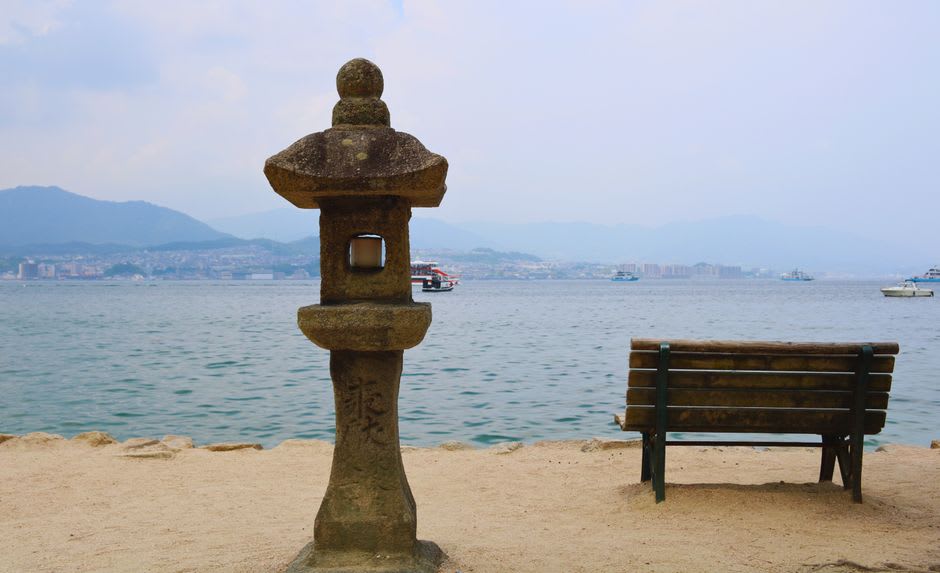
At the mouth of the harbour stands the joyato, a squat stone lantern-lighthouse built in 1859, one of the last of its kind still standing where it was raised. It’s become the emblem of the town, and for good reason: worn granite, a simple flame-housing at the top, the whole thing framed by moored fishing boats and the blue-grey haze of the islands beyond. We sat on the harbour wall near it for a long while doing nothing at all, watching an old fisherman sort his nets and a cat pick its way along the seawall. This is one of the few ports in Japan that has kept the full set of its Edo-period harbour structures — the lantern, the jetty, the boat-slips, the lookout — so it isn’t a reconstruction of an old port so much as an old port that simply never stopped being one.
Sloping Lanes and Temple Views
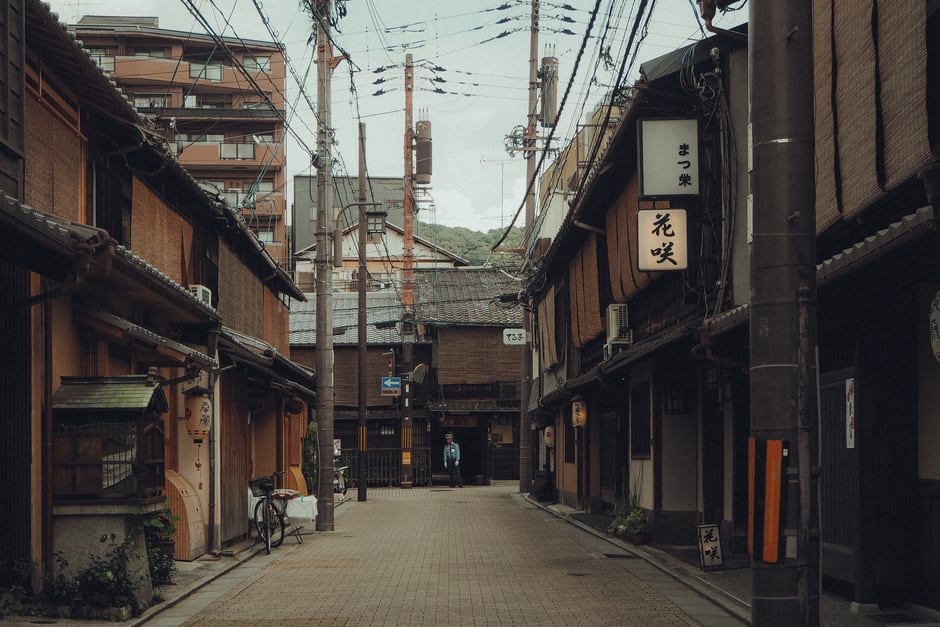
We spent the afternoon climbing the lanes that rise steeply from the water. Tomonoura is a town for wandering on foot, its streets too narrow and tangled for much traffic, opening now and then onto a small shrine, a shop selling homeishu — the local medicinal liqueur, a herb-steeped sweet rice wine that’s been brewed here for centuries and which we dutifully sampled from tiny cups in a centuries-old merchant house. Up a long flight of stone steps we reached Taichoro, a reception hall attached to Fukuzen-ji temple, whose open veranda frames a view of the harbour islands so composed it looks painted — a Korean envoy in the eighteenth century called it the most beautiful scene in the east of Japan, and looking out over that still water and those floating islands, I wasn’t inclined to argue.
The Town That Inspired a Ghibli Film
Part of Tomonoura’s quiet fame is cinematic. Hayao Miyazaki is said to have stayed here while developing Ponyo, and the town’s seawalls, its little harbour, its houses on the water clearly seeped into that film’s seaside world; you feel it walking around, that same gentle, slightly enchanted ordinariness. Parts of a Wolverine film were shot here too, drawn by the same untouched quality. But Tomonoura wears its screen fame lightly — there’s no theme-parkery about it, just a few modest signs and the same fishermen going about their day. We ended the afternoon with tai, the sea bream this coast is famous for, at a small family restaurant near the harbour, and then sat by the water again as the light softened over the islands, in no hurry at all to leave. That, I think, is the whole point of the place.
Getting There
Tomonoura is reached via Fukuyama, a shinkansen stop on the San’yo line between Okayama and Hiroshima. From Fukuyama station, local buses run down to Tomonoura in about thirty minutes, dropping you a short walk from the harbour. The town itself is compact and entirely walkable — leave the car behind if you can, since the old lanes weren’t built for it. It makes an easy half-day trip from Fukuyama, Onomichi, or Hiroshima, but if you can spare a night at one of the small harbour inns, do; Tomonoura is at its best once the day-trippers have gone and it belongs again to the tide and the fishermen.
Keep exploring
More of Chūgoku