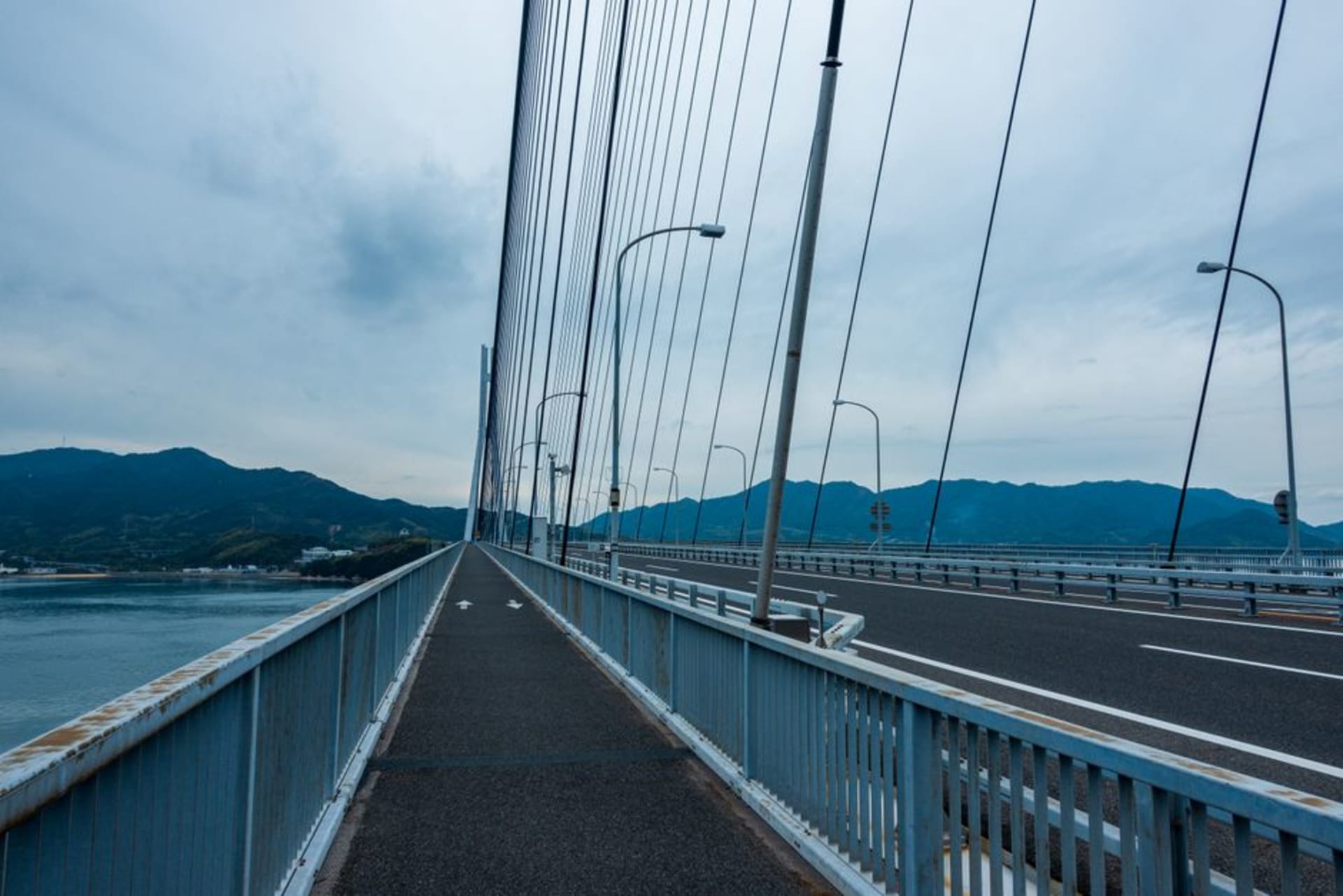
The far western tip of Honshū, a port city that lives and breathes pufferfish and looks across a narrow, ship-thronged strait at Kyūshū. We came to eat the fish that can kill you and stayed for the strange thrill of walking under the sea to another island. The current here runs fast, and so does the history.
Shimonoseki is where Honshū runs out. Stand on its waterfront and Kyūshū is right there across the Kanmon Strait, so close you can read the cranes on the far docks, the water between churning with the wakes of ferries, tankers, and fishing boats all threading a channel barely a kilometre wide. We came here mostly for one reason, and I’ll admit it was a slightly nervous one: fugu, the pufferfish, the notorious delicacy whose organs carry a poison with no antidote, prepared only by licensed chefs. Shimonoseki is the undisputed capital of it. Lia was more relaxed about the whole thing than I was. “People eat it every day,” she said, which was true, and did nothing for me until the first translucent slice was actually in front of us.
The Fish That Bites Back
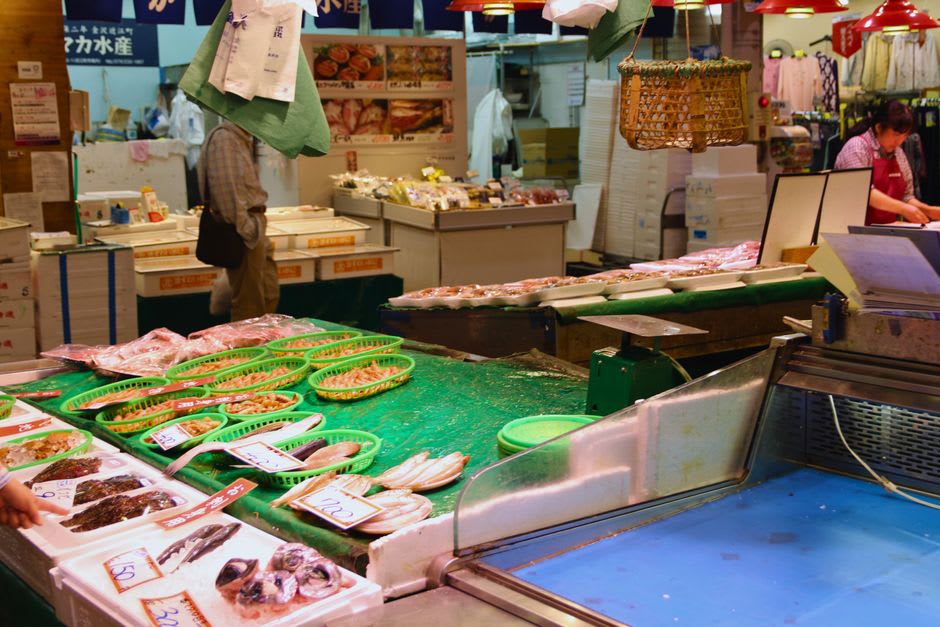
Karato Market on the waterfront is the temple of fugu, and on weekends it turns into a glorious free-for-all — stalls heaped with the day’s catch, and a system where you buy individual pieces of sushi and sashimi on little plates and eat them standing at the water’s edge. We started there, cautiously, with paper-thin fugu sashimi arranged in a flower pattern on the plate, so cleanly cut you could see the design of the dish through the fish. It’s not about bold flavour; it’s about texture, a firm clean bite, and the faint theatre of eating something that commands such respect. Later we sat down properly at a small restaurant for a full fugu course — sashimi, then a hot pot, then the fried pieces — and by the end the fear had melted into simple pleasure, and I raised my glass to a chef I’d never met but trusted with my life.
Walking Under the Strait
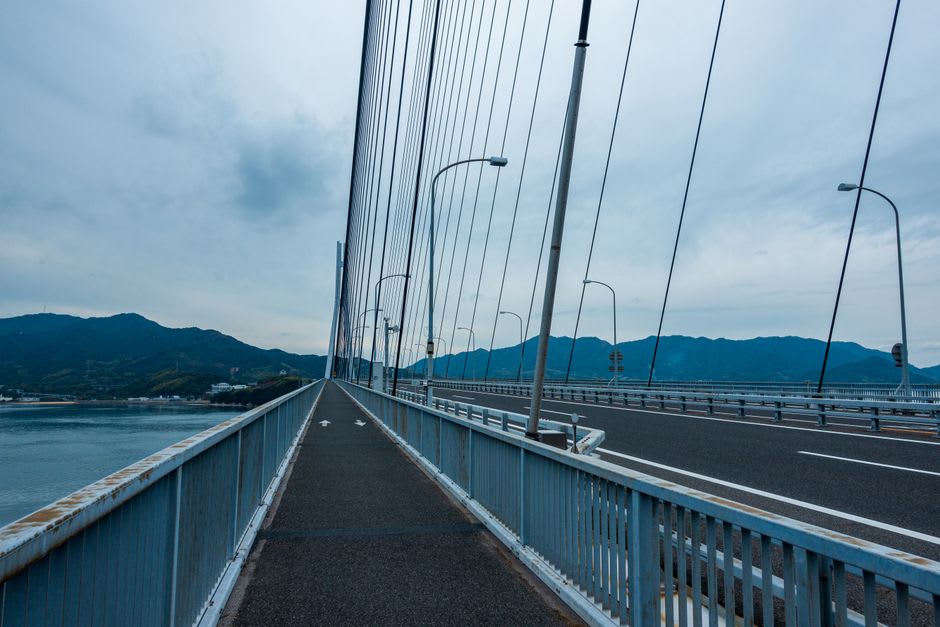
The thing I hadn’t expected to love was the Kanmon Pedestrian Tunnel. Beneath all those ships, cut through the rock under the strait, runs a walking tunnel that connects Honshū to Kyūshū on foot — about seven hundred metres, a fifteen-minute stroll, dropping down by lift on one side and rising on the other in a different region of Japan entirely. There’s a painted line on the tunnel floor marking the boundary between prefectures, and of course we stood astride it and took the obligatory photo, one foot in Yamaguchi, one in Fukuoka. Joggers passed us. An old couple ambled by holding hands. There is something quietly wonderful about walking, unhurried and underground, from one of Japan’s main islands to another while enormous ships pass overhead, and coming up into the sunlight in a whole new place.
Where the Genpei War Ended
Shimonoseki carries heavy history in its water. The Kanmon Strait, here called Dan-no-ura, was the site in 1185 of the final naval battle of the Genpei War, where the Taira clan was destroyed and the child-emperor Antoku drowned rather than be captured — a turning point that ended an era and began the age of the samurai shogunate. On the waterfront near the tunnel, statues commemorate the battle, and up the hill the Akama Shrine, vivid vermilion and shaped like an underwater palace gate, is dedicated to the drowned young emperor. Local legend even holds that the heike crabs of these waters, their shells patterned like scowling faces, carry the spirits of the defeated warriors. Standing at the shrine with the fast grey current below us, Lia and I both felt the strange density of the place — so much beauty and eating and ordinary life going on above so much old sorrow.
Getting There
Shimonoseki is the western terminus of Honshū and well connected: the nearest shinkansen stop is Shin-Shimonoseki, a few minutes by local train from Shimonoseki station, with Hiroshima about an hour away by bullet train and Hakata (Fukuoka) even closer across the strait. Karato Market and the waterfront are a short bus or taxi ride from the station; the Kanmon Pedestrian Tunnel entrance sits further along the shore near Mimosusogawa, reachable by local bus. Come to Karato on a weekend for the full market experience, walk to Kyūshū and back for the sheer novelty, and give the fugu the unhurried evening it deserves.
Keep exploring
More of Chūgoku