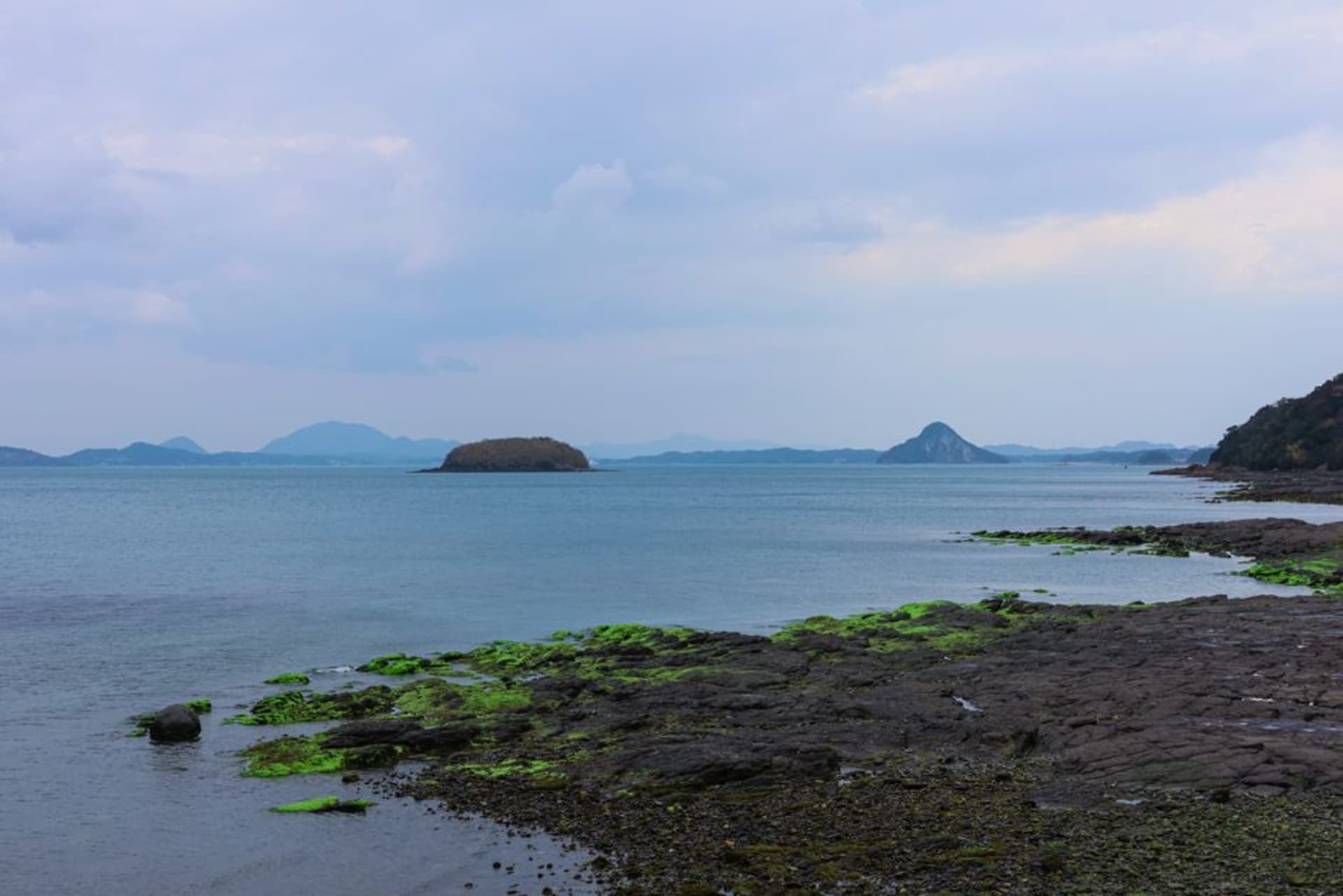
A scatter of remote islands off the Shimane coast, a UNESCO geopark of towering sea cliffs, wild horse and cattle pastures, and a stubborn, proud island culture that still holds bullfights and its own tradition of sumo. Reached only by a long ferry across the Sea of Japan, the Oki Islands feel gloriously, deliberately far from everything. We went to be far from everything, and it worked.
The ferry from Sakaiminato took the better part of the morning, and somewhere in the middle of that grey, heaving crossing the mainland dropped below the horizon entirely and Lia said, half-seasick and half-delighted, that this was the furthest we had felt from anywhere in a long time. That was the point. The Oki Islands are not on the way to anything — you go there because they are hard to reach, and the difficulty is part of what preserves them. When Dogo, the largest island, finally rose out of the swell, green and cliff-edged and topped with cloud, the whole small crowd on deck went to the rail together, as if pulled. We stayed at a family-run minshuku that night where the owner apologised that dinner was “only what the sea gave us today,” which turned out to mean a table so covered in fish we could barely find the rice.
The cliffs of Kuniga
The image that sold us on the Oki was the Kuniga coast on Nishinoshima, and it did not lie. We took a small inter-island ferry across the calm inner sea — the islands cradle a drowned caldera, so the water between them is startlingly still — and then walked the cliff path above Matengai, a wall of rock that falls some 250 metres straight into the sea. Horses and cattle graze right up to the edge here, unfenced, utterly unbothered, and we spent an absurd amount of time watching a foal pick its way along ground that made my stomach lurch. Lia lay on her front near the drop to look over, which I could not bring myself to do, and reported back that the sea below was the deep bottle-green of very old glass.
Sumo, bulls, and island pride
What surprised me most about the Oki was how fiercely the islands hold their own culture. This is a place with its own sumo tradition — matches held through the night at shrine festivals, where, unusually, the winner sometimes lets his opponent take the second bout, a gesture of shared respect that says a great deal about the temperament here. There is bull-sumo too, the Oki tradition of ushi-tsuki, brought over by exiled nobles centuries ago. We didn’t catch a match, but a man at a tiny izakaya spent an hour explaining the whole culture to us over shochu, drawing the ring on a napkin, proud in a way that had nothing to do with performing for visitors. He’d never left the islands, he said, and couldn’t imagine why he would.
Slow days and the Rosoku-jima sunset
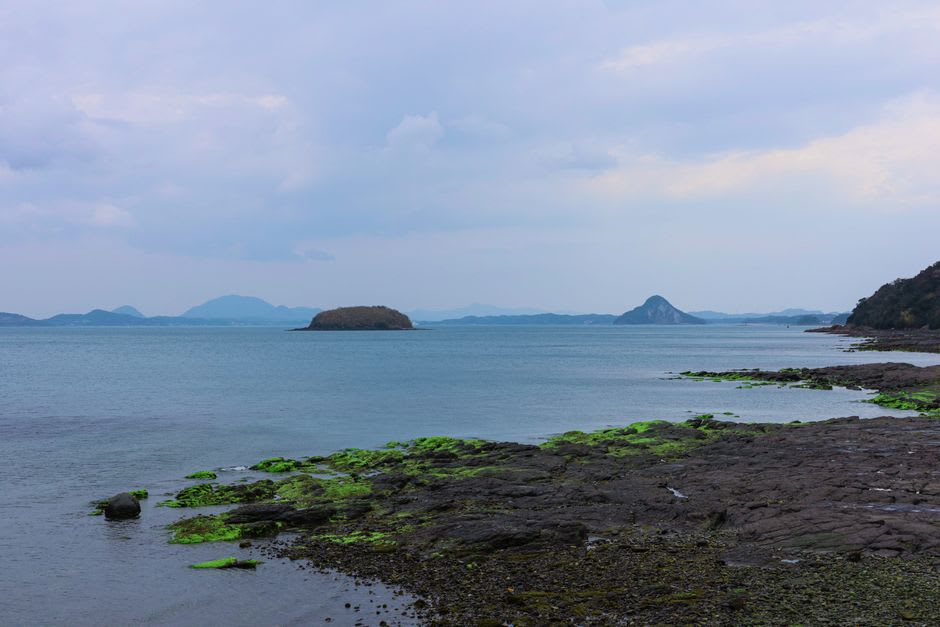
Time works differently out here. We fell into the island rhythm fast — long breakfasts, a rented bicycle, an afternoon doing nothing but watching fishing boats. On our last evening we joined a small boat that goes out at dusk to see Rosoku-jima, the “Candle Rock,” a slender sea stack that, when the sun sinks to exactly the right point behind it, appears to be crowned with a single flame. It is a trick of alignment and it depends entirely on the weather, and it is completely worth the gamble. When the flame lit — that brief moment when the sun balanced on the rock’s tip — the whole boat gasped as one, and Lia gripped my arm hard enough to leave a mark she still teases me about.
Getting There
The Oki Islands lie in the Sea of Japan off Shimane Prefecture. The main ferries run from Shichirui and Sakaiminato ports on the mainland, taking roughly two to two and a half hours by regular ferry to the islands; a faster hydrofoil runs in the warmer months and roughly halves the time. Once there, smaller ferries connect Dogo with the Dozen group of islands, including Nishinoshima. Sailings drop off sharply in winter and can be cancelled in rough weather, so build slack into your plans and do not treat any onward connection as guaranteed — the sea, out here, still has the final word.
Keep exploring
More of Chūgoku