Motonosumi
"A hundred and twenty-three red gates pouring down a cliff into a blue you could fall into."
A stretch of the northern Yamaguchi coast where 123 vermilion torii gates spill down a green headland toward a churning blue sea. One of Japan's most photographed shrine walks, and yet somehow still wild at the edges, wind and spray and colour all at once.
We reached Motonosumi late in the morning, after a long empty coast road with almost no other cars, and I remember the exact moment the shrine came into view because Lia gripped my arm. From the clifftop path the torii don’t look like a line of gates so much as a red river — 123 of them, vermilion against the impossible green of the headland and the deep blue of the Japan Sea crashing below, tumbling down the slope in a tight ribbon toward the water. CNN once named this one of Japan’s most beautiful places, and for once I understood the clickbait. We stood at the top for a long while before walking down through them, the wind pushing hard off the sea, the red gates framing that blue over and over.
Walking down through the gates
The path threads directly through all 123 torii, and walking it is a physical thing — the gates are set close, so you pass through them in a rhythm, red beam overhead, red beam overhead, the sea getting louder with each step down the headland. They were built starting in 1955, the story goes, after a local fisherman dreamed that a white fox spirit asked for a shrine here; the god enshrined is one of prosperity and good fortune, and the whole cascade was completed over decades. Lia counted the gates under her breath on the way down and lost her place laughing somewhere in the seventies. At the bottom the land drops away to black rock and white spray, and you turn to look back up at the red climbing the green cliff behind you. It’s better from below.
The offering box you’ll never reach
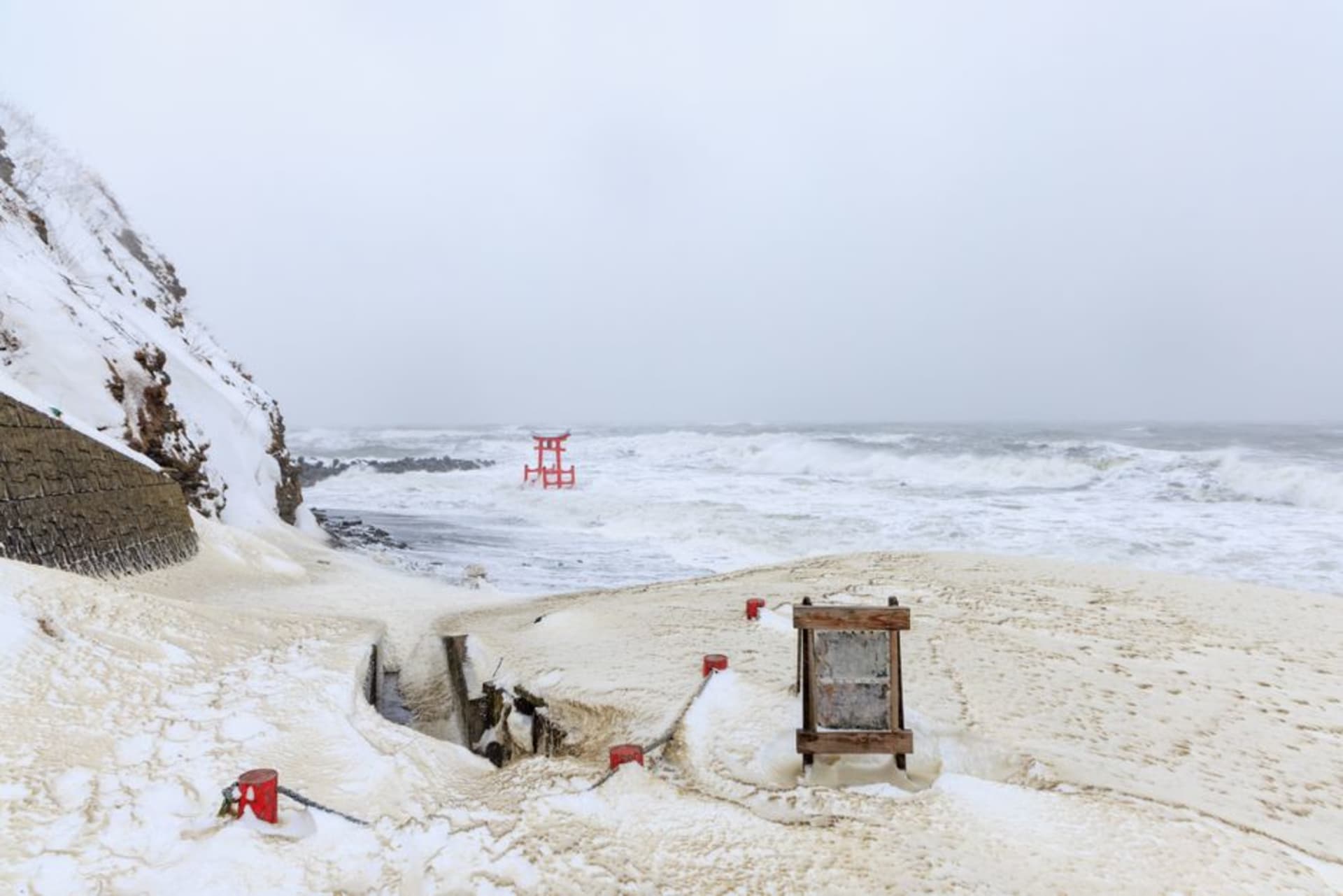
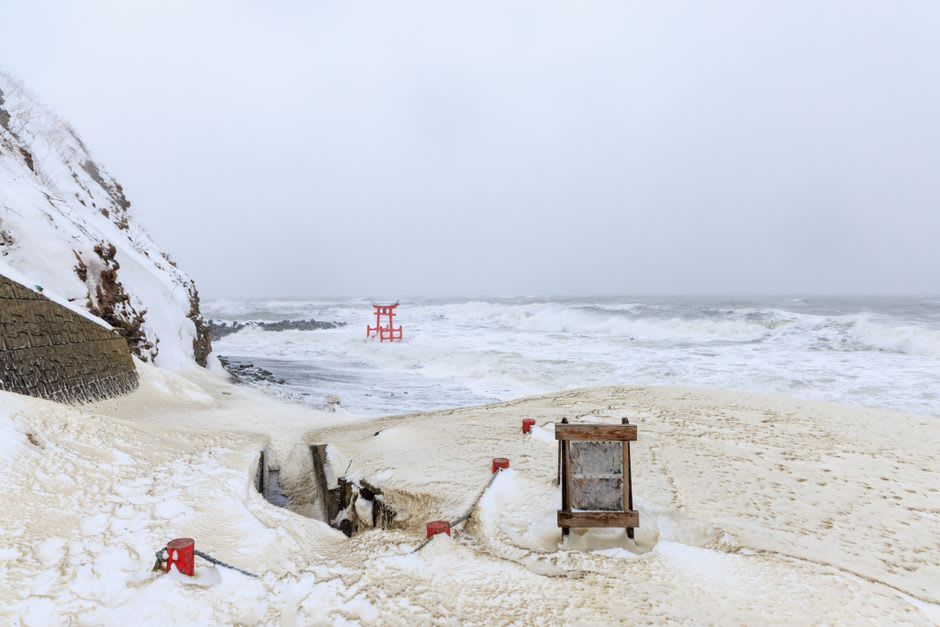
At the top of the shrine stands the strangest and most delightful thing here: a torii gate about five metres up with a small offering box, a saisen-bako, mounted on its very top crossbar. The custom is to throw your coin upward and try to land it in the box — success supposedly means your wish comes true. It is fiendishly hard. We watched a queue of people fling coins that pinged off the timber and rained back down onto the grass, everyone laughing, and then of course tried ourselves. Lia missed six times. My single coin, thrown with no technique whatsoever, went in on the first attempt, which I have never once let her forget. A small crowd actually cheered. Whatever I wished for, I’m still waiting.
The blowhole and the wild coast
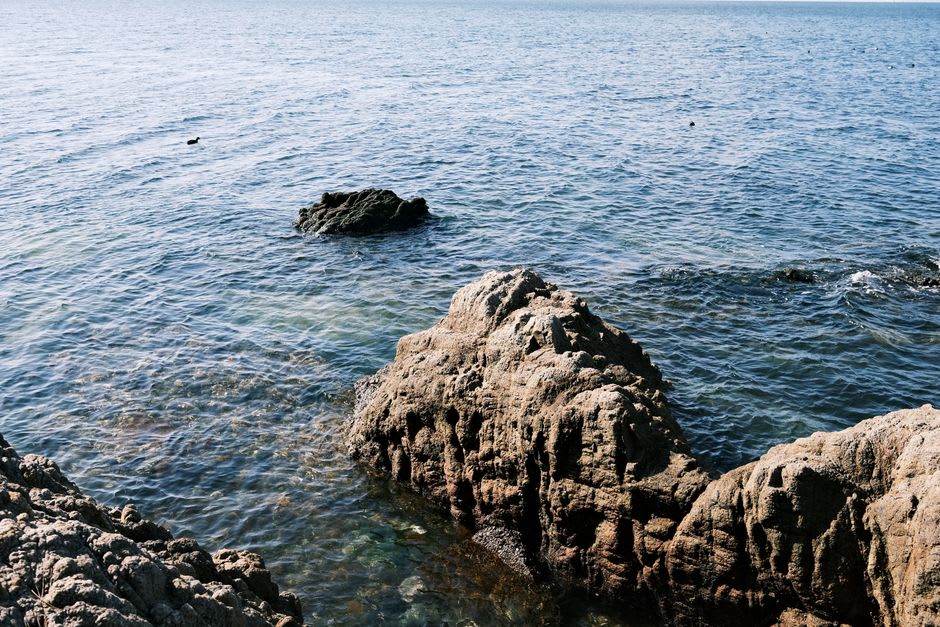
Just along the headland from the shrine is the Ryugu no Shiofuki, the “dragon’s blowhole” — a fissure in the rock where, when the swell is up and the wind is right, the sea forces a jet of spray as high as thirty metres into the air. We got lucky with a rough day and watched it erupt again and again, the ground trembling faintly underfoot. This whole coast of northern Yamaguchi is like that: raw, sea-carved, largely undeveloped, the kind of shoreline you’d expect on some remote Atlantic edge rather than an hour from a bullet-train line. We ate grilled squid from a stall near the car park, the wind whipping the smoke sideways, and agreed it was the most dramatic single spot of our whole trip through the west.
Getting There
Motonosumi is on the remote northern coast of Yamaguchi, and there’s no way around needing a car — public transport here is minimal. It’s roughly a 90-minute drive from Shimonoseki or an hour from Hagi, along quiet, scenic coast roads. There’s a free car park right at the shrine. If you’re carless and determined, some seasonal sightseeing buses run from Nagato-furuichi station, the nearest rail stop, but check schedules well ahead. Pair it easily with Tsunoshima to the west for a full day of Yamaguchi’s spectacular coastline. Go on a windy day if you want the blowhole at its best.
Keep exploring
More of Chūgoku