Miyajima
"At high tide the gate lets go of the earth, and the whole island seems to lift with it."
A sacred island in Hiroshima Bay, where a great vermilion torii gate appears to float on the tide and a shrine stands on stilts above the sea. Tame deer wander the lanes, Mount Misen rises behind, and at dusk the whole island turns to gold. One of Japan's oldest holy places.
The ferry across from the mainland takes ten minutes, and for most of them the great gate is just a small vermilion mark on the water ahead. Then it resolves — the torii of Itsukushima, standing out in the bay on its own, apparently unmoored from any land, and Lia and I both stopped talking. The island is properly called Itsukushima, though everyone says Miyajima, “shrine island,” and it has been considered sacred for so long that for centuries commoners were not permitted to set foot on it. You feel some of that even now, stepping off the ferry: the sense of arriving somewhere that was holy long before it was a destination.
The Floating Torii and the Shrine
The famous gate belongs to Itsukushima Shrine, which is built out over the water on wooden piles so that at high tide the whole complex — the shrine and its great torii both — appears to float free of the land. This was deliberate: the island itself was considered so sacred that the shrine could not stand on its soil, so it was built above the sea instead. At high water we watched it from the shore, the vermilion posts doubled in the still bay; at low tide, hours later, we walked out across the wet sand to stand directly beneath the gate, which up close is enormous, its main pillars whole camphor trees.
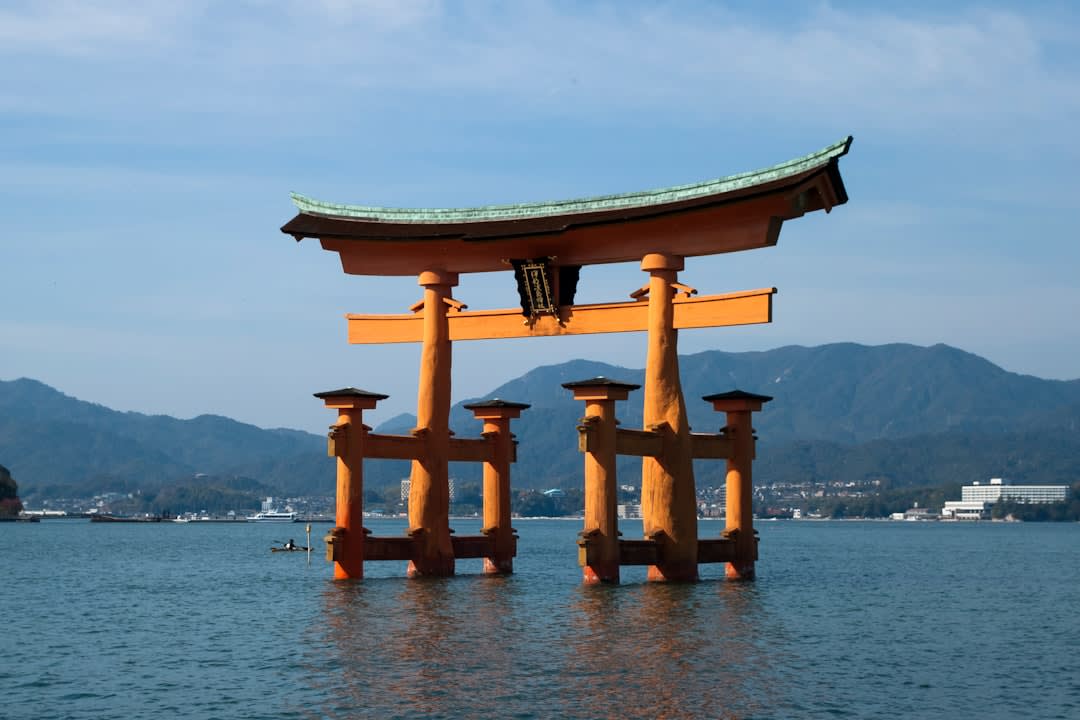
We timed our day around the tide chart posted at the ferry terminal, which I would tell anyone to do — the island is a completely different place at high and low water, and if you can, you want to see both. Between the two we let the deer investigate us.
The Deer and the Lanes
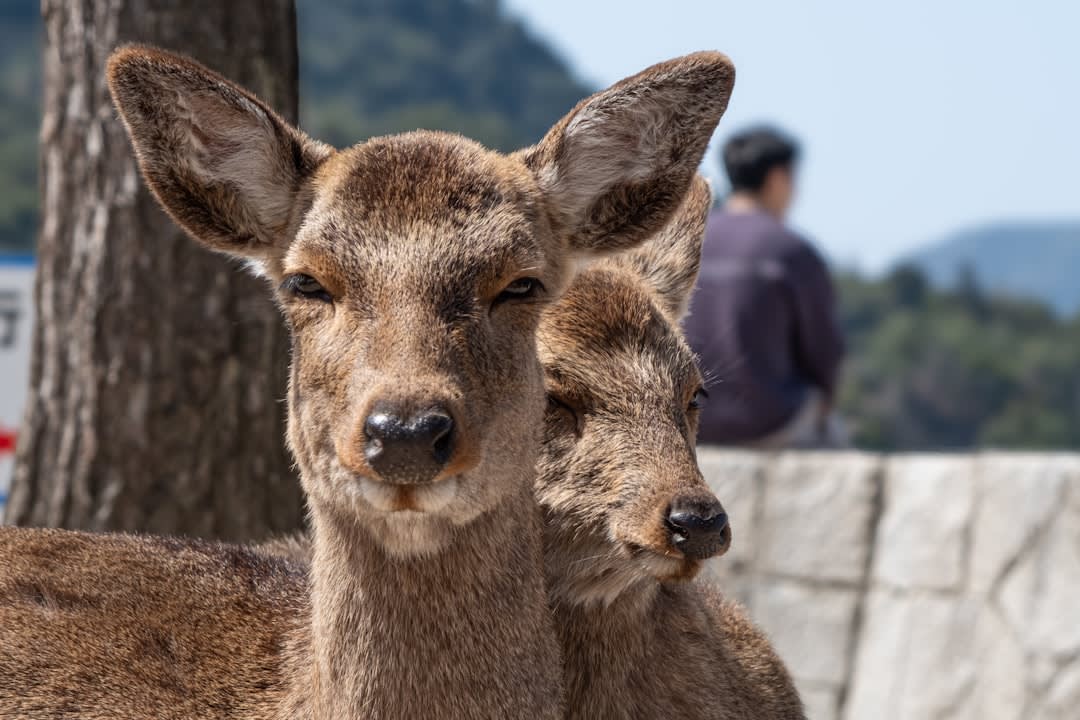
The island’s deer are tame to the point of impudence. They wander the streets and the shoreline freely, considered messengers of the gods and thoroughly aware of their own untouchable status, and they will nose calmly through your bag if you let your guard down. One relieved a man near us of an entire map. Lia adored them; I kept a wary hand on my pockets.
The lanes back from the water are lined with little shops grilling momiji manjū — maple-leaf-shaped cakes filled with red bean — and shucking oysters over coals, Hiroshima Bay being famous for them. We ate oysters standing up, dripping and hot, and bought a box of the warm little cakes that did not survive the afternoon.
Mount Misen at Dusk
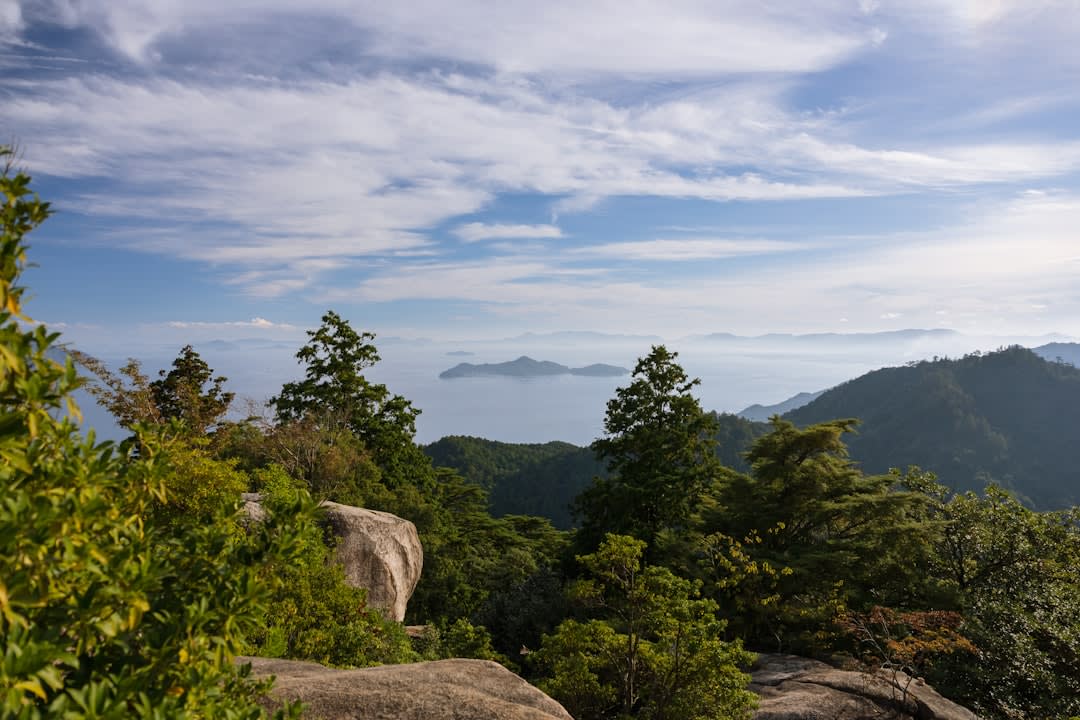
Behind the shrine the island rises steeply to Mount Misen, its sacred peak, and we took the ropeway up and then scrambled the last rocky stretch to the summit on foot. From the top the whole of the Seto Inland Sea opens out below you, a scatter of green islands in silver water, and there is an ancient hall where a flame is said to have burned continuously for over a thousand years.
We came down as the light was going, and stayed on the island past the day-trip crowds to watch the torii at dusk. As the sun dropped, the gate and the shrine were lit and the water went from silver to gold to deep blue, and the whole thing turned quietly, unarguably magical. Lia said it was the most beautiful hour of our whole month in Japan. Standing there with the tide coming in around the glowing gate, I did not argue.
Getting There
Miyajima lies in Hiroshima Bay and is reached by a short ferry from Miyajimaguchi, itself about thirty minutes from central Hiroshima by JR San’yō line train or streetcar. The JR-operated ferry is covered by the Japan Rail Pass. Boats run frequently and the crossing is ten minutes. Everything on the island is walkable from the pier. Check the tide table before you go and, ideally, stay into the evening or overnight — most visitors leave by late afternoon, and the island after dark, with the torii lit and the deer settling down, belongs to almost no one.
Keep exploring
More of Chūgoku