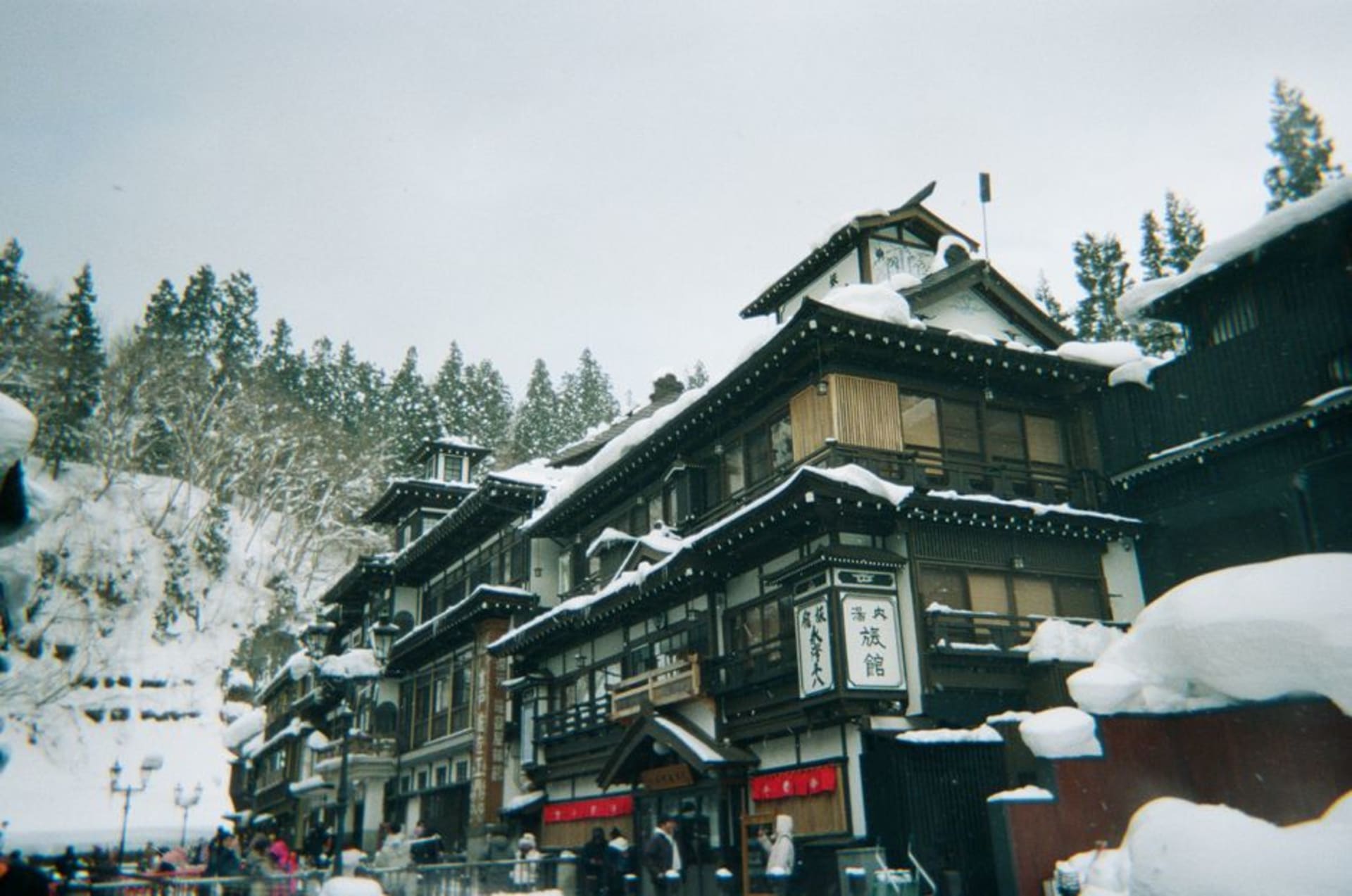
A small Tottori hot-spring town where the river runs warm and the water is faintly radioactive in the way that, they insist, does you good. Above it clings the Nageiredo, a wooden hall bolted impossibly into a cliff face on the sacred flank of Mount Mitoku. It is a place that asks you to bathe, then climb, and mostly to slow down.
We arrived in Misasa in the flat gold light of late afternoon, and the first thing Lia noticed was the smell — that mineral, faintly sulphurous breath that rises off any good onsen town, mixed here with woodsmoke and river damp. We had not booked ahead. We rarely do, and it has cost us before, but that evening the woman at a small ryokan by the water simply nodded us in and showed us a room where the tatami still held the warmth of the day. Below the window the Misasa River slid past, and someone had built a little open bath right at its edge, half public, half not, where two old men sat up to their shoulders talking about nothing. Lia looked at me. We both understood we would not be leaving early.
The water that is supposed to be good for you
Misasa’s whole reputation rests on radon — the water carries a trace of it, and the town has spent a century politely insisting this is medicine rather than menace. I am a skeptic by temperament, but I will say this: after an hour in the riverside bath, the tension I carry in my shoulders like a second rucksack was simply gone. We soaked as the light drained out of the valley and the inn lanterns came on one by one along the far bank. An older woman lowered herself in beside Lia, sighed the exact sigh we had sighed, and the three of them fell into that wordless companionship that hot water seems to manufacture. There is a free footbath in the middle of town too, the Kabuyu, where we sat later with wet hair and cold beer, watching the town do its slow evening rounds.
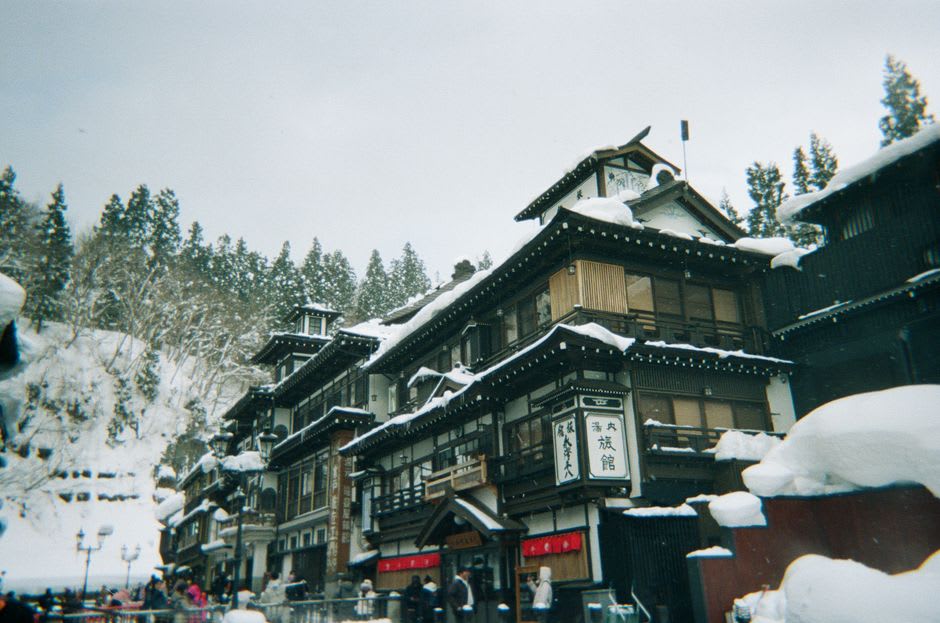
Climbing to the Nageiredo
The next morning we did the thing everyone comes to do and few describe honestly: we climbed Mount Mitoku to the Nageiredo. It is not a stroll. The temple at the base, Sanbutsu-ji, checks your shoes, refuses you if your soles look treacherous, and makes you climb in pairs — sensible, because the path is roots and chains and bare rock hauled up by hand. Lia went ahead, laughing, muddy to the elbow. Then, near the top, you round a shoulder of the mountain and there it is: a small wooden hall wedged into a hollow in the cliff, held up by spindly legs, looking for all the world as though it were thrown there and stuck. Legend says a monk flung it into place with prayer. Standing there, breath ragged, I found the legend easier to believe than the engineering.
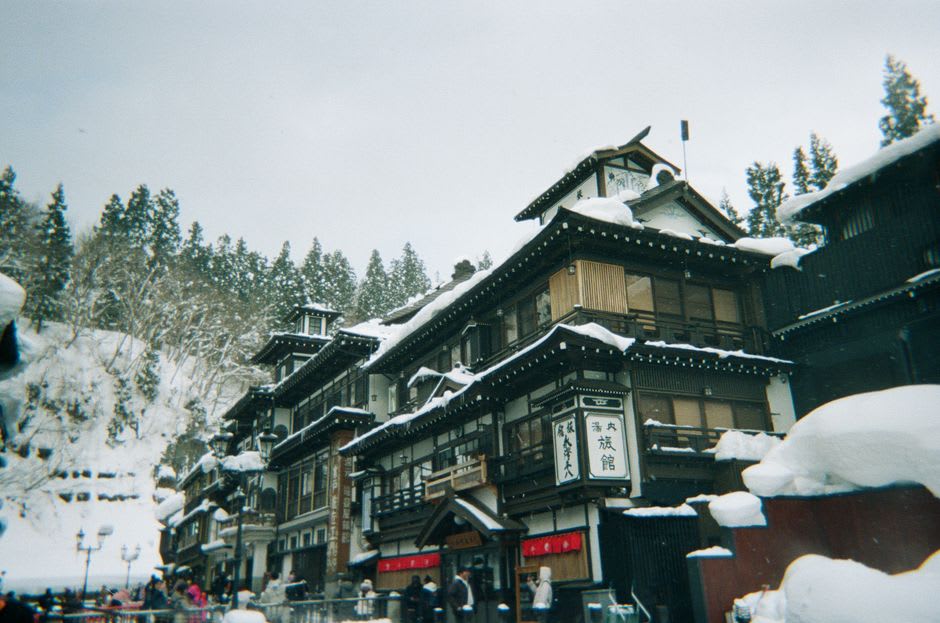
Coming back down to ordinary things
What I remember most is the descent — how the adrenaline of the climb gave way to something quieter, and how hungry we were. Back in town we found a tiny place serving Tottori’s beef and river fish, the owner grilling over charcoal while a baseball game murmured on a television nobody watched. Misasa is not a place of monuments and ticket queues. It is a place of small pleasures stacked one on the next: the water, the walk, the meal, the second bath before bed because why not. Lia said it felt like the town had been designed by someone who understood tiredness as a thing to be honoured rather than fought.
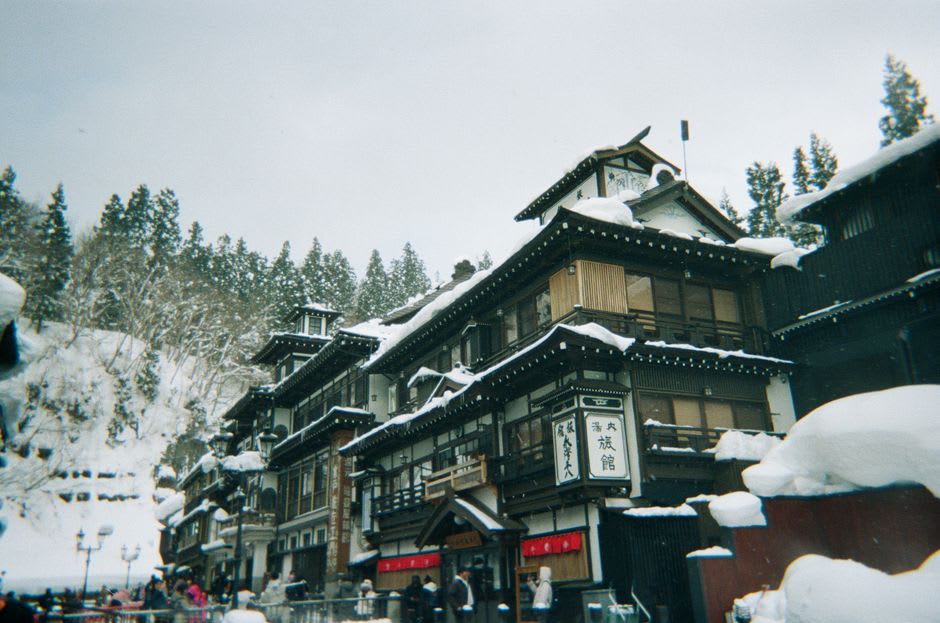
Getting There
Misasa sits inland in Tottori Prefecture. The usual approach is to take the train to Kurayoshi Station on the San’in Line, then a local bus for about twenty minutes up the valley into the onsen town — buses are infrequent, so we checked the return times before we did anything else. If you are driving, it is well signposted off the main roads, and most ryokan have parking. For the Nageiredo climb, go early, wear real shoes, and be prepared to be turned back if the weather has made the rock unsafe; the temple takes no chances, and neither should you.
Keep exploring
More of Chūgoku