Matsue
"A city built around a lake and a castle, where a homesick Irishman a century ago found the Japan he'd been looking for."
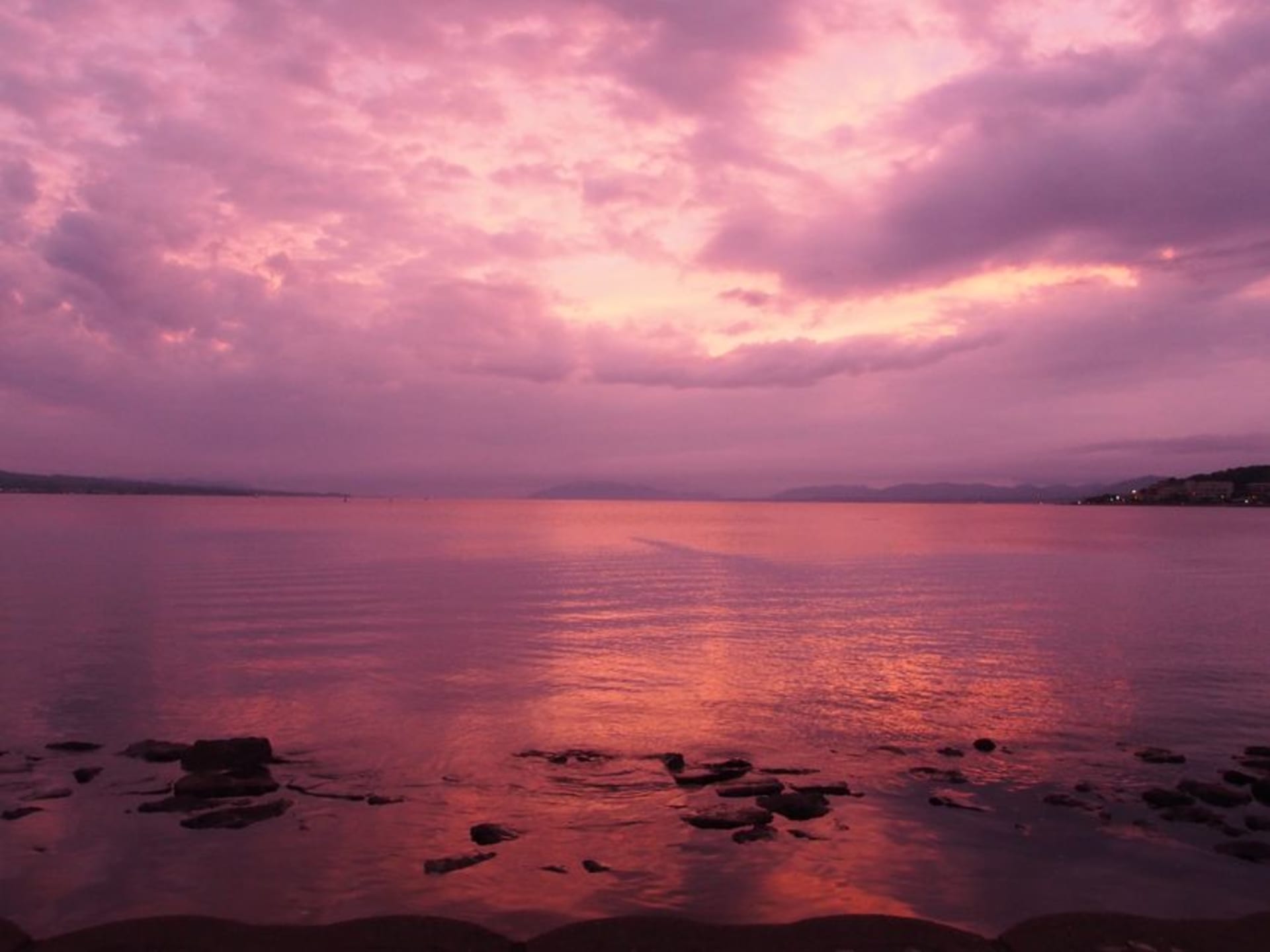
A castle town on the shores of Lake Shinji, famed for its lake sunsets, a rare original wooden keep, a preserved samurai quarter, and the ghost-hunting writer Lafcadio Hearn who made it his adopted home.
I came to Matsue partly for a dead writer. Lafcadio Hearn — half-Greek, half-Irish, wholly restless — washed up here in 1890 as a schoolteacher and fell so completely for the place that he took Japanese citizenship, married a samurai’s daughter, and spent the rest of his life setting down its ghost stories and half-lit corners for the outside world. Lia teased me for planning a stop around a Victorian ghost-hunter, but Matsue turned out to be exactly the kind of town he described: watery, atmospheric, faintly melancholy, and quietly one of the loveliest small cities we found in Japan.
The lake and its sunset
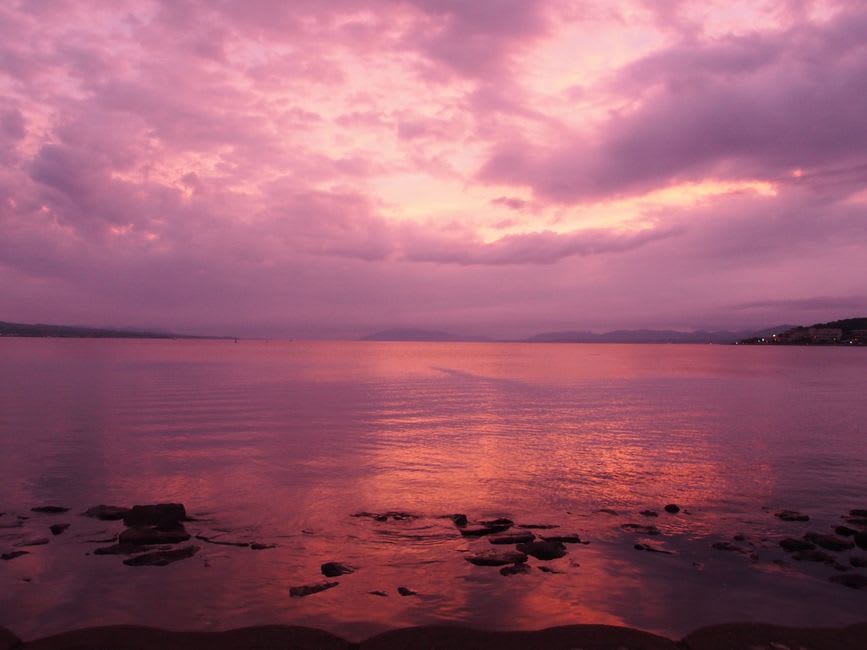
Matsue sits between two bodies of water, but the one that matters is Lake Shinji, a broad brackish lagoon along the city’s western edge. Its sunsets are locally famous — famous enough that the tourist office publishes the times and locals gather along the shore to watch. There’s a small pine-clad island offshore, Yomegashima, that sits just so in the frame, and when the sun goes down behind it the whole lake turns to hammered copper. We walked out to the lakeside promenade with a can of coffee each and joined the loose crowd of people simply standing and looking, and it was as good as promised: the island black, the water burning, a fishing boat cutting a slow line across the light. The lake is also where the local delicacies come from — the “seven treasures of Shinji,” including a tiny sweet clam that turned up in our soup that evening.
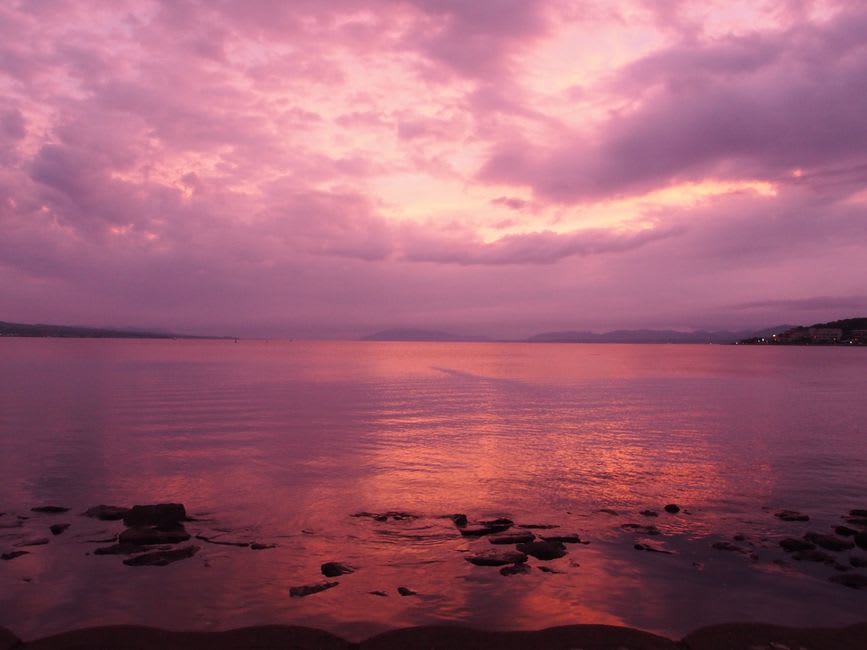
We ate that night on the lake side of town — grilled eel and the little Shinji clams steamed in sake — and walked back along the water in the last blue light.
An original castle
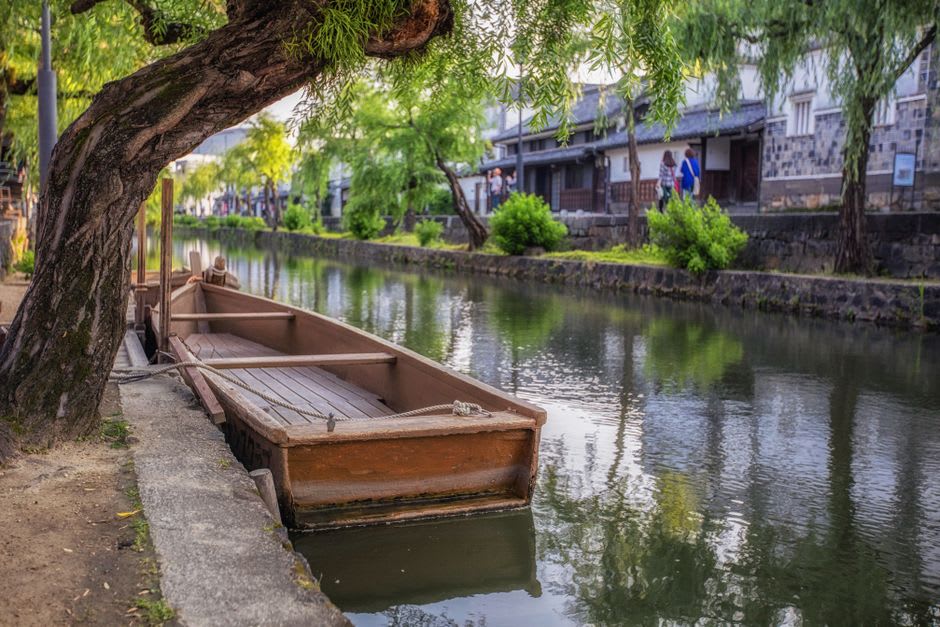
Matsue Castle is one of only a dozen in Japan to keep its original wooden keep — not a concrete postwar reconstruction but the real thing, built in 1611 and standing ever since. It’s black-boarded and severe, with a gabled roof shaped, they say, like a plover in flight, and inside it’s all bare dark timber, steep ladder-stairs and the honest smell of old wood. You climb in socked feet to the top floor, where a wraparound window frames the lake and the grey roofs of the town. Because so few originals survive, there’s a particular charge to climbing a keep that samurai actually climbed, the boards worn smooth, the whole structure creaking gently around you. We took the little pleasure boat around the castle moat too, ducking flat under the low bridges while the boatman sang, which was more charming than I’d expected to find it.
The wide moat and old stone ramparts make the whole castle district feel unusually intact, a green and watery quarter in the middle of the city.
Samurai lanes and Hearn’s ghosts
North of the castle runs Shiomi Nawate, a preserved samurai street shaded by old pines, earthen walls on either side and, behind one of them, the modest house where Lafcadio Hearn lived. It’s kept much as it was, with the little garden he wrote about lovingly, and next door a museum lays out his strange wandering life and his enduring affection for this town. Reading his descriptions of Matsue’s mist and lantern-light and then stepping straight back out into the actual lanes is a fine, doubled sort of pleasure. Lia, who’d started the trip skeptical of my ghost-writer, came out of the house won over. We walked the samurai street slowly afterwards, the light coming green through the pines, and it was easy to see what had held him here.
Hearn is buried in Tokyo, in the end, but Matsue is where he’s remembered, and the town wears him gently, the way it wears everything — without fuss, half in shadow, beside the water.
Getting There
Matsue is the capital of Shimane, on the San-in coast facing the Sea of Japan. It’s reached by the Yakumo limited express from Okayama (about two and a half hours), which connects to the Shinkansen network, or by air via nearby Izumo Airport, or on the overnight Sunrise Izumo sleeper from Tokyo. The castle, samurai quarter and Hearn’s house cluster together within walking distance north of the centre. Pair it with Izumo Taisha, forty minutes west, for a slow couple of days on a coast few foreign visitors reach.
Keep exploring
More of Chūgoku