Izumo
"A shrine so old the rest of Japan changes its calendar around it — the month the gods leave home to come here."
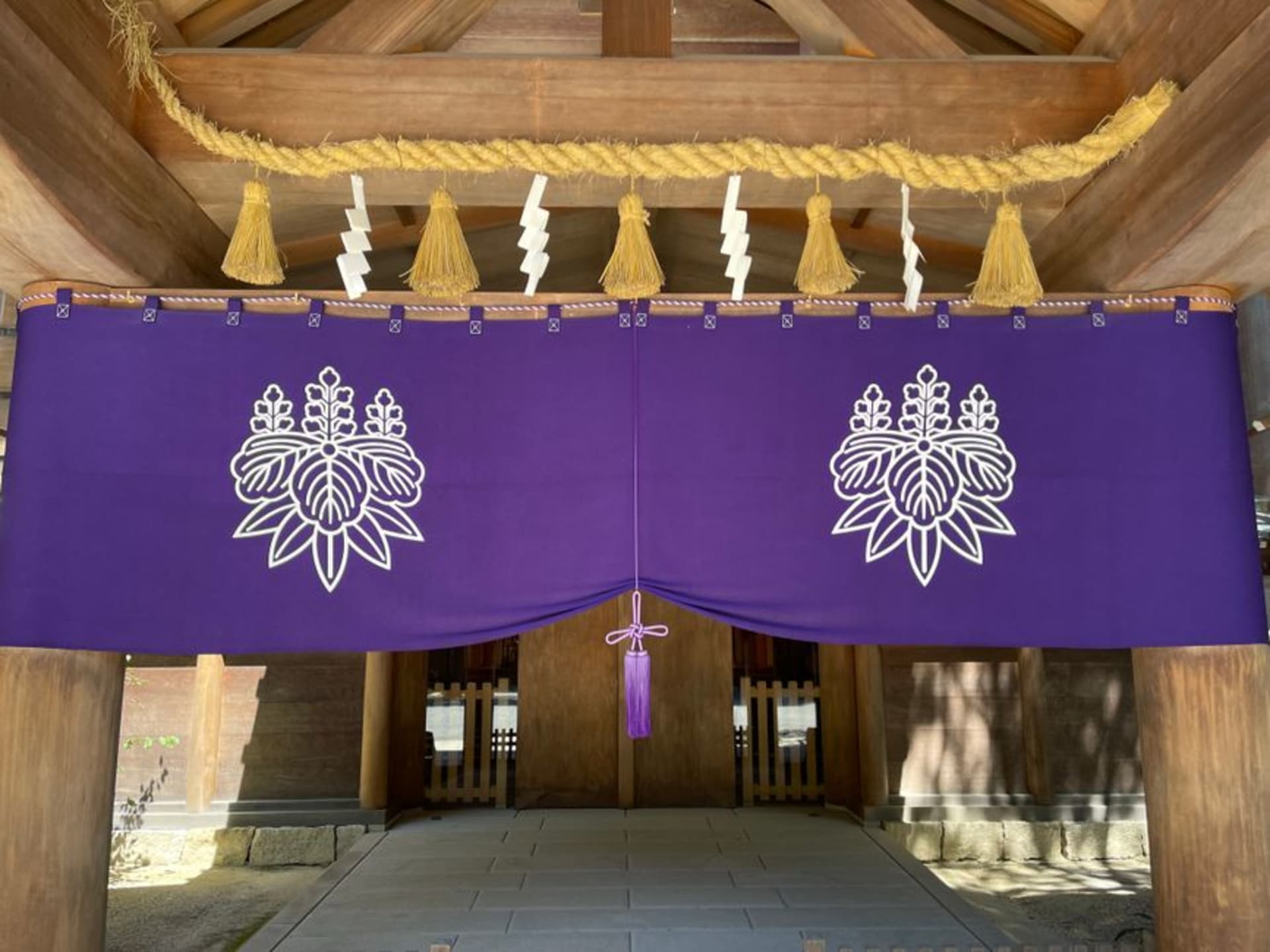
One of Japan's oldest and most revered shrines, its hall hung with a colossal rope of twisted straw, on a wild stretch of Shimane coast where the gods are said to gather each autumn. Sunsets over the Sea of Japan at Inasa beach.
There’s a month in the old Japanese calendar called kannazuki, the “month without gods,” when the deities are said to leave their shrines all across the country. Everywhere, that is, except Izumo — where the same month is called kamiarizuki, the “month with gods,” because this is where they all come. Lia and I arrived in ordinary July, no gods in transit, but the idea stayed with me the whole time we were there: that this quiet corner of the Shimane coast is, in the deep grammar of the country, the one place the whole pantheon calls home.
Izumo Taisha
Izumo Taisha is among the very oldest shrines in Japan — older than written record can quite pin down, tangled up in the founding myths of the country itself. You approach down a long pine-lined avenue that slopes gently downhill, unusually, toward the sanctuary. What stops you is the shimenawa, the sacred rope of twisted rice straw slung beneath the eaves of the prayer hall: not the modest cord you see at most shrines but a monstrous, tapering thing, thick as a tree trunk, coiled and heavy, one of the largest in Japan. Standing under it you feel its weight physically. At Izumo you also clap four times instead of the usual two — twice for yourself and twice, they say, for your partner — and Lia and I did it side by side, which for a shrine dedicated to the god of marriage and good relationships felt like the correct thing to do.
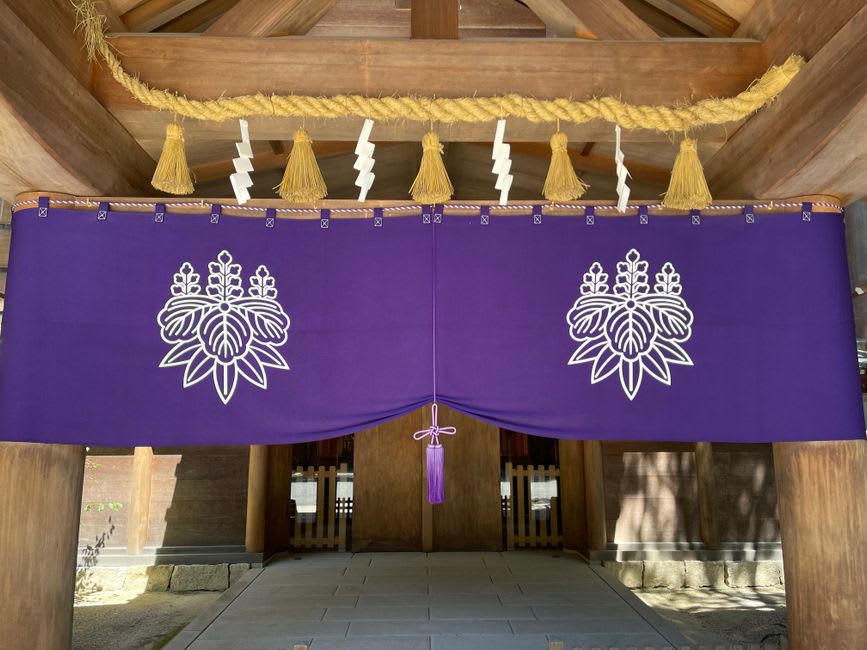
Behind the fence stands the main hall itself, thatched and steep-roofed in the ancient taisha-zukuri style, rebuilt over centuries but faithful to a form that predates the temples of Kyoto by a long way. You can’t go in — few can — but you feel its age through the palings.
The month of the gods
The myth is worth knowing, because it’s everywhere here. Each autumn, the story goes, the eight million gods of Japan travel to Izumo to hold council — and part of what they decide is human relationships, who should be bound to whom. Along one flank of the shrine stand two long, low buildings, the jūkusha, said to be the lodging houses where the visiting gods stay during their stay. We walked past them slowly. There’s a particular hush to Izumo, a sense of somewhere that matters enormously in a register you can’t quite access as an outsider, and I found I liked not fully understanding it. A priest crossed the gravel in white and pale blue and the whole place seemed to hold its breath.
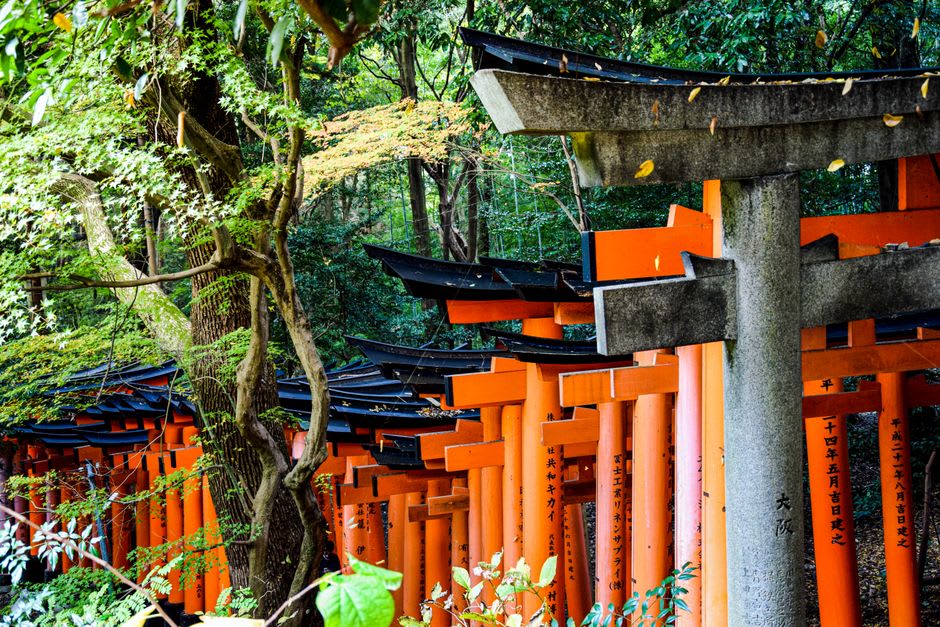
We bought a paper fortune and a small charm for our relationship, because when in the house of the marriage god you do as instructed, and Lia tied the fortune to the rack with all the others fluttering white in the sea wind.
Inasa beach and the coast
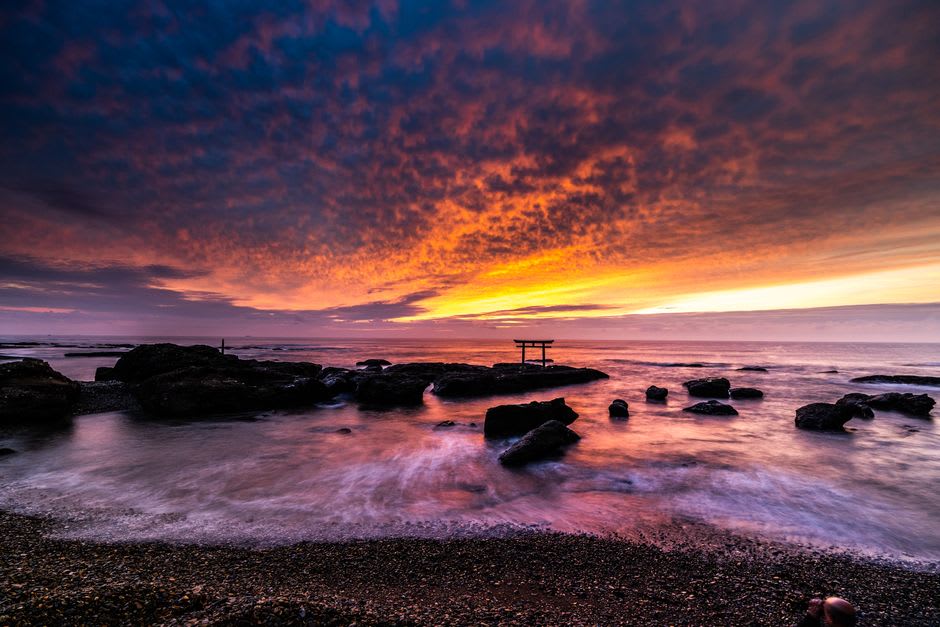
A short walk west of the shrine the land runs out at Inasa no Hama, the beach where — the myth again — the gods are received when they arrive by sea each autumn. A single small rock crowned with a torii stands offshore. We came at the end of the day, and Izumo gave us the thing this coast is quietly famous for: a Sea of Japan sunset, the whole western sky going molten, the torii rock a black silhouette against it, the water flat and burning. There were maybe a dozen people on the sand, mostly locals, nobody talking much. It’s a wild, open coast out here, far from the tourist rivers of Kyoto and Tokyo, and the emptiness is part of the gift.
Afterwards we walked back into town in the blue dusk and ate Izumo soba — served cold in stacked little lacquer rounds, a local specialty — and I thought that for a place at the mythological centre of a whole country, it wore its importance very lightly.
Getting There
Izumo sits on the San-in coast in Shimane, one of the least-visited stretches of mainland Japan. Izumo Airport has flights from Tokyo and Osaka; by rail it’s reached via Okayama and the Yakumo limited express to Matsue, then a local line, or on the overnight Sunrise Izumo sleeper train from Tokyo, which terminates here. From Izumo-taisha-mae station a short walk brings you to the shrine avenue. Pair it easily with Matsue, forty minutes east along the lake, for an unhurried couple of days on a coast most visitors never reach.
Keep exploring
More of Chūgoku