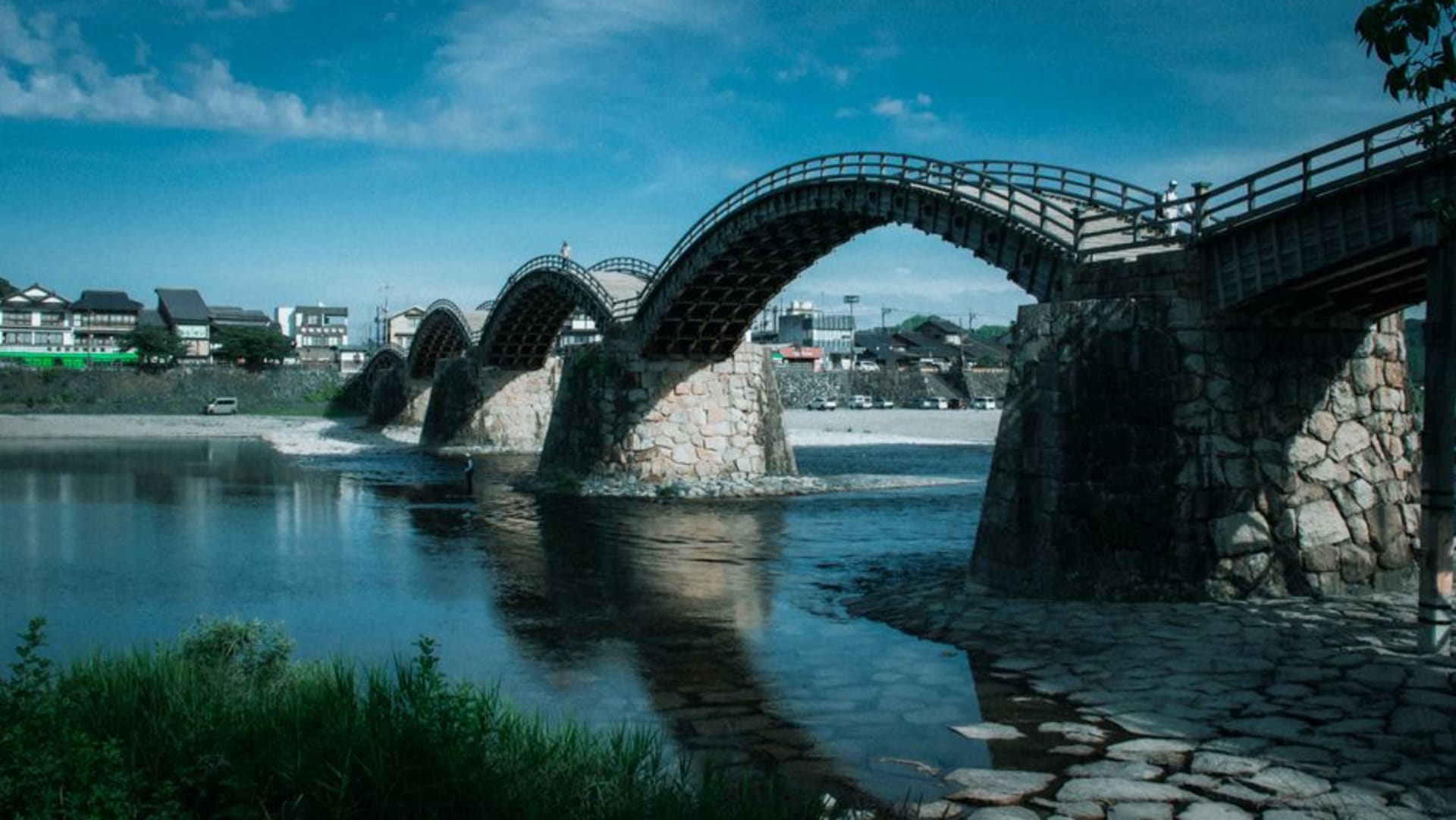
Iwakuni
"Five arches, no nails, and a river running clear beneath — someone once solved a flood with pure elegance."
A Yamaguchi town where five wooden arches leap the Nishiki river in a single graceful line, and a small white castle keeps watch from the hill above. Cherry trees crowd the banks, the water runs clear over pale stones, and the whole scene looks composed rather than built.
We came to Iwakuni almost by accident, on a slow train from Hiroshima that we had boarded mostly to escape the city for an afternoon, and I have thanked that impulse ever since. You walk down from the little station, the streets widen, and then the Nishiki river opens out ahead of you — broad, shallow, running clear over a bed of pale stones — and stretched across it is the Kintaikyō, five perfect wooden arches rising and falling in a line like something drawn rather than constructed. Lia stopped on the embankment and just looked. The bridge has been rebuilt more than once since the seventeenth century, most recently after a flood swept it away, but the design has never changed, and standing there you understand why nobody dared improve it.
Crossing the Kintaikyō
You pay a small toll at a wooden booth and step onto the bridge itself, and the crossing turns out to be surprisingly physical — each arch climbs steeply and then drops, so you walk it in a series of ups and downs, the timber ribs curving away beneath your feet. It was built without a single central pillar in the water, five spans leaping from stone piers so the river could rage through in flood without tearing the bridge down. Halfway across I stopped to look down through the slats at the current, and a heron stood motionless on the shingle below, entirely unbothered by us.
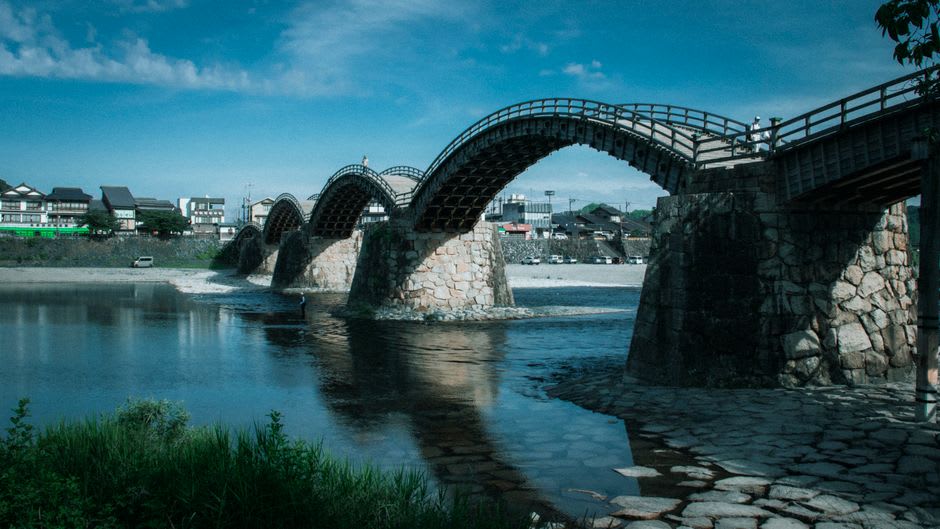
We crossed and recrossed it three or four times over the afternoon, at different heights of light, and it was never quite the same bridge twice.
The Castle on the Hill
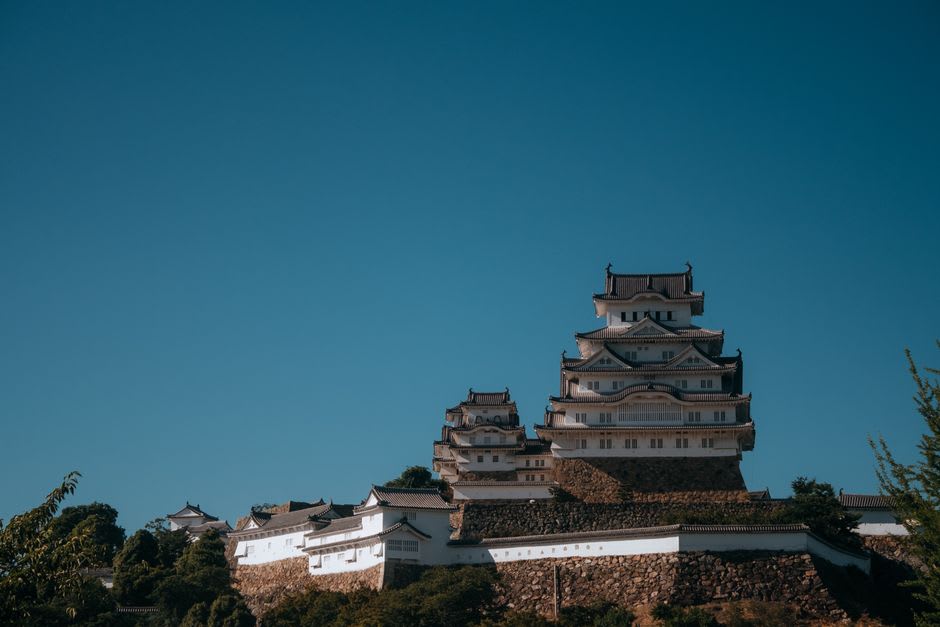
Above the far bank the land rises steeply to Iwakuni Castle, a compact white keep perched on the ridge, and you reach it by a short, near-vertical ropeway that swings you up over the treetops. The castle is a modern reconstruction of the original — which stood only a few years in the seventeenth century before the shogunate ordered it demolished — but the view it commands is the real reward: the whole loop of the Nishiki river far below, the five arches tiny and precise, the town spread out beyond, and on a clear day the glint of the Seto Inland Sea.
We ate lunch at the foot of the hill in the old samurai quarter, in a garden of clipped pines, and I had the local soft-serve flavoured with lotus root, which sounds worse than it tasted.
Cherry Blossom on the Banks
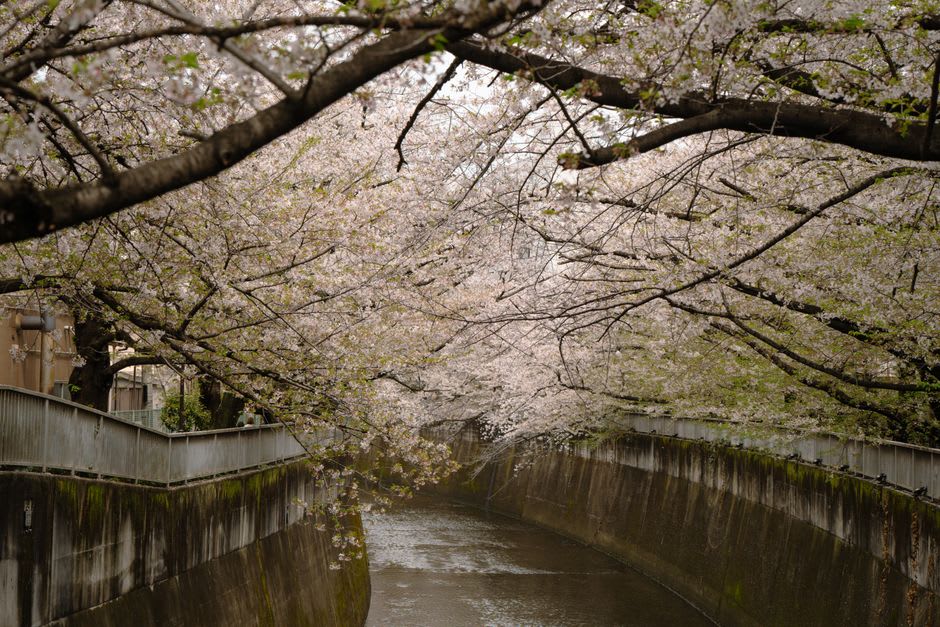
We had come slightly too late for the peak, but the embankments along the river are planted thick with cherry trees, and enough late blossom clung on that the banks were still edged in pale pink. In full season, we were told, this is one of the finest hanami spots in western Japan — the arches of the bridge framed in blossom, families spread out on blue tarps beneath the trees, boats poling along the shallows. Even at the tail end of it, with petals turning on the current, it was lovely.
We sat on the grass as the afternoon cooled, watching the light shift on the water, and neither of us was in any hurry to catch a train back.
Getting There
Iwakuni lies in eastern Yamaguchi Prefecture, about forty-five minutes west of Hiroshima on the JR San’yō line to Iwakuni station — both covered by the Japan Rail Pass. From the station a local bus runs to the bridge in around twenty minutes, or you can walk it in a little over half an hour along the river. The Shinkansen stops at Shin-Iwakuni station, a bus ride further out, so for most travellers the ordinary line is simpler. The bridge, castle ropeway, and old town are all clustered together and easily seen in a half-day, though the riverbank rewards lingering into the evening.
Keep exploring
More of Chūgoku