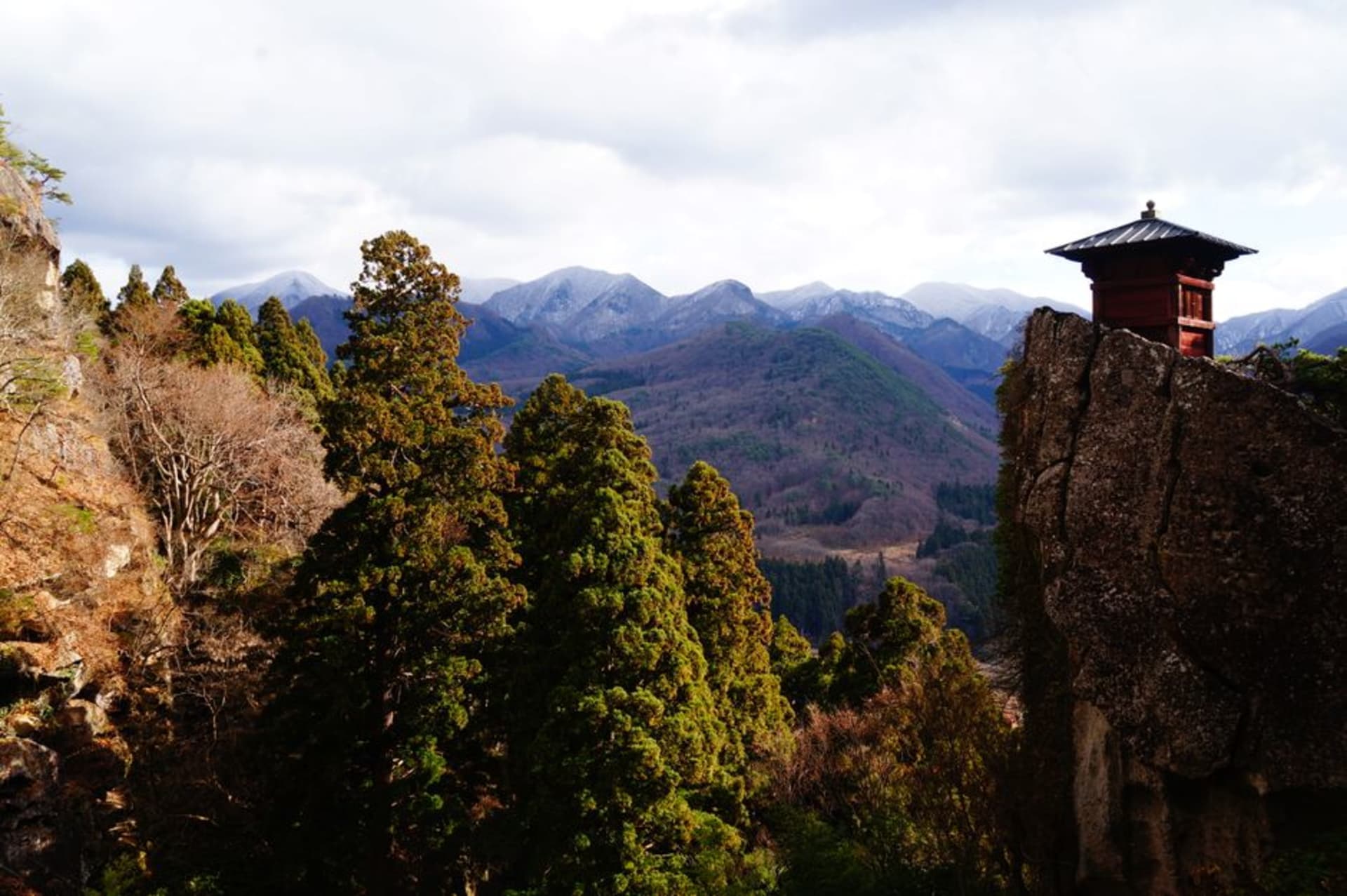
Mount Daisen
"From the coast it looks like Fuji's shy cousin; up close it is nobody's cousin at all."
The great sacred mountain of Tottori, nicknamed the Hoki Fuji for the near-perfect cone it shows from the coast. Its lower slopes hide an ancient temple and a beech forest that turns molten in autumn, while the summit ridge crumbles into something wilder and more precarious than the postcards admit. We came to look at it and ended up walking into it.
The first time we saw Daisen properly was from a train window near the coast, and Lia actually pointed, which she never does. It rose out of the plain in that impossibly clean cone shape — the reason locals call it the Hoki Fuji — floating above the rice fields with a cap of cloud it seemed reluctant to remove. We had planned a lazy day of temple-gazing on its lower slopes. But mountains do this to us: they suggest, and we are weak. By mid-morning we had abandoned the lazy day entirely and were lacing up at the trailhead, sharing a convenience-store rice ball and a look that meant we both knew we were about to do more than we’d intended.
The forest and the old temple
Before the climb proper, Daisen’s lower reaches are a world unto themselves. We walked up through the grounds of Daisen-ji, a temple complex that has clung to this mountain for over a thousand years, its mossy stone steps damp underfoot and the air thick with cedar. Nearby, the Ogamiyama Shrine sits at the end of Japan’s longest stone-paved approach, a corridor of old trees where the light comes down in coins. It was quiet in a way that felt earned rather than staged — a monk crossed the courtyard, a bell sounded once somewhere uphill, and Lia stood a long time in front of the main hall not photographing anything, which for her is a kind of prayer.
The climb into the wild ridge
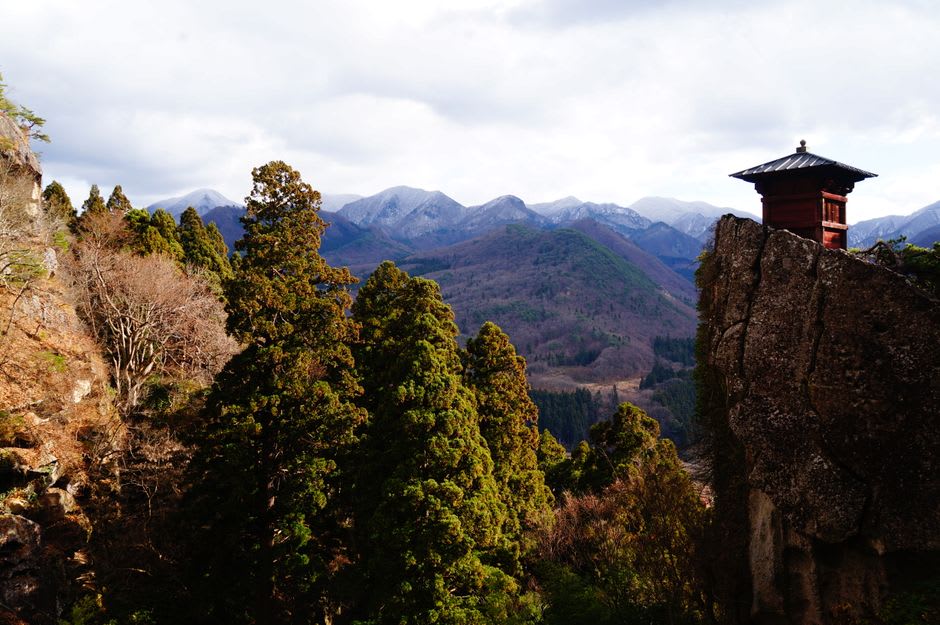
The trail up the Natsuyama route is relentless and honest — wooden steps, then rock, then the beech forest thinning as you gain height. In autumn these beeches burn orange and copper, and we climbed through them with the whole Tottori coast unspooling below us, the Sea of Japan a hard silver line. Near the top the mountain drops its pretty mask entirely. The true summit, Kengamine, is off-limits now, the ridge to it eroded to a knife-edge too dangerous to walk, and standing at the accessible high point of Misen you understand why: the far crest looks less like a path than a warning. We ate our second rice ball up there, wind snatching at the wrapper, both of us grinning at how far the shy cousin had made us climb.
Down to Tofugadaira and the light
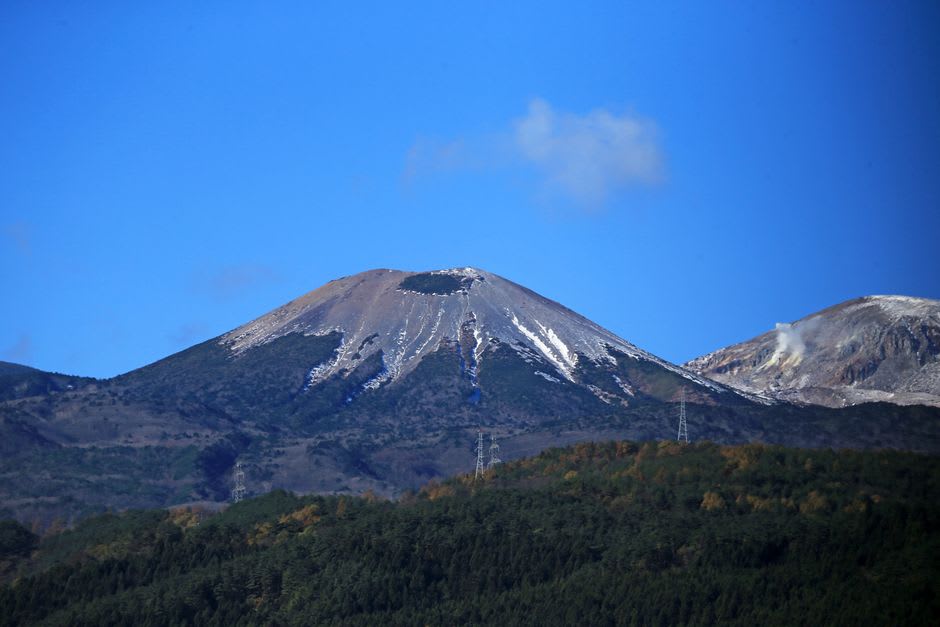
Coming down we detoured to Tofugadaira, a shoulder of grassland partway up the mountain where the whole cone reveals itself and, on a good evening, the sunset turns the Sea of Japan to hammered copper. We were lucky — the cloud lifted just as the light went low, and Daisen’s flank glowed the deep bruised gold that only autumn mountains manage. A few other walkers had gathered there, all of us silent, all of us pretending we hadn’t planned our descent around exactly this. Lia said it was the kind of view that made her forgive her aching legs. I said nothing, because I was too busy forgiving mine.
Getting There
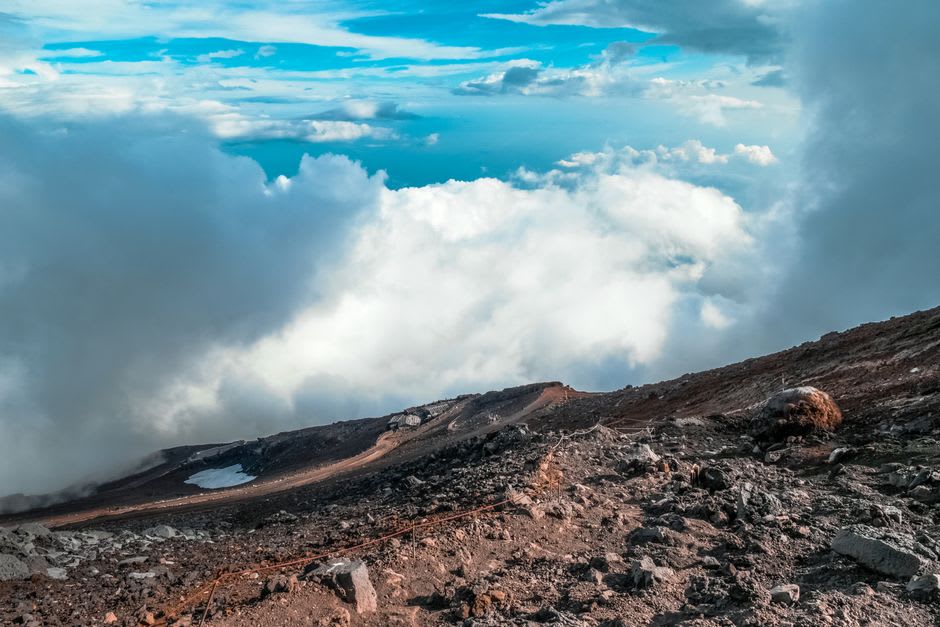
Mount Daisen sits in western Tottori Prefecture. Most people reach the base by taking the train to Yonago Station, then a bus roughly fifty minutes up to the Daisen-ji temple area, which is where the trails and shrines begin — bus timetables thin out sharply outside summer and the autumn colour season, so check the last departure before you climb. Drivers will find parking near the temple village. The full ascent to Misen takes most hikers five to six hours round trip; go early, carry water, and treat the weather with respect, because the upper mountain changes its mood far faster than the gentle coastal view suggests.
Keep exploring
More of Chūgoku