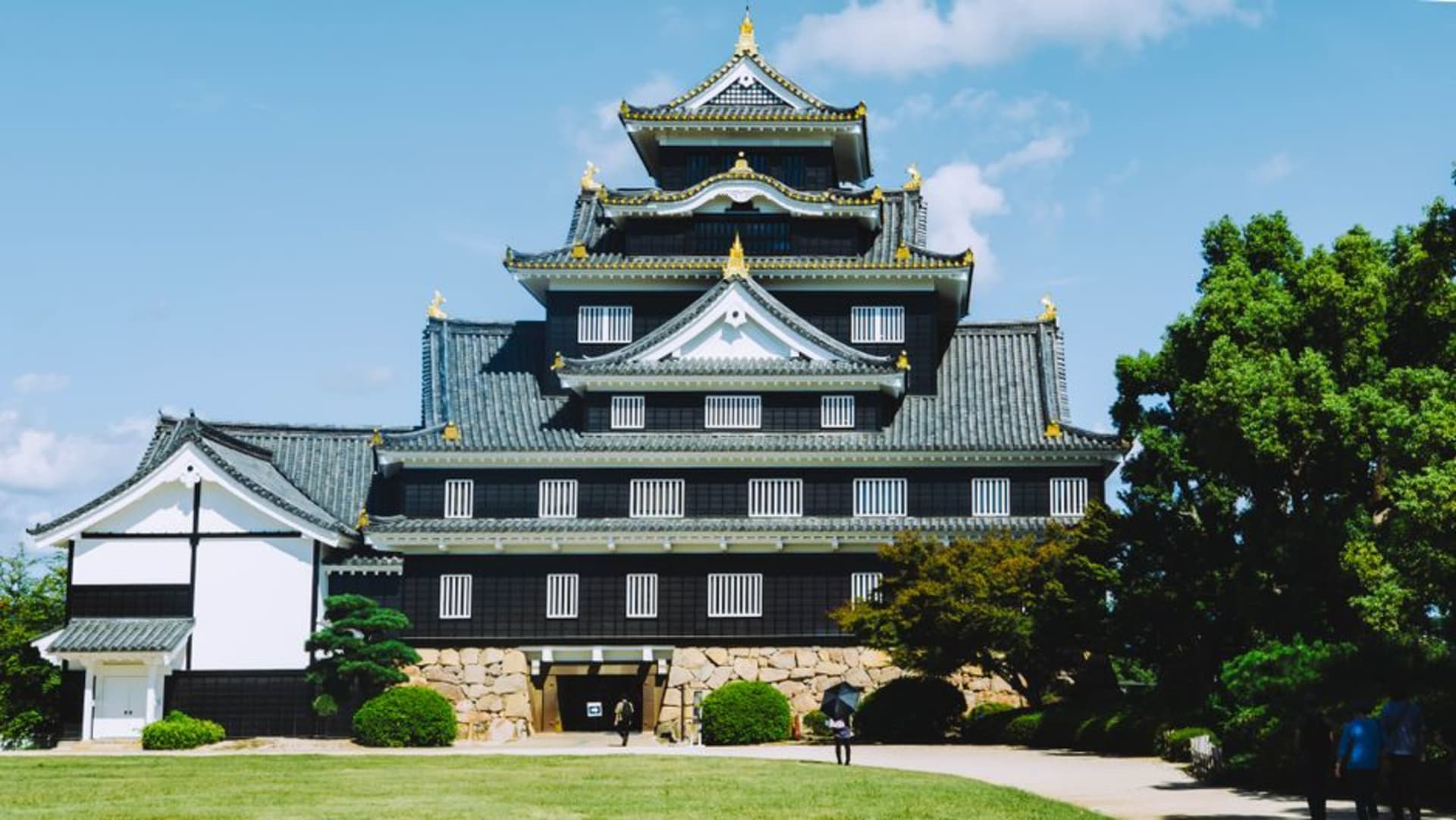
A small mountain town in the folds of inland Okayama, crowned by the highest original castle in Japan. In autumn, the keep floats on a lake of morning cloud, and below it a samurai street and a stone-garden temple keep their quiet.
The alarm went off at half past four and Lia groaned into the pillow. We’d taken the slow local line into Bitchū-Takahashi the evening before, the kind of train with velvet seats and a driver who bows, and the guesthouse owner had warned us the cloud only forms on cold, still mornings after a warm day. This was one of them. So we pulled on every layer we had, walked out into a town that was completely asleep, and started up the hill toward the castle that everyone had told us to see from below, not from inside.
The castle that floats
Bitchū Matsuyama Castle sits at nearly 430 metres, the highest original castle keep in Japan — original meaning it was never burned down and rebuilt in concrete, that the wood under your hand is the wood they raised in the seventeenth century. But the famous view isn’t from the keep. It’s from a lookout on the opposite ridge called Unkai, where you stand in the cold before dawn and wait. We waited. The valley below was grey nothing, and then the sun came up behind us and the nothing turned white and began to move, and the castle’s small dark keep rose out of it like the last thing left of a drowned world. Lia didn’t say anything for a long time. Neither did I. A man beside us with an enormous lens whispered sugoi to no one.
Walking the samurai street
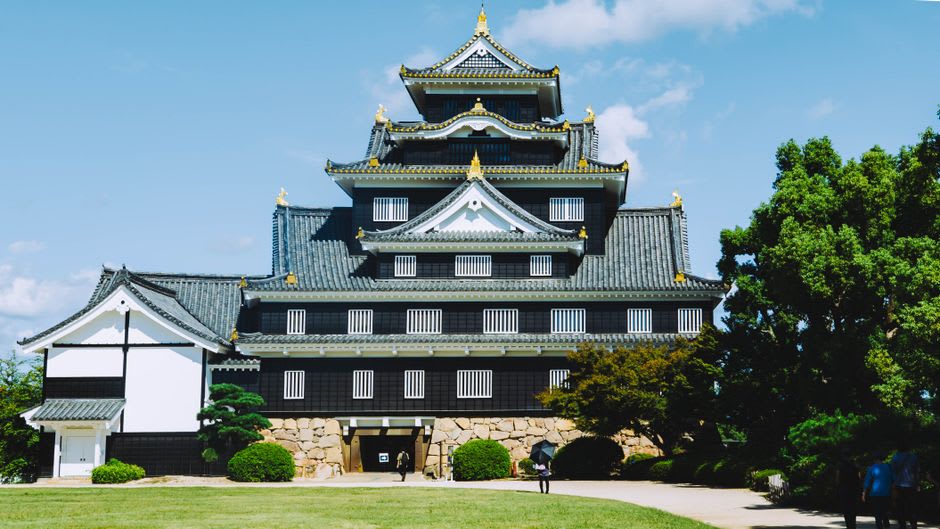
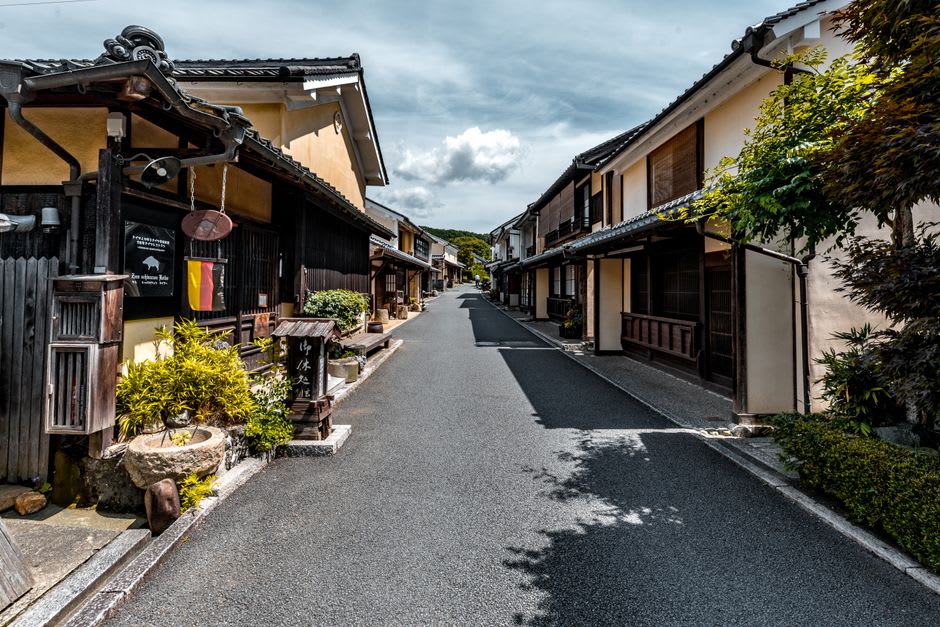
Later, warmed up and properly awake, we went to actually climb to the castle — a real climb, twenty minutes of steep stone path from the last car park, which is part of why the place survives so intact; nobody built a road to its door. The keep is small and honest, dark timber and white plaster, and from its windows the town looks like a scattering of tiles. Back down in Takahashi itself we walked Ishibiya-chō, the old samurai quarter, where earthen walls the colour of weak tea run along a lane and a few of the residences open their gardens. It’s not a museum street. People live behind those walls. A woman was sweeping her step and a cat watched us from a windowsill, and it felt less like sightseeing than like being briefly let into somewhere.
Stones and moss at Raikyū-ji
Our last stop was Raikyū-ji, a temple with a garden laid out in the 1600s and attributed to Kobori Enshū, the tea master who designed with rocks the way other people design with words. You sit on the wooden veranda and look at it: a bed of raked white gravel, clipped azaleas trained into a low wave that’s meant to read as ocean swells, and a borrowed backdrop of the mountain beyond. We sat there far longer than we’d planned. Lia said it was the first garden that had made her want to be quiet rather than photograph it, and then we both quietly photographed it anyway, and laughed. The morning had started in the cold and ended with tea and moss, and Bitchū-Takahashi had given us both without asking anything back.
Getting There
Bitchū-Takahashi is on the JR Hakubi line, about 35–40 minutes by limited express from Okayama, which is itself a stop on the San’yō Shinkansen. The cloud-sea lookout at Unkai needs a taxi in the pre-dawn dark — arrange it with your accommodation the night before, as they only run on request and the window is short. Autumn and winter mornings after a warm day give the best odds; check the local forecast for a big overnight temperature drop. The castle car park is a further steep walk from the keep itself, so wear real shoes.
Keep exploring
More of Chūgoku