Treasure Beach
"Treasure Beach is what Jamaica looks like when no one is trying to sell it to you."
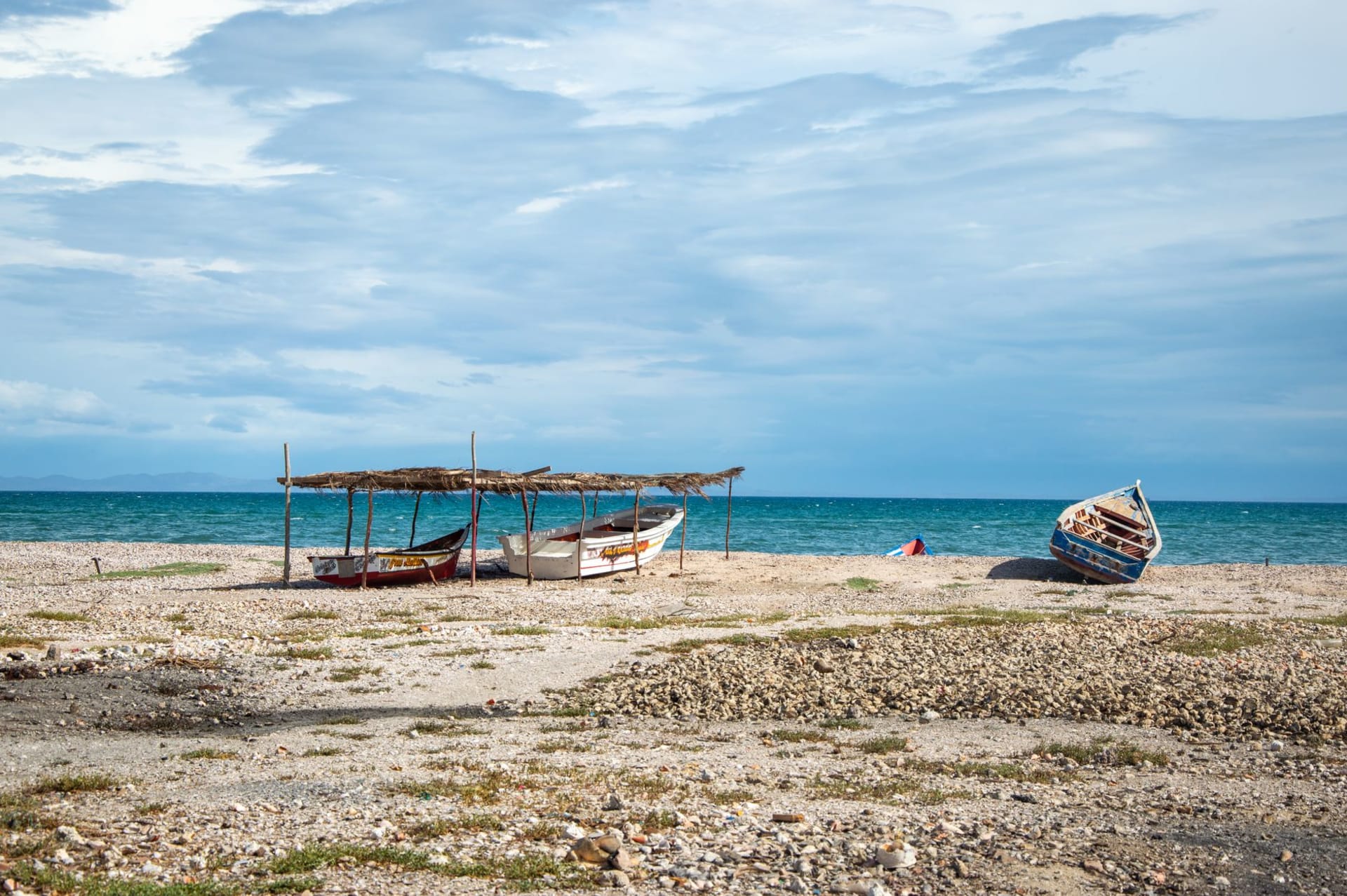
Getting to Treasure Beach requires a commitment that most visitors on a tight schedule won’t make. You cross the Santa Cruz Mountains from the north coast, come down through dry scrubland and cactus into a landscape that looks nothing like the Caribbean of travel brochures — parched, rugged, the vegetation sparse and spiky, the road narrowing as you descend to the coast. Then the sea appears: dark sand beaches broken by rocky headlands, fishing boats hauled above the tide line, goats picking their way between the sea grape trees. I had been told it was worth it. I had not believed it sufficiently.
The community of Treasure Beach is a loose collection of small coves — Billy’s Bay, Frenchman’s Bay, Great Pedro Bay — strung along a few kilometers of south coast. There is no resort strip. There is no cruise ship pier. There is no Dunn’s River queue. What there is: small guesthouses run by families, a handful of bars and restaurants where the same people drink Red Stripe every evening, a fishing cooperative that goes out before dawn and brings back snapper and parrotfish and lobster that appear on menus the same afternoon.

Jake’s is the famous hotel at Treasure Beach — a collection of quirky, handbuilt cottages designed by filmmaker Perry Henzell’s family, painted in tropical colors, full of found objects and local art, sitting right on the water at Calabash Bay. The property has expanded over the years but retained its handmade quality, and it hosts the annual Calabash Literary Festival each May, which draws writers from across the Caribbean and its diaspora and is the best single cultural event I have attended on the island. The festival runs under canvas shelters on the beach with the sea behind the stage and rum punch circulating freely, and it has a communal warmth that feels nothing like a literary festival and everything like a very bookish street party.
The Pelican Bar is offshore — literally. A ramshackle wooden bar built on a sandbar about a kilometer out to sea, accessible only by small fishing boat, it consists of driftwood and planks and netting and a roof of thatch that requires constant repair and apparently always has. The owner, Floyd, has been running it for decades. You arrive by boat, climb a ladder, sit on a barstool over open water with a Red Stripe in your hand and the sea stretching to the horizon in all directions, and the absurdity of the situation is so complete it becomes its own kind of peace. I stayed until the sun was low and the last boat had to come back twice for me.

The south coast’s comparative dryness means fewer mosquitoes than the north coast and clearer water for longer periods. The snorkeling off the rocky headlands is uncrowded and genuinely impressive — parrotfish, lionfish, lobster in the crevices, and occasionally a sea turtle working the reef in the utterly unconcerned way of something that has been doing this since before the hotels were built. At night, the darkness is the real kind — no resort lighting, no sound systems, just the sound of water and whatever the goats are discussing two fields over.
When to go: November through April is the sweet spot — drier than the north coast and cooler than summer. The Calabash Literary Festival in late May is reason enough to time a visit around it. Avoid September and October when the south coast can catch tropical weather systems, and July and August when the heat is unrelenting and the fishing slow.