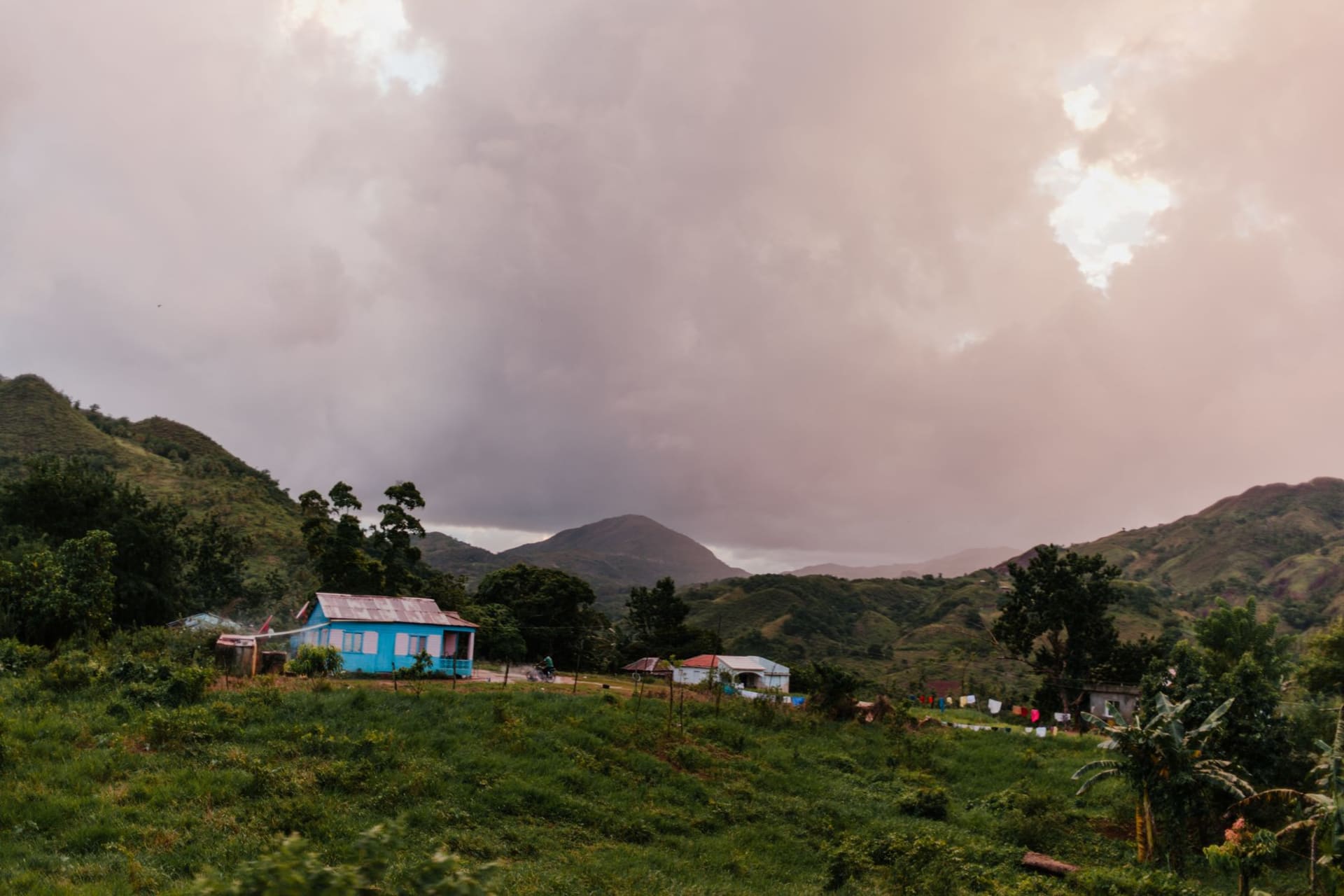
Blue Mountains
"The coffee up there tastes like what coffee is trying to be everywhere else."
The shared taxi left Kingston at four in the morning. Five of us — me, two coffee workers heading back up to an estate, a woman with a basket of something wrapped in cloth, and a driver who navigated the hairpin bends at a speed that suggested he had done this enough times to stop worrying about it. The road climbs through Gordon Town, through Mavis Bank, narrowing as it rises until the headlights are cutting through actual cloud and the temperature has dropped ten degrees and whatever warmth Kingston held feels like a different island entirely.
I arrived at Clifton Mount Estate as the sky was turning from black to a deep blue-grey, and a man named Errol handed me a ceramic cup without ceremony, just poured from a small pot he had been keeping warm on a propane burner. That cup of coffee — grown on the hillside I was standing on, picked and processed within a kilometer of where we stood — tasted nothing like what gets exported under the Blue Mountain label and sold in airport duty-free. It was clean, almost floral, with a sweetness that required no sugar, and a finish that stayed for minutes. I have thought about that cup regularly in the two years since.

The Blue Mountains are often framed as a day trip from Kingston or an add-on to a beach holiday, which is a misunderstanding of their scale. The ridge runs for some thirty kilometers and the peaks reach over 2,200 meters — real altitude, real weather, real ecosystems. The upper forest is cool and wet enough that you need a jacket even in July, and the biodiversity is extraordinary: tree ferns, bromeliads, wild ginger, more than three hundred species of birds including the Jamaican tody and the streamertail hummingbird, which the Jamaicans call the doctor bird and which moves too fast for the eye to properly follow. Walking the trails above two thousand meters, you hear the wind moving through bamboo in a way that sounds almost deliberate.
The Blue Mountain Peak trail starts before dawn for a reason — the summit view from 2,256 meters opens up just at first light, and for perhaps forty minutes on a clear morning you can see Cuba to the north and the Haitian coast to the east, the whole Caribbean flattened beneath you in a pinkish haze. By eight o’clock the clouds tend to roll in and the summit disappears into grey. The trail takes four to five hours from Whitfield Hall, where the sensible decision is to sleep the night before, waking to cold water and porridge and the sound of owls.

Below the high ridge, the villages of Section and Hagley Gap sit at a more hospitable altitude where the coffee estates give way to small farms growing callaloo, yams, and cho cho. The women who run the roadside stalls along the B1 road sell pepper shrimp wrapped in newspaper, cold Red Stripes from coolers, and pieces of hard-dough bread with butter that seems to taste better at altitude. I stopped at one of these stalls on my way back down and stayed for an hour without deciding to, listening to a woman named Marva explain the difference between washed and natural-process coffee with the precision and quiet authority of someone who has done the work herself for thirty years.
When to go: November through March is ideal — the dry season keeps the trails clear and the morning views are sharper. April and May bring heavy rain that can make the peak trail slippery and treacherous. The coffee harvest runs October through February, which is the best time to visit the estates; the processing is underway and the air around the wet mills carries a fermented-fruit sweetness that is unlike anything else.