
Comoé National Park
"The ranger said the elephants had come back. He said it the way you'd talk about a friend who survived something."
Almost nobody comes to Comoé, and the people who run it know exactly why and aren’t bitter about it. It sits in the far northeast corner of Ivory Coast, a long, dusty haul from Abidjan, and for years during the country’s troubles it was effectively abandoned — poached, overgrazed, written off. UNESCO put it on the list of World Heritage in Danger. Then, slowly, it came back. By the time Lia and I got there, bumping up the red-dirt road from Kong in a borrowed 4x4, it had been taken off that danger list, and the ranger who met us said the elephants had returned. He said it the way you’d talk about a friend who survived something.
The largest wild thing in West Africa
Comoé is enormous — one of the largest protected areas in all of West Africa, over a million hectares of savanna stitched together by gallery forest that follows the rivers. That mix is the whole point. You drive for an hour through tall golden grass and stunted trees, the kind of dry savanna that photographs as monotonous and feels, in person, like the inside of an oven, and then the track dips toward the Comoé River and suddenly you’re under a tunnel of green, the temperature drops ten degrees, and there are monkeys overhead and the river sliding past brown and slow.
It was at one of those river bends that we saw the hippos — a pod of them, just eyes and nostrils and the occasional enormous yawn, in a pool the colour of strong tea. Our guide cut the engine and we sat. He told us, quietly, that Comoé is one of the few places where you find both savanna chimpanzees and forest species in the same park, because of that river-forest-grassland overlap. We didn’t see a chimp. You rarely do. But knowing they were out there in the gallery forest, using tools to crack open whatever it is they crack, changed how the silence felt.
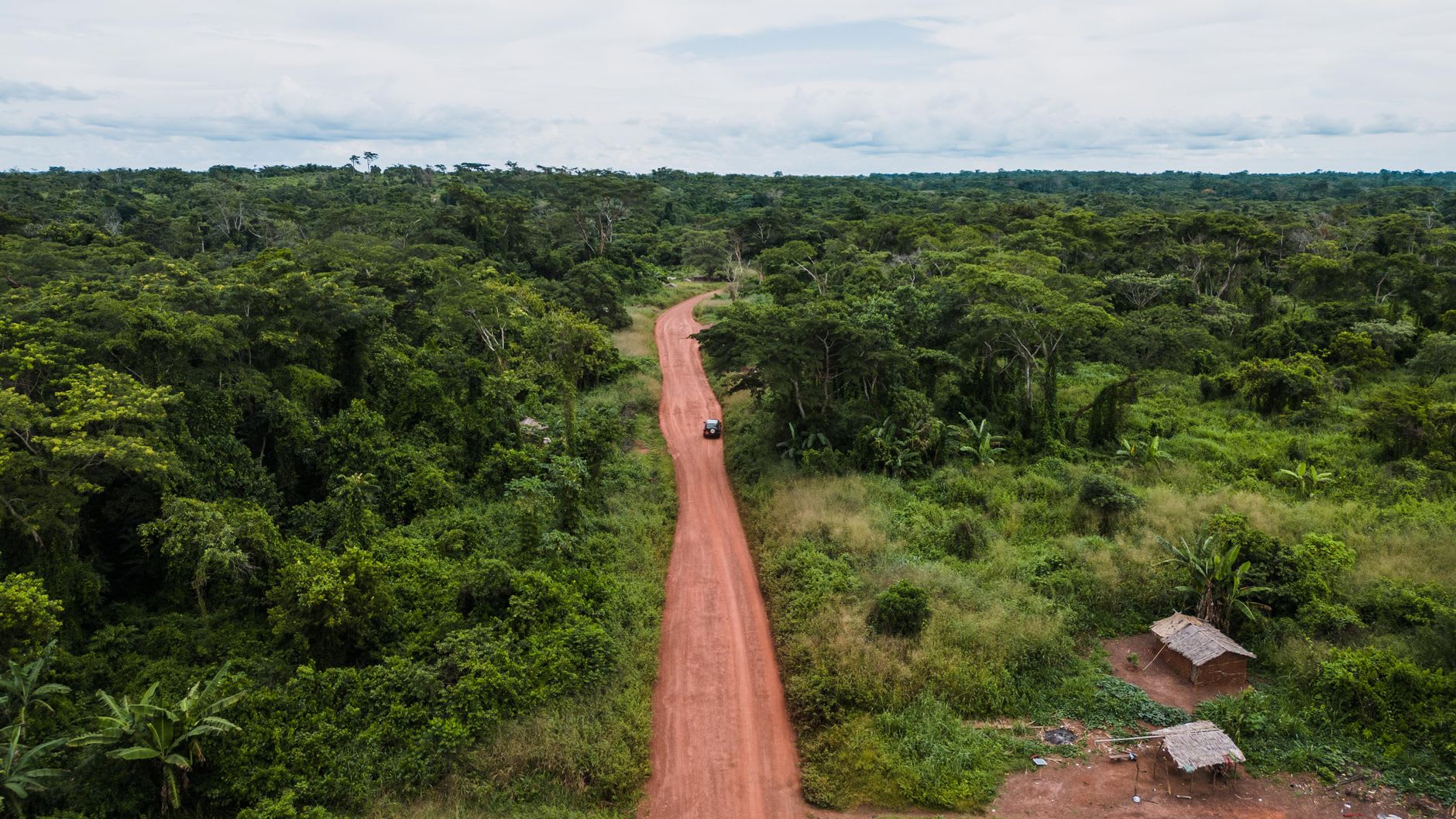
Slow travel, by necessity
Comoé is not a place that hands you wildlife. There are no crowds of vehicles converging on a leopard sighting, because there are no crowds and often no other vehicles at all. What there is, is patience rewarded — a herd of kob antelope flushing through the grass, a hornbill the size of a small dog flapping across the track with absurd effort, the tracks of an elephant pressed into the mud at a water hole, fresh, the animal itself just out of sight in the trees.
We stayed in simple rooms near the park edge and ate rice and grilled fish from the river by lamplight, the generator off by ten, the dark total and loud with insects. Lia, who is not a morning person under any circumstances, was up before dawn both days without complaint, which is the highest compliment she pays a place.

I won’t pretend the journey is easy or the infrastructure polished. It’s neither. But Comoé is one of those rare places where you feel you’ve arrived somewhere genuinely wild and genuinely recovering, where the animals are returning rather than retreating. That’s worth a hard day on a dirt road.
When to go: The dry season, roughly December through April, when wildlife concentrates around the shrinking waterholes and the rivers and the tracks are passable. The rains from June to October make much of the park impassable and the animals disperse — best avoided unless you enjoy being stuck in mud far from anywhere.