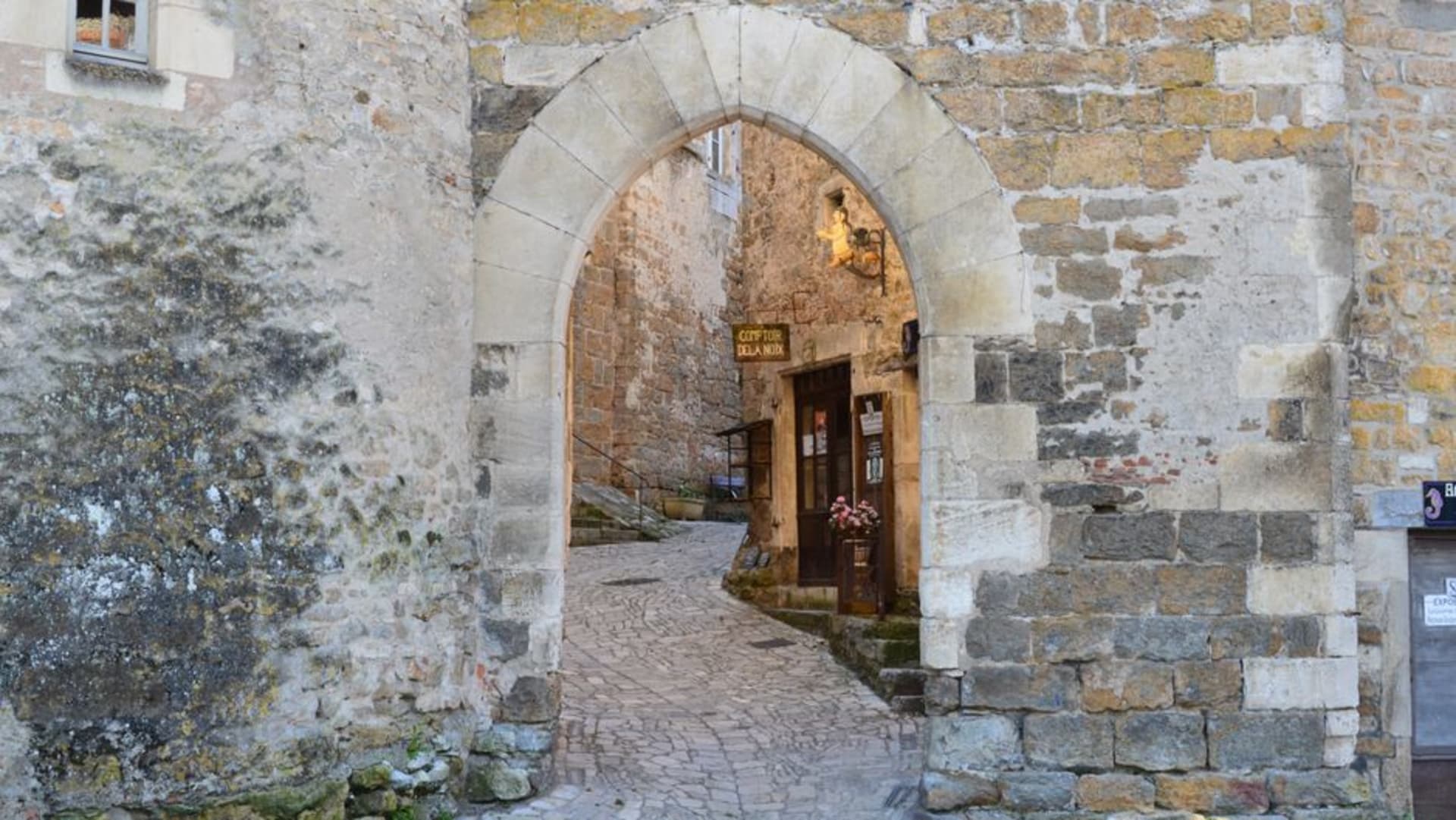
The best-preserved medieval town center in Italy, where popes were once locked in a room until they picked a winner and the streets still run on medieval logic.
Viterbo doesn’t get the attention Rome or Orvieto do, and after a day wandering its San Pellegrino quarter I genuinely don’t understand why. This is, by most serious accounts, the best-preserved medieval town center anywhere in Italy — not a reconstruction, not a sanitized old-town district, but a genuine thirteenth-century neighborhood of grey tufa-stone houses, external staircases, and covered passageways (the profferli, distinctive to this town) that has simply gone on being lived in for eight hundred years. I got lost in it twice, happily, before I found my way back to anything resembling a main street.
The Room Where “Conclave” Was Born
Viterbo’s strangest claim to history sits at the Palazzo dei Papi, the palace built for the popes who relocated the seat of the Church here for roughly two decades in the thirteenth century, fleeing factional violence in Rome. In 1268, after the death of Pope Clement IV, the cardinals gathered here to elect a successor and simply could not agree — for nearly three years. Exasperated Viterbese locals eventually locked the cardinals inside the palace hall, reduced their food to bread and water, and, when even that failed, allegedly stripped the roof off the building to expose them to the elements. It worked: they elected Gregory X within weeks, and the word conclave — from the Latin for “with a key” — entered the language permanently. I stood under the loggia where this reportedly happened, looking out at the same view of the valley, and found the whole story a little bit hilarious and a little bit terrifying, which feels about right for medieval Church politics.

A City Built on Hot Water
Viterbo sits on volcanic ground, and the Etruscans and later the Romans both knew it: the sulfurous thermal springs just outside town, at what’s now called Terme dei Papi, have been in continuous use for over two thousand years, and popes and pilgrims alike came here specifically to soak. I spent a late afternoon in the mineral pools with steam rising off the water into cooling autumn air, which is not an experience I associate with central Italy but should, apparently, be. The Etruscan presence runs even deeper than the springs — the necropolis nearby is a reminder that this stretch of northern Lazio, sometimes called Tuscia, was Etruscan heartland centuries before anyone thought to build a papal palace on top of it.

The town’s other great obsession is Santa Rosa, a thirteenth-century local girl canonized after her death, whose feast on September 3rd brings out the Macchina di Santa Rosa — a nearly thirty-meter illuminated tower carried through the darkened streets on the shoulders of about a hundred men, a UNESCO-recognized tradition that’s been running in some form since the 1600s. I wasn’t there for it, but everyone I met in Viterbo talked about it the way you’d talk about a family holiday, which told me everything about how this town sees itself: not as a museum piece, but as a place that is still, stubbornly, alive.
When to go: Late spring or early autumn for comfortable walking weather in the old town and pleasant thermal-bathing temperatures; early September if you can catch the Santa Rosa procession, one of the more remarkable civic spectacles in Lazio.