Udine
"Udine doesn't perform for you. It just happens to be beautiful while going about its business."
A city that keeps its Venetian face on and its Slavic-Germanic soul underneath, quietly pouring the best Friulian wine you've never heard of.
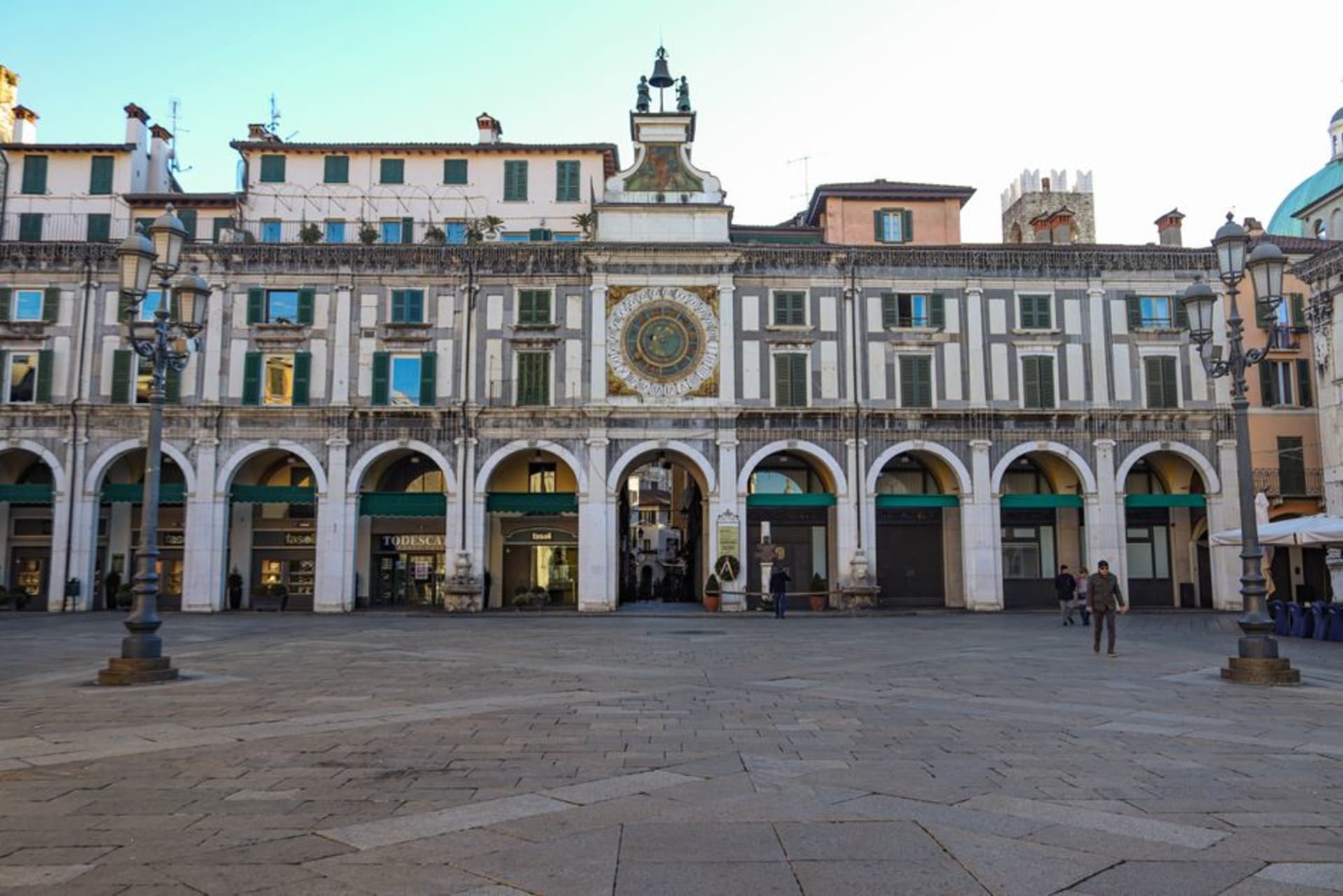
I came to Udine expecting a footnote to Venice and left thinking of it as its own capital — which, in a sense, it is: the quiet administrative heart of Friuli-Venezia Giulia, a region that spent centuries being fought over by Venetians, Austrians, and everyone in between, and still hasn’t fully decided which language to dream in. You hear it in the streets, where old-timers slip between Italian and Friulian, a Romance language with its own grammar and its own newspapers, stubborn and proud. Udine wears Venice’s influence openly in its architecture — the Piazza della Libertà, often called the most beautiful Venetian square outside Venice itself, has a loggia by the same school that built the Doge’s Palace, plus a clock tower with two bronze Moors that strike the hour, a near-copy of the one in St. Mark’s Square. But climb the hill to the Castello di Udine, and the view stretches north to the Alps and east toward Slovenia, and you understand this was never really Venice’s city. It belonged to the Patriarchs of Aquileia for a thousand years before that, and its bones are older and stranger than the lagoon veneer suggests.
Wine Country Without the Crowds
What pulled me back a second time wasn’t the architecture, though. It was the wine. The hills east of Udine, the Colli Orientali del Friuli, produce whites that sommeliers in Paris and New York talk about in hushed tones — Friulano, Ribolla Gialla, the extraordinary orange wines made by macerating white grapes on their skins for weeks, a technique that’s ancient here and was only “discovered” by the natural wine world a decade or two ago. I spent an afternoon at a small cantina outside town where the owner poured me a Ribolla Gialla the color of weak tea and told me, without a trace of irony, that Friuli invented orange wine before Georgia did, or maybe alongside it, and that either way nobody in Bordeaux had any business looking down on it. I believed him. The glass certainly argued his case.

The San Daniele Question
No conversation about this corner of Friuli avoids ham for long. San Daniele del Friuli, a short drive from Udine, produces a prosciutto that locals will tell you — calmly, but with total conviction — is superior to Parma’s, thanks to the particular breeze that comes down off the Alps and across the Tagliamento river valley, drying the hams slower and sweeter. I won’t adjudicate that fight; I’ve eaten both too many times to be impartial. But I will say that a plate of San Daniele, a glass of Friulano, and a table in the Piazza Matteotti on a warm evening, watching Udinesi do their passeggiata past the old fountain, is one of the more understated great meals of northern Italy — nobody is performing for tourists, because there mostly aren’t any.

When to go: Late September through October, when the harvest is finishing in the Colli Orientali and the cantinas are at their most generous with tastings; the summer heat has broken but the outdoor tables in Piazza Matteotti are still very much in use.