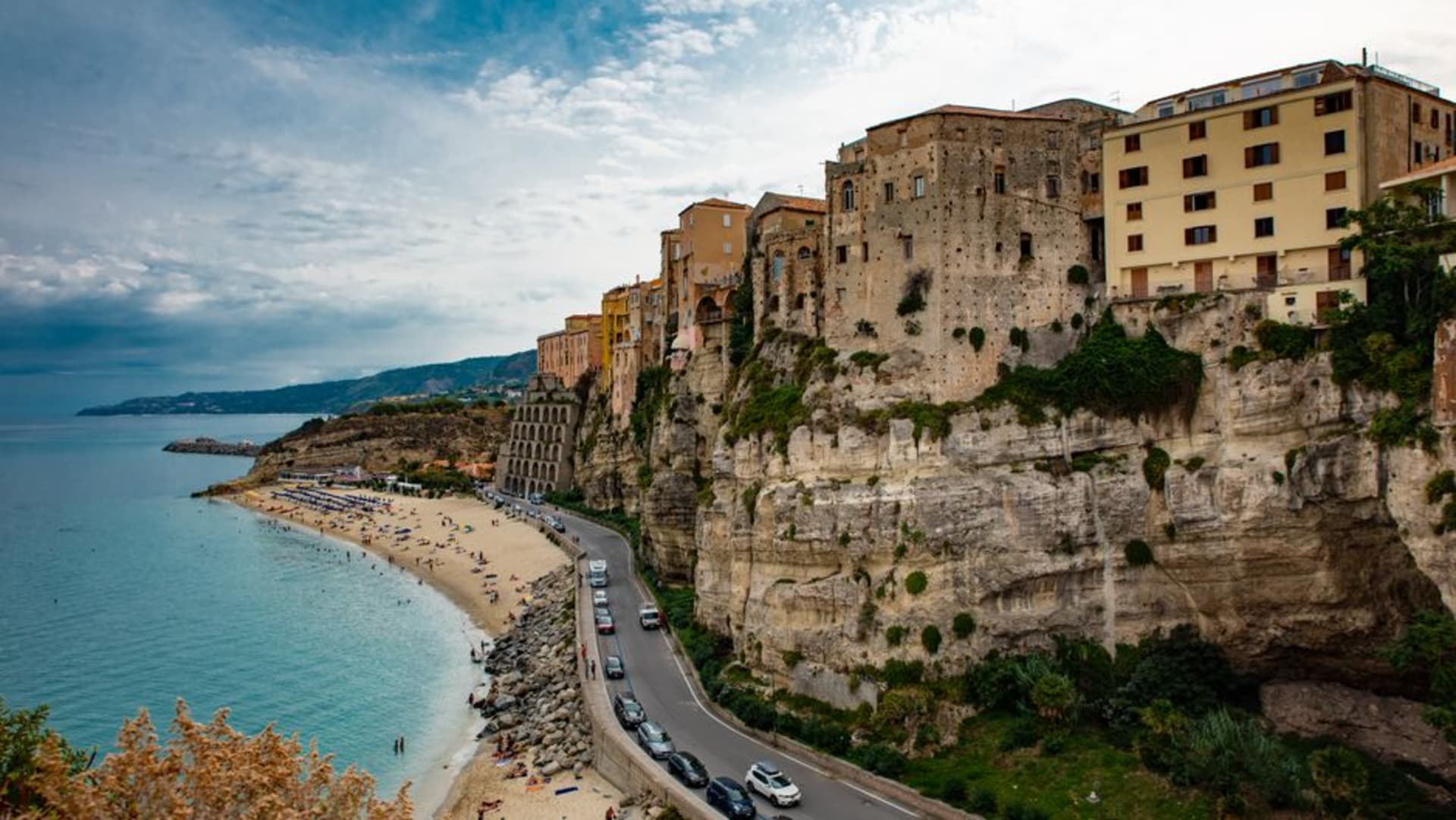
A town balanced on a cliff above the bluest water in Calabria, with a sanctuary perched on a rock like it's daring the sea to try something.
Tropea is the photograph everyone has seen without knowing where it was taken — a pastel town stacked on a sandstone cliff, a lone rock rising from the beach below crowned with a whitewashed sanctuary, the whole scene sitting above water so clear it looks retouched. It isn’t. I stood on the belvedere at the edge of the old town the first evening, coffee in hand, and had the specific experience of a real place outperforming its own reputation, which happens less often than travel writing likes to admit.
The town sits on Calabria’s western coast, on the stretch known as the Costa degli Dei — the Coast of the Gods — a nickname the region hands out with more confidence than modesty, though standing there I couldn’t argue with it. Tropea’s historic center is a maze of narrow streets, palazzi with baroque doorways, and a cathedral, the Cattedrale di Tropea, built by the Normans in the twelfth century and still holding a Byzantine icon locals credit with saving the town from an 1908 earthquake that leveled much of Calabria and Sicily. Wander far enough and the streets simply stop at cliff edges, opening onto views of the sea forty meters below with no warning and, in places, distressingly little railing.
The Rock and the Sanctuary
The image that defines Tropea is the Santuario di Santa Maria dell’Isola, a monastery perched on a rocky outcrop that was once a true island and is now connected to the mainland beach by a spit of sand. Benedictine monks built the original sanctuary here, drawn, as monks so often were, to a spot that combined isolation with a very good view. I walked out to it in the late afternoon, climbing the steps cut into the rock, and looked back at the town from that angle — the cliffs, the layered rooftops, the beach curving away toward Capo Vaticano — and understood immediately why this single vantage point has been photographed more than anywhere else in Calabria.
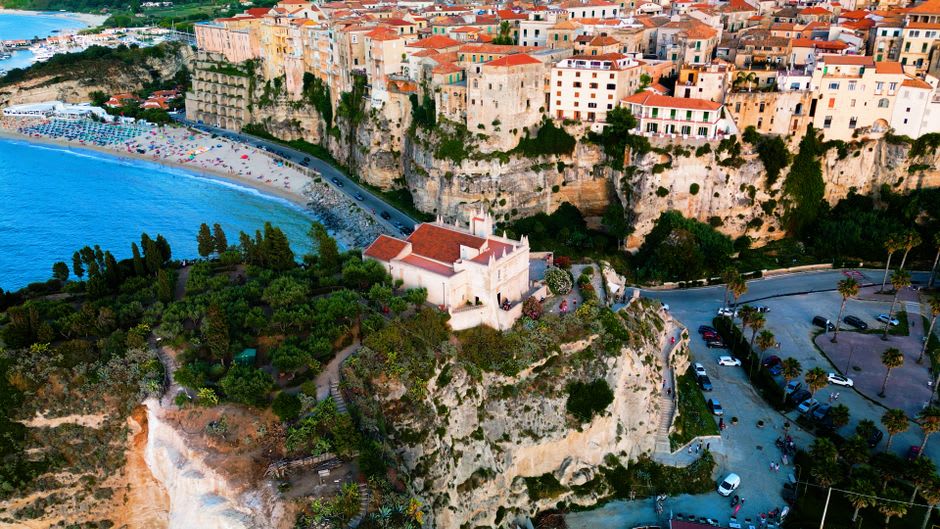
Red Onions and a Coastline Worth Diving Into
Tropea gave Italy its most famous onion — the cipolla rossa di Tropea, sweet and mild enough to eat raw, sold in braided strings from every shop on Corso Vittorio Emanuele and worked into everything from marmellata to gelato, an experiment I approached with skepticism and finished with an empty cup. The IGP status the onion carries is not a marketing gimmick; the specific volcanic-sandy soil along this coast really does produce something different from onions grown anywhere else, and Calabrians take the distinction seriously.
The water below the cliffs is the other reason people come. I swam off the main beach beneath the sanctuary, and again further south toward Capo Vaticano, where the coastline turns properly wild — granite headlands, hidden coves, water shifting between turquoise and a deep marine blue depending on the depth beneath you. This is the Tyrrhenian at its most convincing argument for itself, and unlike Sardinia’s similarly famous coves, you can drive here without a ferry.
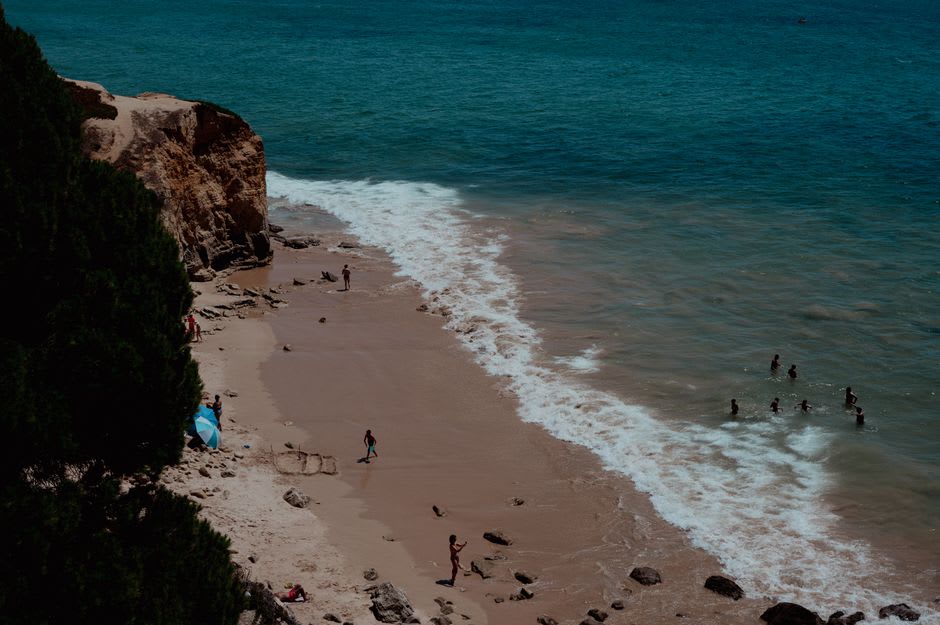
When to go: June and September deliver warm, swimmable water without the August crush of Italian holidaymakers who treat Tropea as their default Calabrian beach town.