Trieste
"The most un-Italian Italian city I've ever stood in, and I mean that as the highest compliment."
A Habsburg port city that ended up Italian by accident of history, and still drinks its coffee like Vienna never left.
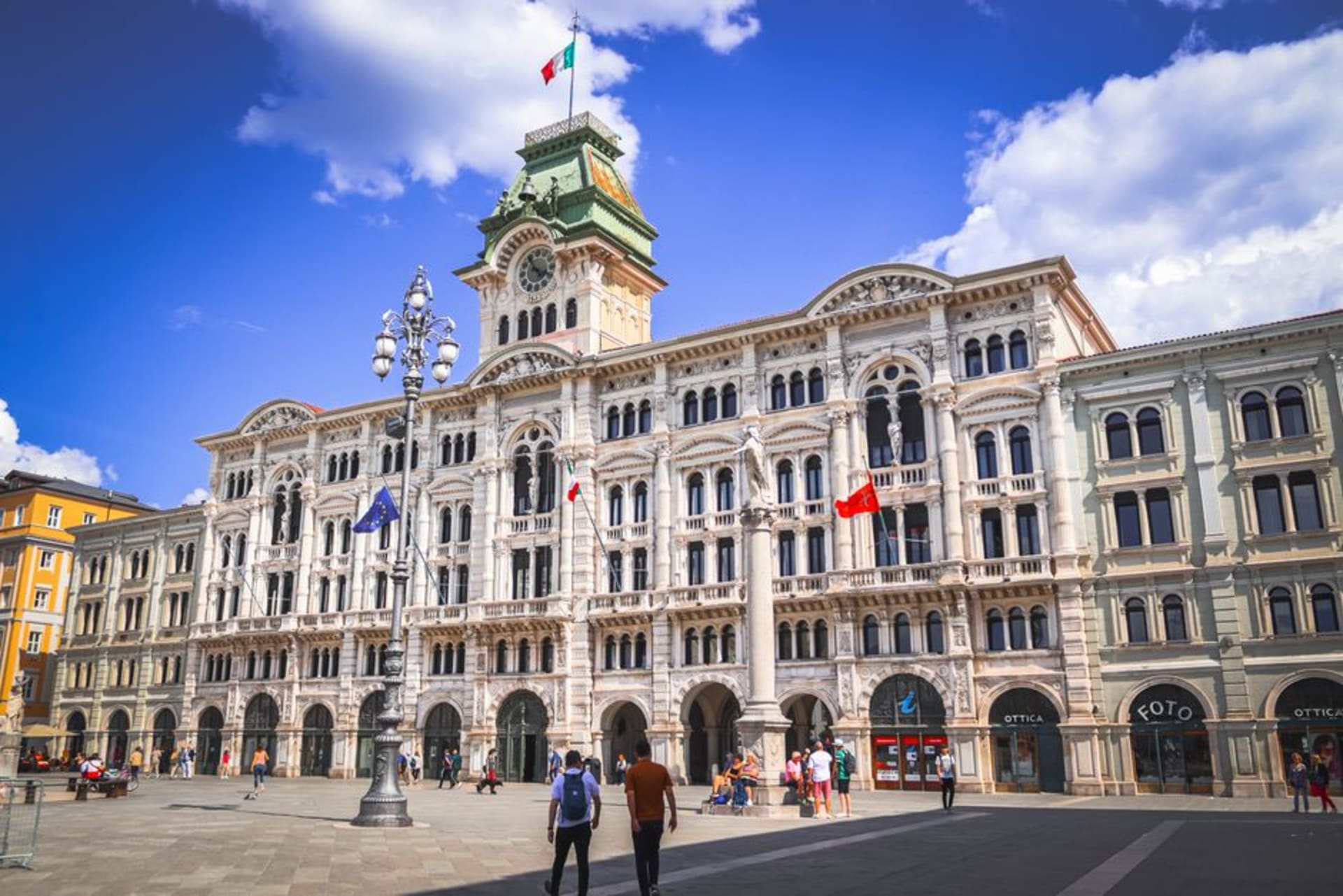
Trieste took me by surprise the way few Italian cities have. I arrived from Venice, three hours up the coast, expecting some diluted echo of it — a smaller lagoon town with fewer canals — and instead found a city that spent the better part of five centuries as the principal port of the Austro-Hungarian Empire and never fully shed the fact. Piazza Unità d’Italia, the vast square that opens directly onto the Adriatic with no promenade or breakwater in between, is ringed by grand Habsburg-era palazzi and is, by most measures, the largest sea-facing square in Europe. I sat at a café table there at sunset, watching the light bounce off the water straight into the square itself, and thought: this doesn’t look like Italy. It looks like Vienna decided to build a beach house.
Coffee, Empire, and James Joyce
Trieste has a genuinely serious coffee culture, distinct from the espresso-at-the-counter ritual of the rest of Italy — a legacy of its role as the empire’s main gateway for coffee imports from the Ottoman world, and of the grand nineteenth-century coffeehouses built to move and roast it. Caffè San Marco and Caffè degli Specchi, both still operating, were haunts of the city’s literary crowd a century ago, and James Joyce lived in Trieste for over a decade, teaching English and writing much of Ulysses and Dubliners here before the outbreak of the First World War. There’s a slightly rumpled bronze statue of him on the Ponterosso bridge now, mid-stride, hat cocked, that I found myself photographing along with everyone else, slightly embarrassed by how charmed I was.
The city’s identity crisis — is it Italian, Slovenian, Austrian, Mitteleuropean — isn’t academic trivia here; it shaped the twentieth century directly. Trieste only became fully part of Italy in 1954, after a tense post-war decade as the disputed Free Territory of Trieste, contested between Italy and Yugoslavia. That border tension left physical scars: the Risiera di San Sabba, a former rice-husking factory on the city’s edge that the Nazis converted into Italy’s only concentration camp with a crematorium, is now a solemn national monument, and visiting it after the café-lined elegance of the piazza was a genuinely hard pivot I wasn’t fully braced for.
Castles, Karst, and the Bora
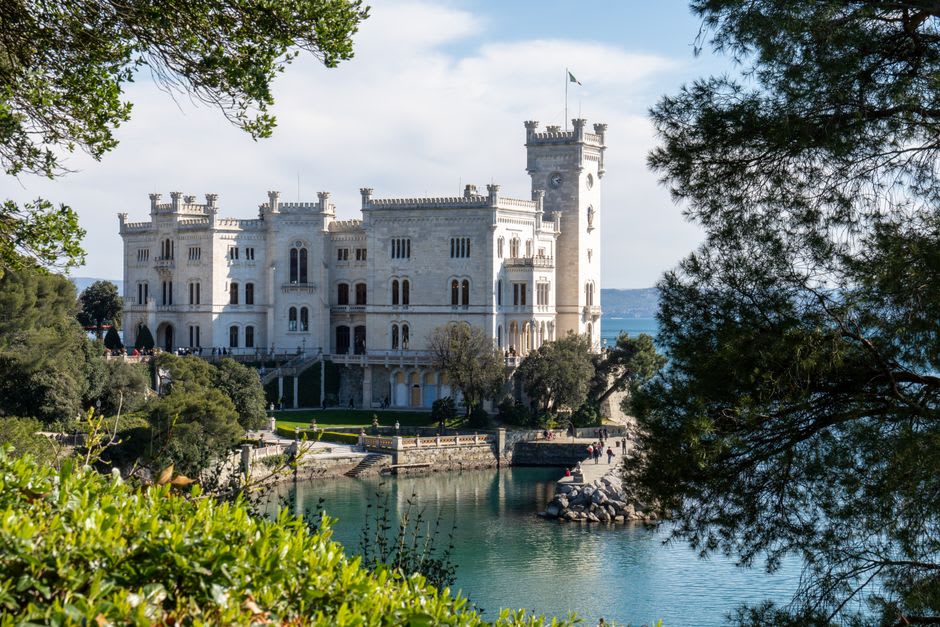
Above the city, Miramare Castle sits on a rocky promontory jutting into the Gulf of Trieste, built in the 1850s for Archduke Maximilian of Austria, who would later become the ill-fated Emperor of Mexico — a personal detail I couldn’t help clocking, living in Mexico myself these past few years. The castle’s white limestone walls and terraced gardens, wrapped almost entirely by sea, make it one of the more romantic follies I’ve wandered through in Europe, all the more poignant knowing how briefly Maximilian actually lived to enjoy it.
Inland, the city backs onto the Carso — the Italian edge of the Karst plateau, a limestone landscape riddled with caves and sinkholes that gave the geological term “karst” its name. It’s also the source of the bora, a fierce, cold katabatic wind that funnels down off the plateau and can hit hurricane force in the city streets; Trieste has installed handrails and ropes along certain exposed stretches specifically so pedestrians can hang on when it blows. I got a mild version of it on my last afternoon there, just enough wind to understand why locals talk about it like a recurring character in the city’s story rather than mere weather.
When to go: Late spring or early autumn for mild weather and calmer seas, avoiding the strongest bora winds that typically hit in winter; October brings the Barcolana, one of the largest sailing regattas in the world, filling the gulf with over a thousand boats.