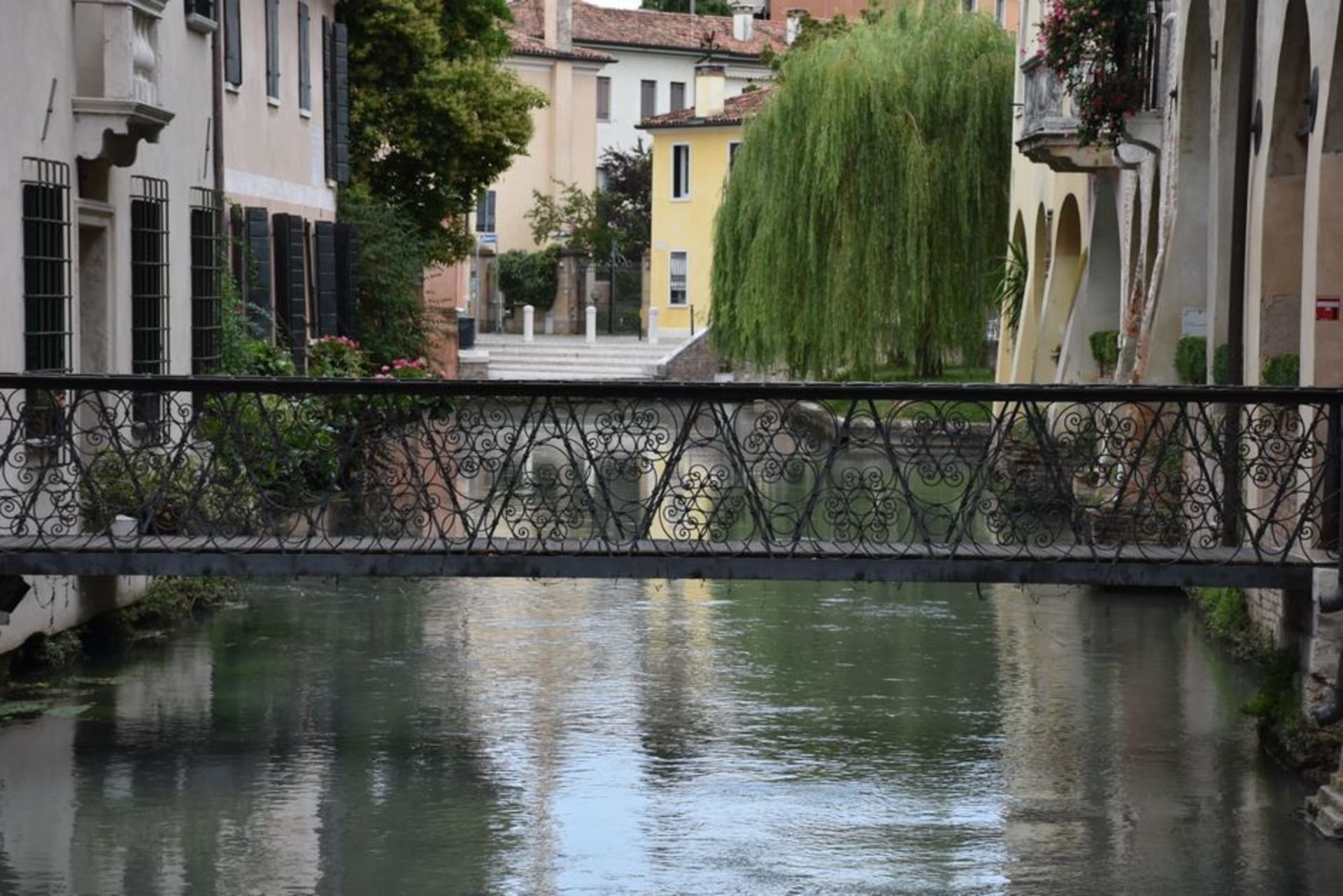
The quiet cousin of Venice, laced with canals nobody photographs and a radicchio so bitter the locals build a festival around it.
I came to Treviso by accident, really — a cheap flight into the airport that shares its name, a city I’d only ever heard mentioned as the place Ryanair lands you when it means Venice. I nearly took the shuttle straight out. I’m glad I didn’t. Treviso turned out to be one of those towns that rewards the traveler who simply stops rushing toward the famous name next door.
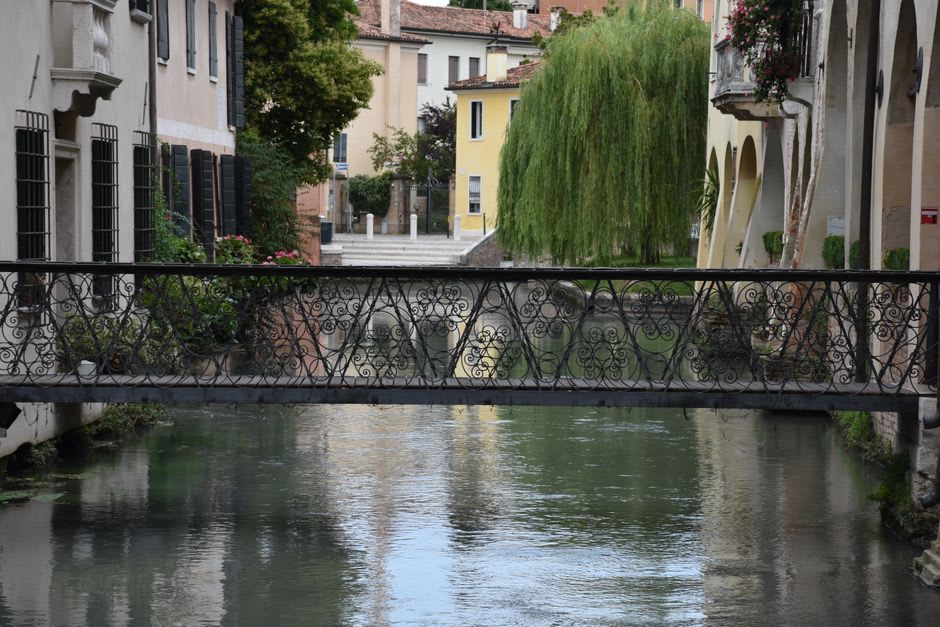
The city is built on water in a way that feels almost domestic compared to Venice’s theater. The Sile and Cagnan rivers split into small canals that run under houses and behind kitchens, and you catch glimpses of them through gaps between buildings — a mill wheel still turning here, a fishmonger’s stall built directly over the current there, the old fish market on its little island in the Cagnan, where vendors have sold the morning catch for centuries with the water running visibly beneath the counters. There’s a phrase locals use, “Treviso la piccola Venezia,” and for once the comparison to Venice isn’t hollow marketing — it’s just true, minus the selfie sticks.
Radicchio and the Cult of Bitterness
If you visit in late autumn or winter, you’ll understand why Treviso considers a vegetable a point of civic pride. Radicchio Rosso di Treviso — the long, tapered, wine-red leaves, not the round Chioggia variety — is grown in the fields around the city and traditionally “forced” in cold water in darkened cellars until the leaves curl and turn a deeper, almost purple red. It tastes properly bitter, grilled over coals or wrapped in pancetta, and the town throws an entire festival, the Fiera del Radicchio, in its honor every December. I ate it grilled with just olive oil and a squeeze of lemon at a family-run place near Piazza dei Signori, and it converted me — I’d always found radicchio a garnish at best, and here it was clearly the main event.
Prosecco Country at Its Doorstep
Treviso is also the unofficial capital of Prosecco. The DOCG hills of Conegliano and Valdobbiadene start less than an hour north, and the wine culture bleeds into the city itself — the local aperitivo of choice is a spritz made with actual regional Prosecco rather than whatever’s cheapest, and it’s served with real ceremony in the bacari-style bars around Piazza dei Signori and Calmaggiore. I spent one long evening drinking spritz after spritz on a canal-side bench, watching students cycle past on the cobblestones, and thinking that this — not the tourist-clogged bridges of Venice — might be the more honest version of the Veneto I’d come looking for. Treviso is also, unglamorously, the birthplace of tiramisù, or at least one of the strongest claimants to the title; the restaurant Le Beccherie near the old fish market still tells the story, and I ordered a slice mostly out of obligation and finished it out of genuine respect.

Walk the old city walls, largely intact from the sixteenth-century Venetian fortifications, and you get a ring of green space circling the historic center — locals jog it, walk dogs on it, sit on its grass with a bottle of wine at sunset. It’s the kind of unglamorous, lived-in beauty that a lot of Italian cities have lost to tourism and Treviso, for now, has kept.
When to go: Visit in late autumn for radicchio season and the Fiera del Radicchio, or September during the grape harvest when the Prosecco hills nearby are at their liveliest.