Torino
"Turin is the city that invented the aperitivo, and has never stopped deserving the credit."
The chocolate and Baroque capital of northern Italy stands beneath the Alps in elegant colonnaded streets that smell of espresso and early mornings.
I arrived in Torino on a Tuesday in late October, stepping off the train at Porta Nuova into a colonnade that smelled of roasted coffee and something colder — the Alps were there, invisible but present, pressing a clean edge into the air. The city announced itself without drama. That is its particular genius.
Under the Porticoes
Torino has over eighteen kilometers of covered arcades, the portici, and you could walk most of the city’s center without ever exposing yourself to rain or sun. Via Roma, Via Po, Piazza San Carlo — the columns repeat like a rational dream, ochre and gray limestone, the light always diffused and flattering. I spent the first morning doing nothing but walking slowly through them, stopping at Caffè San Carlo because it has been there since 1842 and shows no interest in changing. A bicerin — Torino’s own drink of espresso, drinking chocolate, and cream layered in a small glass — arrived and I understood immediately that this city takes its pleasures with a kind of structural seriousness.
The Piedmontese know about chocolate in the way the French know about cheese: as a matter of regional identity and moral standing. Guido Gobino’s shop on Via Cagliari sells gianduja, that hazelnut-chocolate paste that predates Nutella by a century and quietly embarrasses it. I bought too much and did not regret it.
The Surprise of the Quadrilatero Romano
The neighborhood I hadn’t expected was the Quadrilatero Romano, the ancient Roman grid north of Piazza Castello. At night it fills with aperitivo crowds in a way that felt more like Barcelona than any northern Italian city I’d imagined. Lia found it on the second evening when she wandered off the main corso and texted me a corner bar name: Banco Vini e Alimenti on Via Sant’Agostino. We sat on stools at the counter, eating carne cruda — Piemontese raw beef with lemon and olive oil, served like something casual when it is anything but — and drinking Barbera d’Asti from a carafe. It was the unexpected center of the trip.
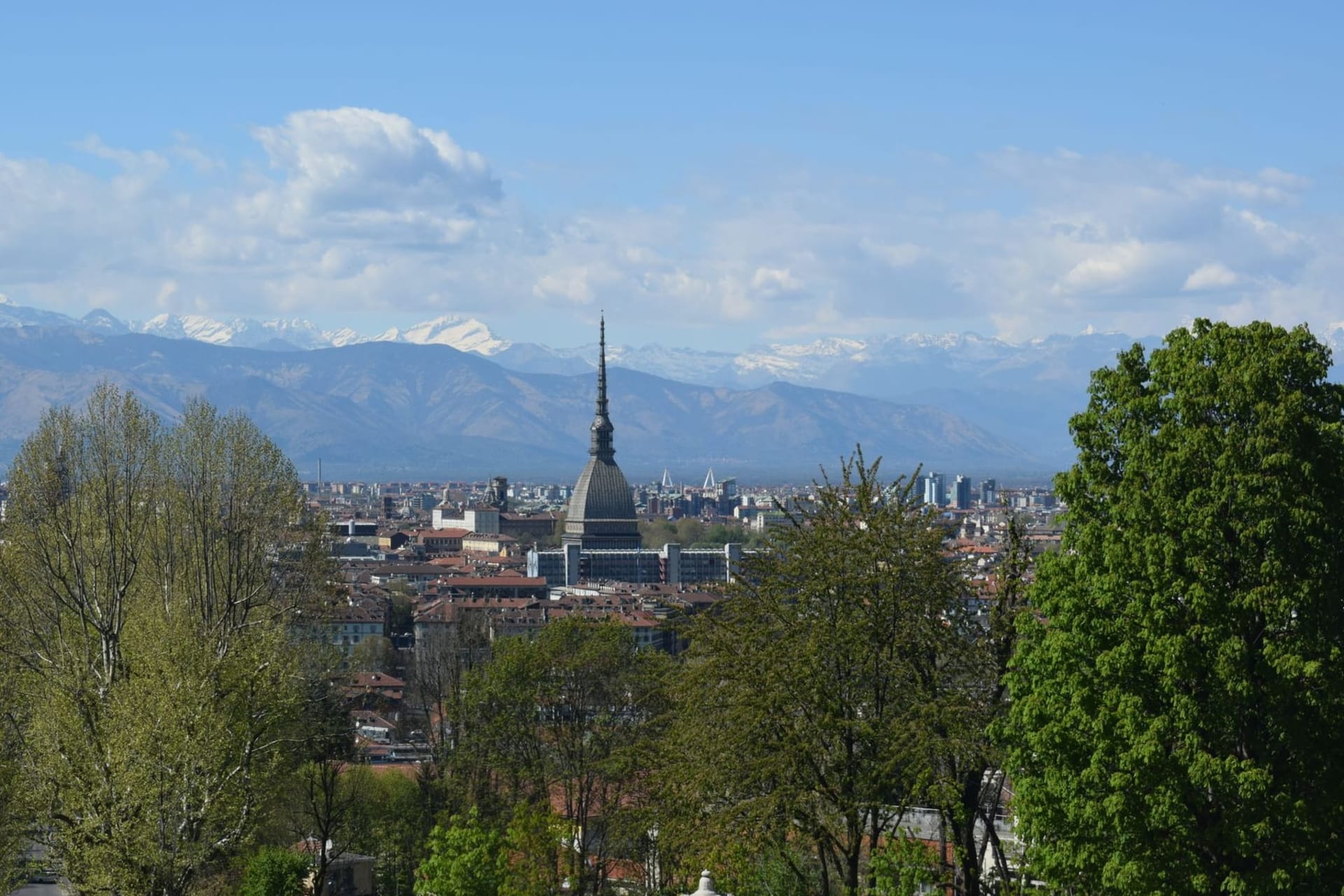
The Museo Nazionale del Cinema inside the Mole Antonelliana surprised me differently: not the collection but the building itself, a 167-meter-tall synagogue turned cinema tower with a glass elevator that rises through its hollow center like something out of Verne.
The Light on the Mountains
Torino’s particular gift is what happens at dusk when the sky west of the city clears. The Alps appear, sudden and enormous, as if the city has been hiding them all day. From Piazzale Gran Madre di Dio, across the river, you can see both the mountains and the perfect grid of the city below — engineering and geology in one frame.
When to go: April through June offers mild temperatures and fewer crowds before summer fills the piazzas; September and October bring the grape harvest from the surrounding Langhe and Monferrato wine regions, and the city takes on a particular amber quality in the afternoon light that seems almost arranged.