
A whitewashed cliff village where Tiberius kept a grotto full of marble monsters, and where I kept finding reasons to stay another day.
I drove down from Rome on a whim, following a friend’s offhand comment that the coast south of the city had a town “like Santorini, but Roman.” Sperlonga is not Greek, but I understood the comparison the moment the road crested the hill and the old town appeared below — a knot of whitewashed houses stacked on a promontory between two long beaches, the Tyrrhenian Sea doing its best impression of the Aegean. Sperlonga sits roughly halfway between Rome and Naples, in the province of Latina, and it has the particular quality of a place that tourists pass on the highway without ever knowing what they’re missing.
The Emperor’s Grotto
The reason Sperlonga exists on any map beyond local beach-town status is a cave. Just south of the modern town, along the coast road, is the Grotta di Tiberio — a natural sea cave that the emperor Tiberius converted into a private dining grotto, complete with a pool where he could keep fish and, according to Suetonius, nearly drowned when the ceiling partially collapsed during a banquet around 26 AD. Excavations in the 1950s uncovered an extraordinary trove of sculpture from the grotto floor: fragments of Homeric scenes — Scylla attacking Odysseus’s ship, the blinding of Polyphemus, Odysseus stealing the Palladium — carved by the same Rhodian sculptors responsible for the Laocoön group in the Vatican. The pieces are reassembled in the small Museo Archeologico Nazionale right at the site entrance, and standing in front of a marble Scylla with writhing sea-monster legs, in a museum you can walk to from a beach umbrella, is the kind of collision of high culture and low-key seaside town that Italy specializes in and nowhere else quite manages.
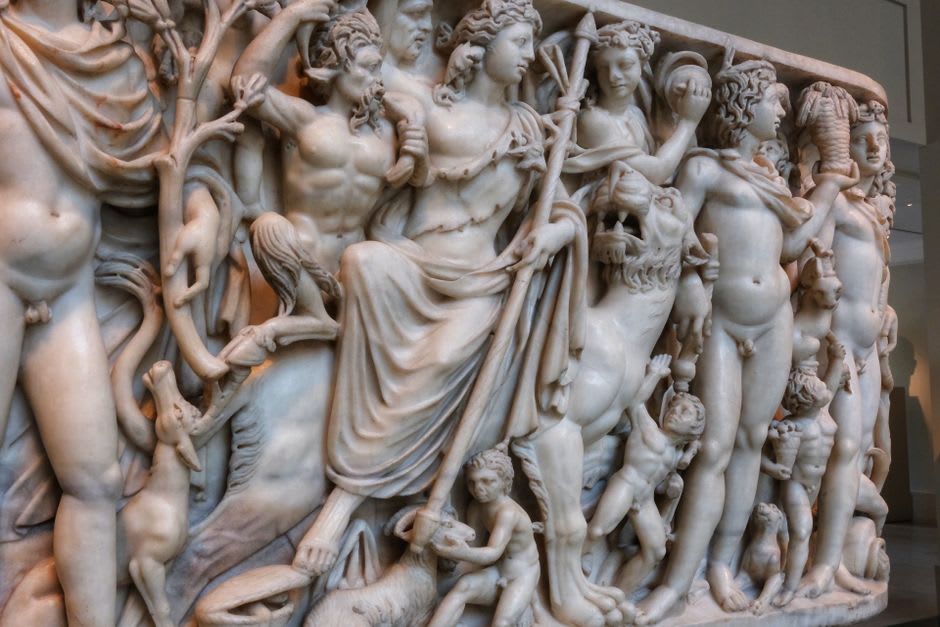
Getting Lost on Purpose
The old town itself rewards aimlessness more than any itinerary. Cars are banned from the historic center — a tangle of covered passageways, whitewashed stairs, and alleys narrow enough that neighbors can pass laundry between windows, originally built this way as a defense against Saracen pirate raids, which plagued this stretch of coast for centuries. There’s no real logic to navigating it; you just walk, and eventually the maze spits you out onto a terrace with a view of the sea, or a tiny piazza with a single bar and a handful of plastic chairs. I ordered a spritz at one of these and ended up talking to the owner for forty minutes about his uncle’s fishing boat, which is the kind of afternoon Sperlonga specializes in producing without you asking for it.
Below the old town, two crescent beaches wrap around the promontory, with fine golden sand that’s unusual for this part of the Lazio coast — most of it further north is darker and coarser. Local trattorie serve spaghetti alle vongole with clams pulled from water you can see from your table, and the regional specialty, tiella — a savory double-crusted pie stuffed with anything from octopus to escarole — is worth seeking out over the more predictable seafood-platter tourist trail.
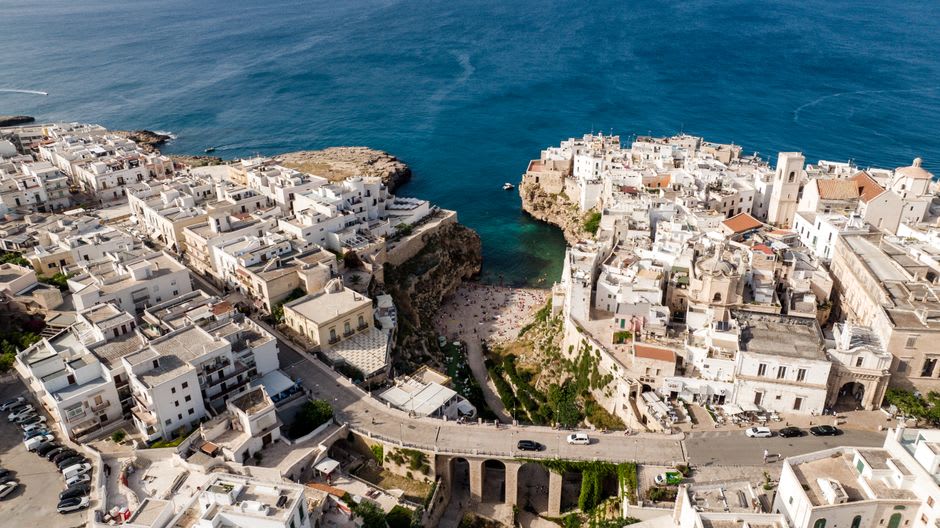
When to go: Late May through June or September gives you warm water and empty beaches, before and after the Roman and Neapolitan summer crowds descend in August.