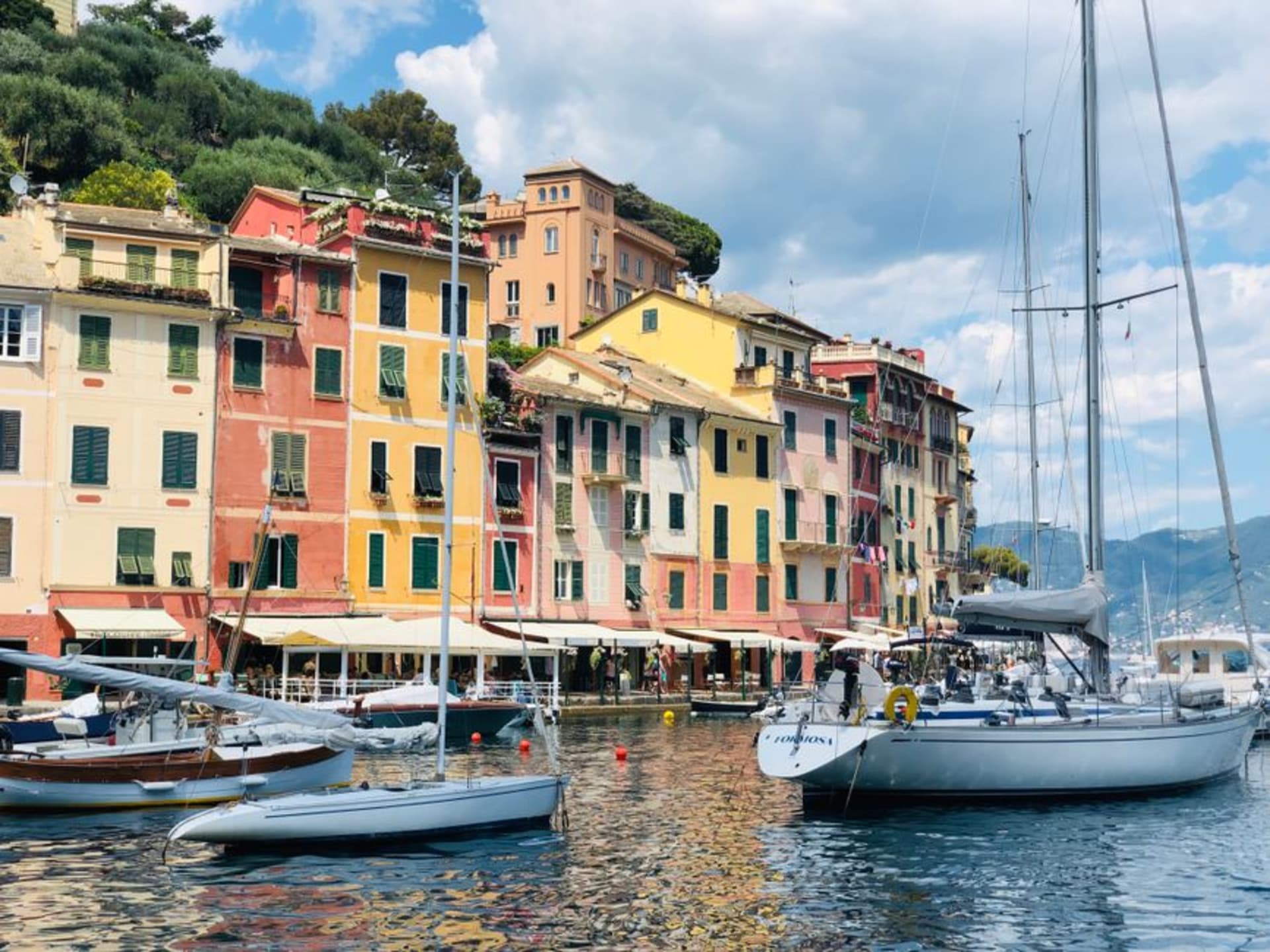
A fishing village that got too beautiful for its own good, where pastel houses crowd a tiny harbor and everyone, at some point, stops talking just to look.
Portofino is absurdly small, and that is entirely the point. The harbor — the Piazzetta, as everyone calls the little square that wraps around it — could not hold more than a few hundred people comfortably, and yet this tiny cove on the Ligurian coast has been drawing the impossibly glamorous since the 1950s, when Rex Harrison and the Hollywood set discovered it and never quite left. I arrived expecting something overrun and cynical, a victim of its own Instagram fame, and instead found a working fishing village that has simply learned to coexist with its own beauty.
The houses are the first thing anyone notices — terracotta, ochre, faded pink and yellow, stacked against the hillside in that particular Ligurian palette that was originally practical, not decorative. Fishermen painted their homes in distinct colors so they could recognize their own house from out at sea, fog or no fog. Centuries later the effect reads as pure whimsy, but it started as navigation. Boats still bob in the harbor below, though these days they share the water with yachts that cost more than most of the houses on shore.
Above the Harbor
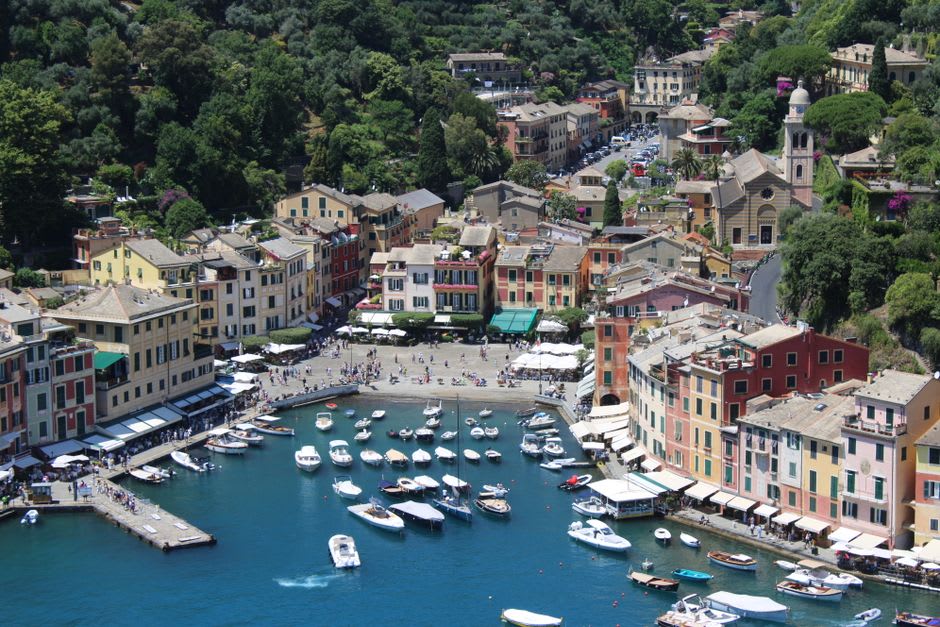
Climb past the church of San Giorgio — locals will tell you, with total conviction, that the relics of Saint George himself were brought back here by returning Crusaders, and whether or not you believe it, the small terrace beside the church gives you the single best view in Portofino, the whole crescent of the harbor laid out below with the Golfo Tigullio stretching beyond. Keep climbing and you reach the Castello Brown, a sixteenth-century fortress-turned-private-residence-turned-museum, its gardens looking straight down onto the boats. I sat there for the better part of an hour doing nothing but watching light change on the water, which is, I have come to accept, the correct way to spend time in Portofino.
For something less crowded, the coastal path to San Fruttuoso is one of the finest short walks in Liguria — about two hours through pine forest and along cliffside, ending at an eleventh-century Benedictine abbey that sits directly on a tiny beach, accessible otherwise only by boat. I went in the off-season and had long stretches of the trail entirely to myself, which felt like a small miracle given how famous this coastline has become.
The Price of Perfection
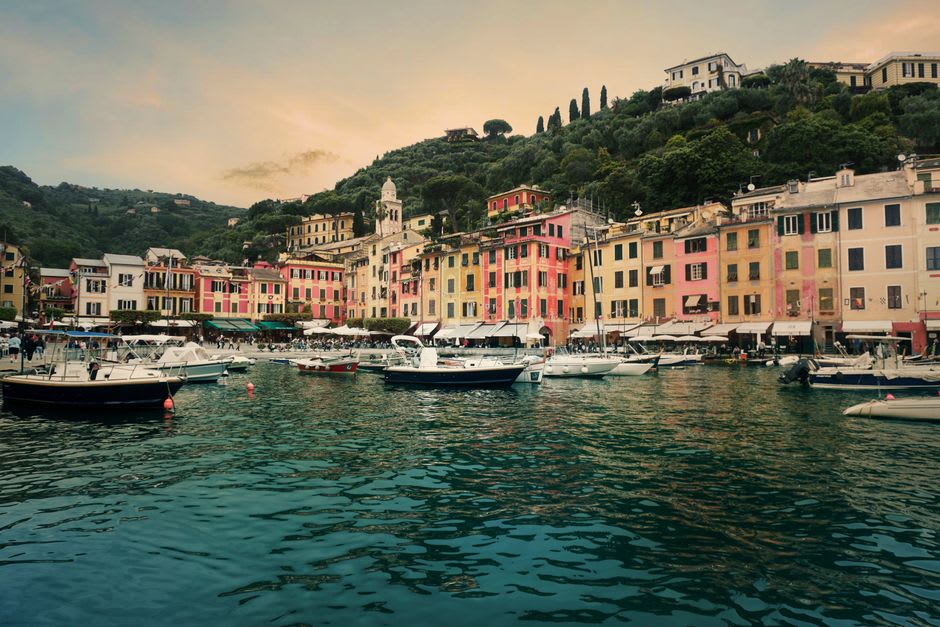
I won’t pretend Portofino is cheap, or that the espresso in the Piazzetta doesn’t cost noticeably more than the identical espresso two towns over. It is a place that knows exactly what it is worth. But the harbor at sunset, when the day-trippers have thinned out and the colors on the houses deepen into something almost theatrical, is worth the markup on the coffee. I ordered a glass of the local Vermentino, sat on a bench facing the water, and understood immediately why generations of people with far more money than me chose to build their lives, however briefly, around this cove.
When to go: Late May or September, when the light is soft, the sea is warm enough to swim, and the summer crowds haven’t fully arrived or have just started to thin.