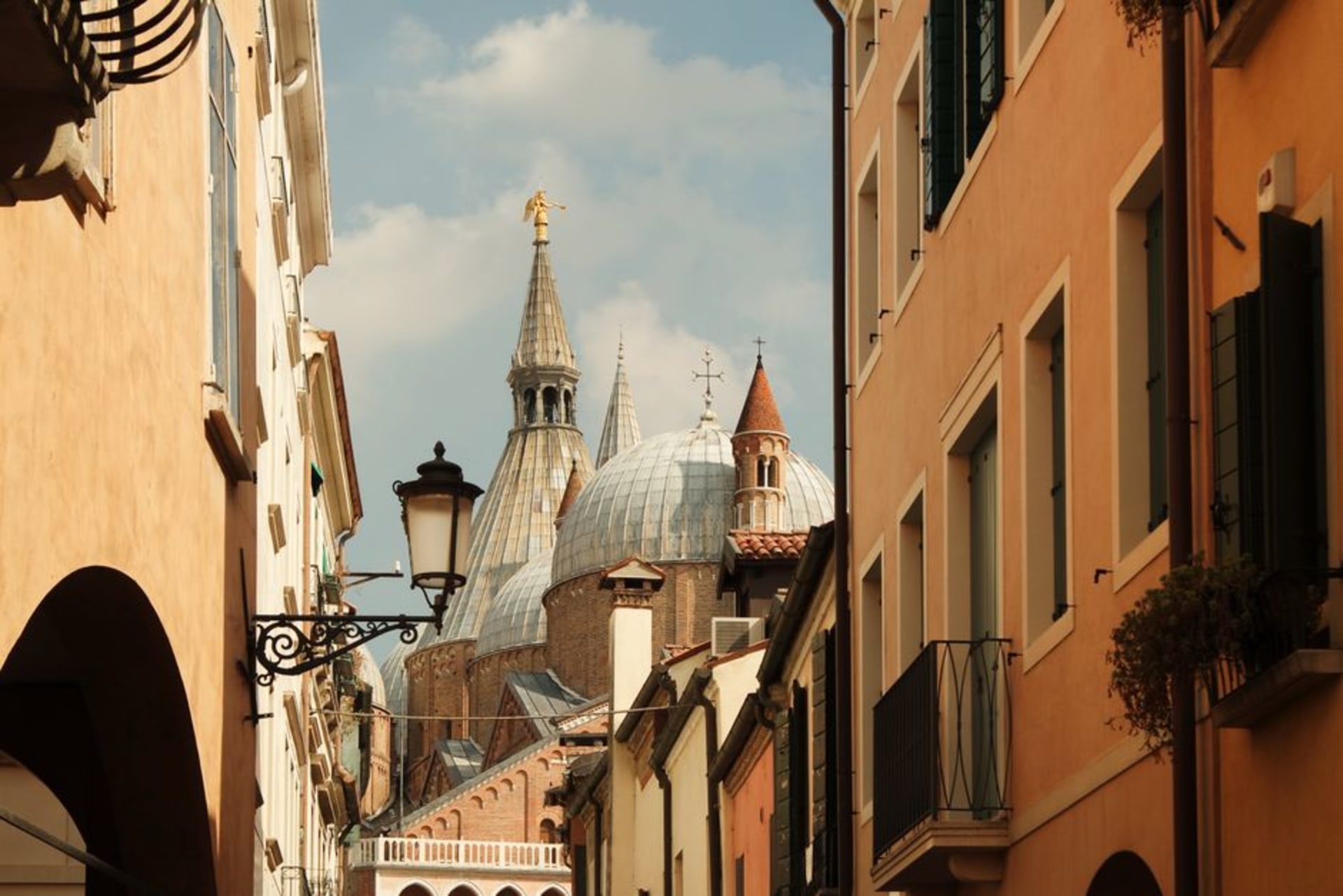
The city that taught Galileo and Giotto, standing quietly in Venice's shadow while holding some of the finest frescoes and the oldest botanical garden in the world.
Padua gets treated as a footnote to Venice — a 25-minute train ride most people take once, glance at a fresco, and leave. I made that mistake myself the first time. The second time, I gave it three days, and it wasn’t nearly enough. This is one of the oldest university towns in Europe, home to the University of Padua founded in 1222, where Galileo Galilei taught mathematics for eighteen years and where you can still stand in the world’s oldest surviving anatomical theater, a steep wooden funnel of a room built in 1594 where medical students once watched dissections by candlelight, craning over railings barely wider than a hand.
The city’s single greatest treasure, though, is a small brick building most visitors would walk past without a second glance from outside: the Scrovegni Chapel. Enrico Scrovegni commissioned Giotto to paint its interior around 1305, and what Giotto delivered changed the direction of Western art — figures with actual weight, grief, and interiority, painted a full century before the Renaissance is supposed to have started. The ceiling is a deep lapis blue scattered with gold stars, and the walls tell the life of Christ and the Virgin in a sequence so emotionally direct it still stops people cold. Visits are timed and limited — fifteen minutes at a stretch, preceded by a cooling-off period in an anteroom to protect the frescoes from humidity — and I remember standing in that anteroom slightly annoyed at the bureaucracy of it, then walking in and immediately understanding why they guard it so carefully.

Saints, Science, and a Very Old Garden
The Basilica of Saint Anthony, a domed pilgrimage church holding the tomb of the beloved Franciscan saint, draws pilgrims from across the Catholic world, its Byzantine-influenced domes visible from most of the old city. Out front stands Donatello’s equestrian statue of the condottiero Gattamelata, cast in 1453 and considered the first large bronze equestrian monument since antiquity — Donatello essentially reinvented a Roman art form here, and you can feel the weight of that ambition just looking at the horse’s stance.
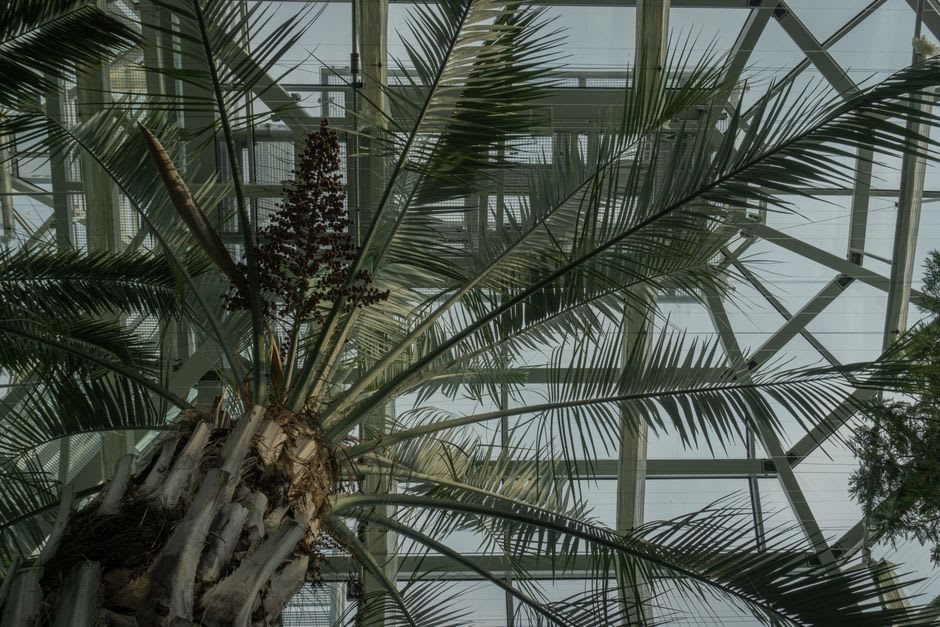
Then there’s the Orto Botanico di Padova, founded in 1545 as the garden of the university’s medical faculty, making it the oldest academic botanical garden in the world still in its original location. UNESCO listed it as a World Heritage Site for exactly that reason. Its circular walled layout, ringed by a moat, was designed to protect the plants from theft and grazing animals, and somewhere inside grows a dwarf palm planted in 1585 that Goethe came to see two centuries later and wrote about in his essay on plant metamorphosis — it’s still there, housed now in its own glass pavilion, an old, stubborn thing that has outlived every visitor who’s ever admired it.
Piazza Life
Padua’s civic heart is the Palazzo della Ragione, a medieval law court whose upper hall — one of the largest suspended medieval roofs in Europe — is covered floor to ceiling in astrological frescoes. Beneath it, the ground floor opens onto the twin markets of Piazza delle Erbe and Piazza della Frutta, still functioning produce markets today, stalls of cheese and vegetables set against thirteenth-century porticoes. I bought a wedge of Asiago and ate it sitting on the palazzo steps, watching Paduans go about an ordinary Tuesday in a piazza that has looked more or less the same for eight hundred years.
When to go: April to June or September to October, before or after the Venice crowds spill over, and while the botanical garden and the piazza markets are at their liveliest.