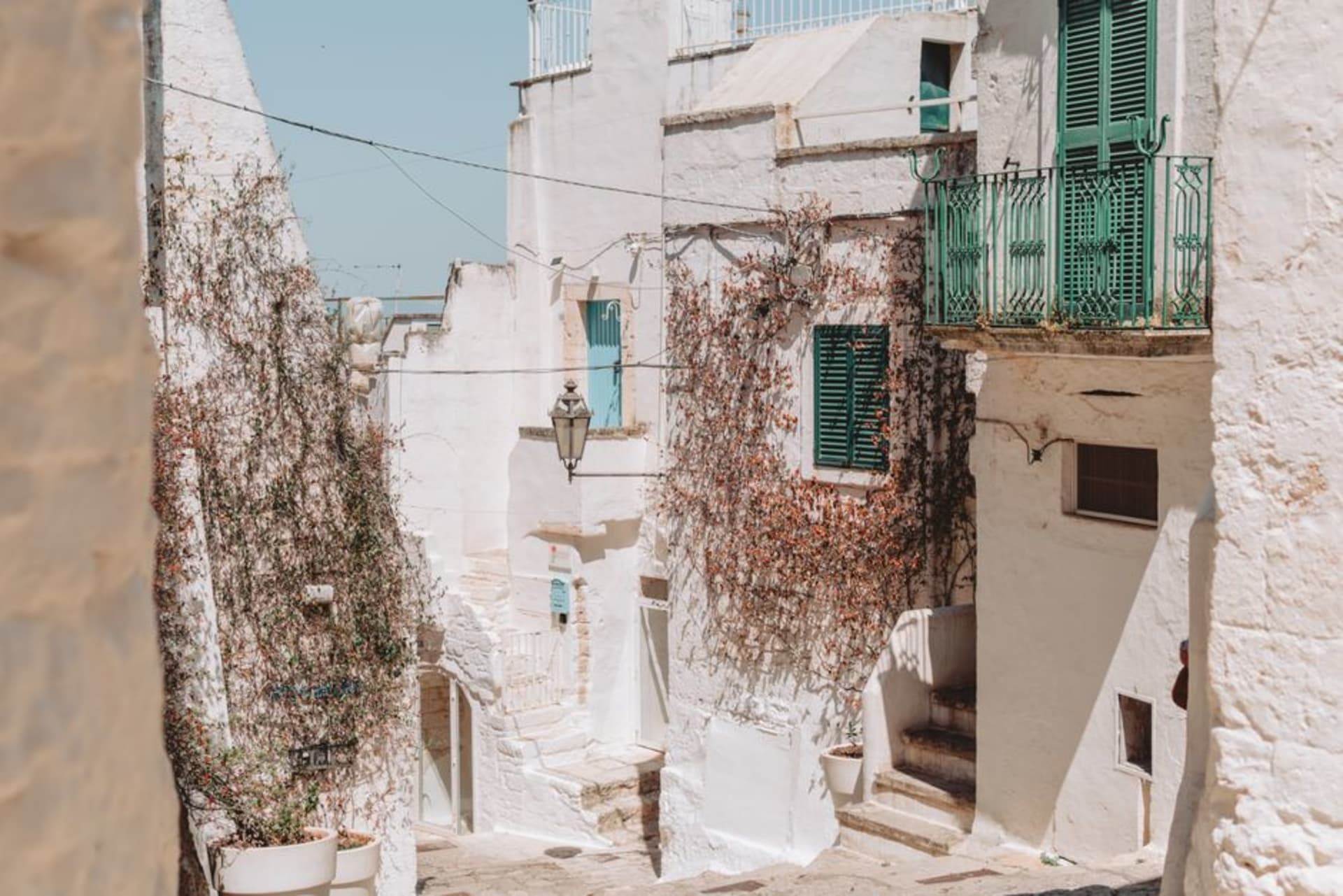
Ostuni
"La Città Bianca doesn't announce itself gradually — it appears all at once on the horizon, white on white on white, and you understand instantly why they never stopped painting it."
Ostuni sits on its hill like it's daring you to notice it from twenty kilometers away, all whitewash and stubbornness above the olive groves — I noticed it, and then I got lost in it for three days on purpose.
I saw Ostuni before I reached it, which is the only correct way to arrive. Coming up from the coast road near Villanova, the land goes flat and silver-green with olive trees for what feels like forever, and then the hill rises out of nowhere with the old town stacked on top of it like a pile of sugar cubes left in the sun. The whitewash isn’t a marketing decision — it dates back centuries, originally a defense against the plague, lime being a natural disinfectant that locals kept reapplying long after anyone remembered why. Whatever the original logic, the effect now is that the entire città bianca glows, especially in late afternoon when the light goes gold and the walls throw it back at you almost painfully bright.
Getting Lost on Purpose
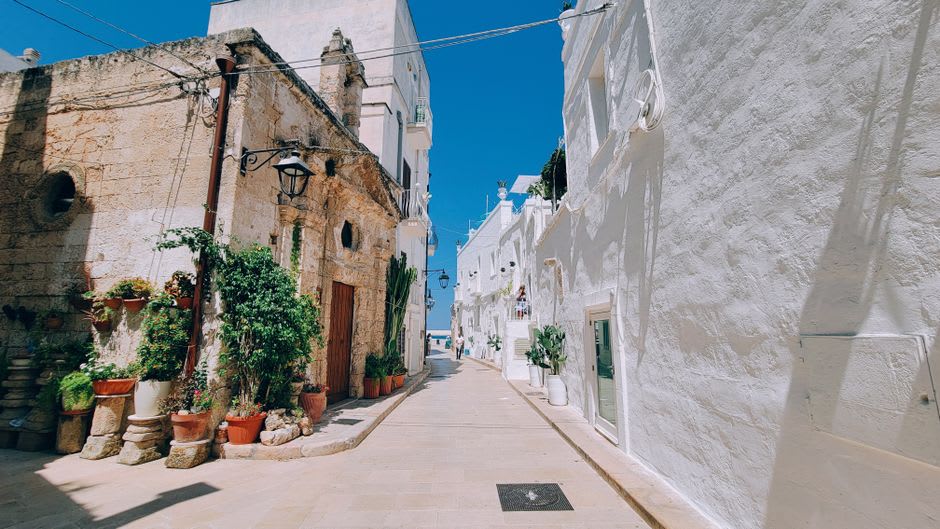
The old town is a labyrinth by design — narrow stepped alleys, sudden archways, staircases that dead-end into someone’s front door — and I stopped trying to navigate it with any intention after about twenty minutes. That’s the point. I’d wander into a vicolo thinking it led somewhere and instead find a woman shelling fave beans on a stool outside her door, or a cat asleep on a windowsill draped with drying laundry, or nothing at all except more white walls and a wedge of sea visible between two buildings far below. The Cattedrale di Ostuni anchors the highest point of town, its facade a strange and lovely mix of Gothic and Romanesque with a rose window that looks almost too intricate for the plainness surrounding it — everything else in Ostuni is so aggressively minimal that the cathedral’s carved stone comes as a small shock. I sat on the steps across from it with a granita and watched the light change for the better part of an hour, which is not something I usually admit to doing but which felt entirely correct in that particular piazza.
Olive Oil and the Land Below
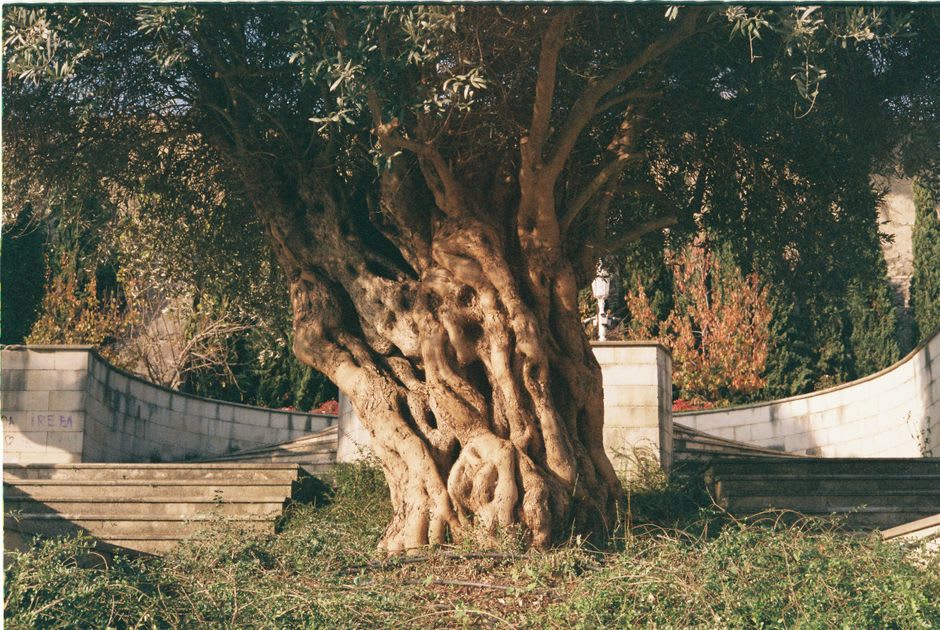
What I didn’t expect was how much the countryside around Ostuni would end up mattering as much as the town itself. This part of Puglia holds some of the oldest olive trees in Italy, gnarled trunks that twist into shapes that look sculpted rather than grown, some of them reportedly over a thousand years old. I rented a scooter for a morning and rode out through the groves toward Cisternino, stopping wherever the road happened to widen enough to pull over, and ended up talking my way into a small frantoio where a family was still pressing oil the traditional way. The smell of fresh-pressed olive oil is nothing like the bottled version — grassy, almost peppery, sharp enough to catch in the back of your throat — and I bought a tin I had no reasonable way of getting home intact. It didn’t survive the flight. I’ve never really recovered from that loss.
Down at sea level, Ostuni’s own stretch of coast — Costa Merlata and the beaches toward Rosa Marina — gets overshadowed by the hill town’s reputation, unfairly. The water there runs through that specific Adriatic turquoise that looks digitally enhanced in photos and somehow undersells itself in person, backed by low cliffs and pine scrub instead of the flatter sand you get further south. I spent one entire day doing nothing but alternating between that water and a beach umbrella, which after three days of alleys and staircases felt like the correct way to let the town settle in properly.
When to go: Late May through June or September gives you the white-hot light and warm sea without August’s crowds and heat; if you can only manage August, come for the early mornings and accept the siesta hours as non-negotiable.