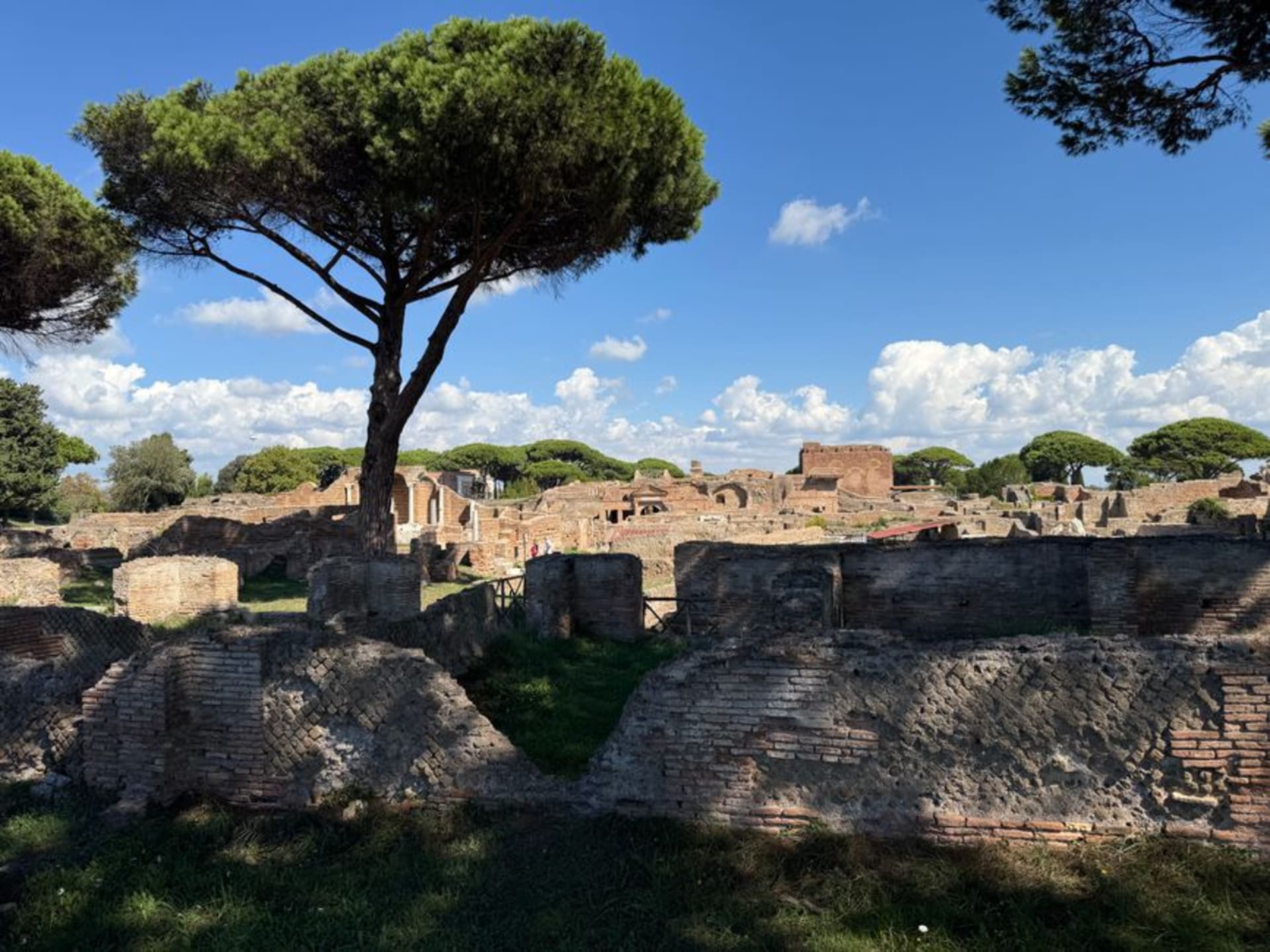
Rome's ancient port city, abandoned to silt and pine trees, where you can wander a two-thousand-year-old street grid without another tourist in sight.
I’ll say the thing every visitor to Ostia Antica ends up saying, because it’s true and worth repeating: this is Pompeii for people who don’t want to fight three tour buses for a photo. Take the Roma-Lido train from Porta San Paolo, next to the Piramide metro stop, and in about half an hour you’re standing in front of the necropolis gate of a Roman city that once housed fifty thousand people and now houses almost nobody, its brick apartment blocks and marble temples slowly being reclaimed by umbrella pines and wildflowers.
Rome’s Working Port
Ostia was founded, according to tradition, by Rome’s fourth king Ancus Marcius in the seventh century BC, guarding the mouth of the Tiber — the name itself comes from “ostium,” Latin for river mouth. For centuries it was Rome’s commercial lifeline, the port through which grain from Egypt and Sicily flowed to feed the capital. What makes it so vivid to walk through today is that Ostia was a working town, not just a monumental one, and the ruins show that: multi-story apartment buildings called insulae, some of the earliest evidence of a middle class living in stacked urban housing anywhere in the ancient world. You climb worn stone stairs that Roman dockworkers climbed, past the shells of shops with their counters still visible, past a fullonica where cloth was washed and treated. The Piazzale delle Corporazioni, behind the theater, has black-and-white mosaics identifying the trade guilds — shipowners, rope makers, grain merchants — that once operated from the offices ringing the square, a kind of ancient chamber of commerce laid out in stone.
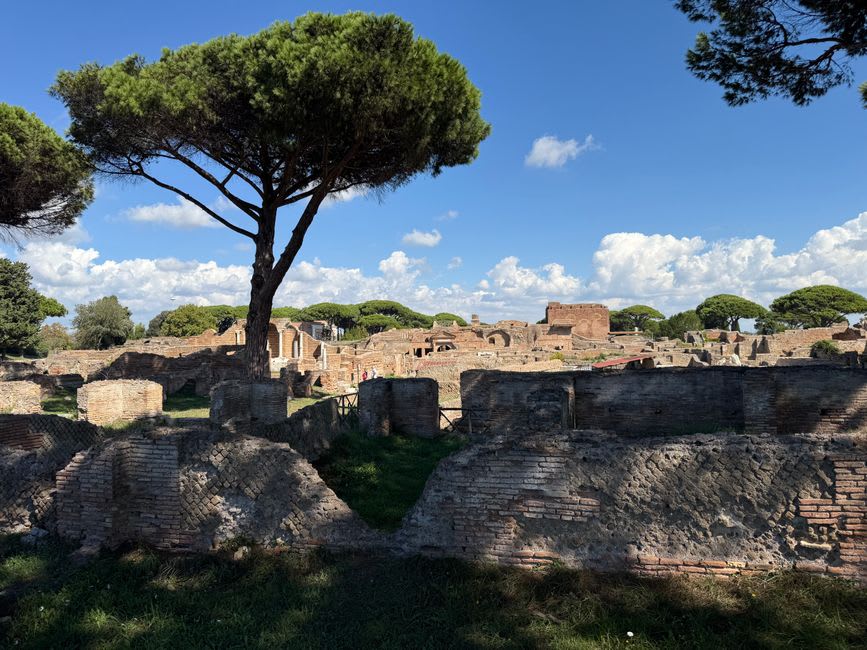
Why It Survived So Well
Ostia’s remarkable state of preservation owes something to a slow, unglamorous death rather than a dramatic one. Unlike Pompeii, it wasn’t buried in a single catastrophic eruption; it declined gradually from the third century onward as the harbor silted up and trade shifted to the newer port at Portus nearby, and by the early Middle Ages it was largely abandoned, its population dwindling due to malaria in the surrounding marshland. The silt that killed the port also buried and protected the buildings, which is why you can still see the Terme di Nettuno with its black-and-white mosaic of Neptune driving sea horses, or climb into the seats of the well-preserved theater, built under Augustus and still used for performances today. I sat in that theater on a quiet October morning with the sound of nothing but wind in the pines and a few birds, and it was one of the more affecting archaeological experiences I’ve had anywhere — more intimate than the Forum, less performed than the Colosseum.
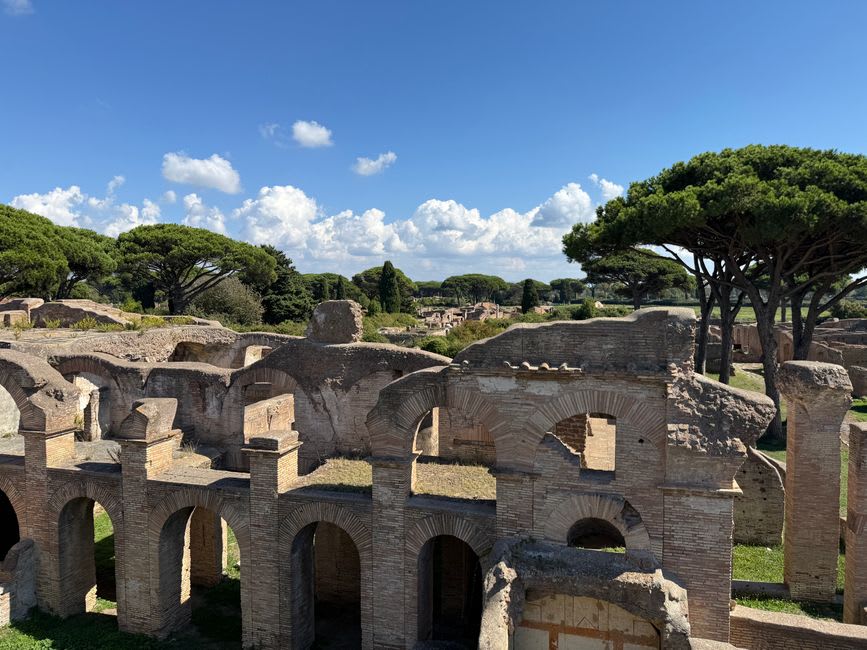
When to go: Spring and autumn mornings are ideal — the site has very little shade, so summer midday visits are brutal, and an early start lets you have the ruins nearly to yourself before day-trippers from Rome arrive.