
A Ladin village under the Alpe di Siusi where every third door seems to hide a wood-carver, and the mountains do the rest of the talking.
Ortisei sits at the mouth of the Val Gardena, and it is the first place in Italy where I heard a language I couldn’t place at all — not Italian, not German, but Ladin, a Rhaeto-Romance tongue that has survived in these five Dolomite valleys since Roman legions mixed with the local Rhaetian population two thousand years ago. Street signs here run three deep: Ladin, German, Italian, in whichever order local politics of the moment favors. It’s a small, stubborn detail, but it told me more about this place than any guidebook paragraph could — a community that has spent centuries being ruled by everyone else and answering, quietly, by keeping its own language alive.
Wood, Faith, and the Odle
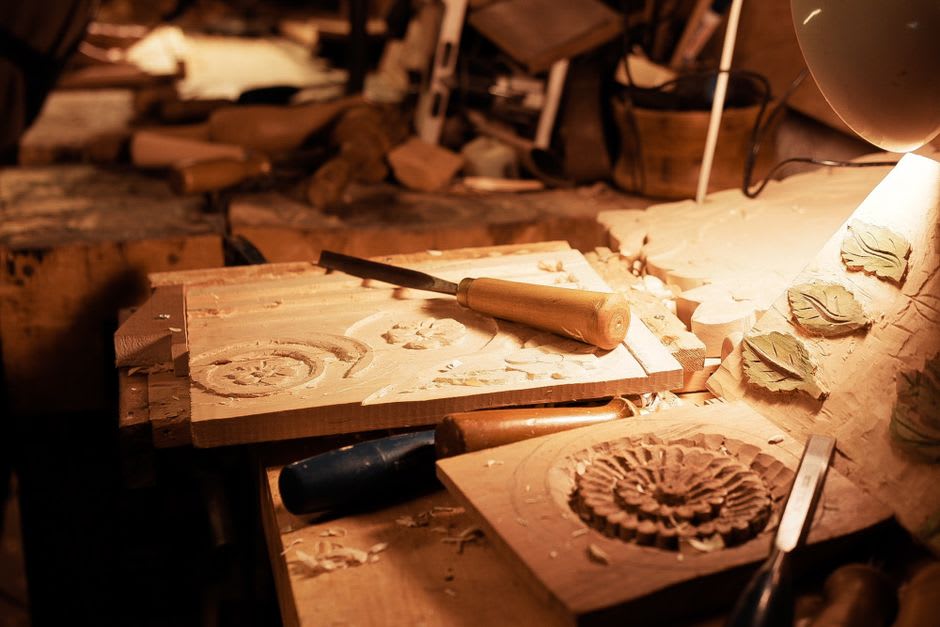
Val Gardena has been a center of woodcarving since at least the seventeenth century, when farmers, shut in by snow for half the year, turned to whittling as a winter trade. What started as toys and religious figures grew into an export industry that shipped Gardena Nativity scenes and saints across Catholic Europe, and the craft is still visible everywhere in Ortisei — in shopfront windows, in the workshops you can hear before you see, chisels tapping against limewood. I spent an hour in one studio watching a man carve a Madonna’s face from a single block, and left understanding why the valley’s museum, the Museum Gherdëina, treats woodcarving as seriously as fine art, because here, it is.
The real draw, though, is what rises behind the town. The Seceda cable car lifts you in a few minutes from Ortisei’s rooftops to a ridge at over 2,500 meters, where the jagged Odle massif — a UNESCO World Heritage site since 2009, along with the rest of the Dolomites — comes into full view. I have seen a lot of mountains. I was not prepared for the Odle, a wall of vertical grey spires that look less like geology than architecture, backlit gold at sunset in a way that made everyone on the platform go quiet at the same moment. Reinhold Messner, the South Tyrolean climber who was first to summit Everest without supplemental oxygen, grew up in these valleys, and standing under the Odle, that biographical fact stops being trivia and starts making obvious sense.
The Alpe di Siusi
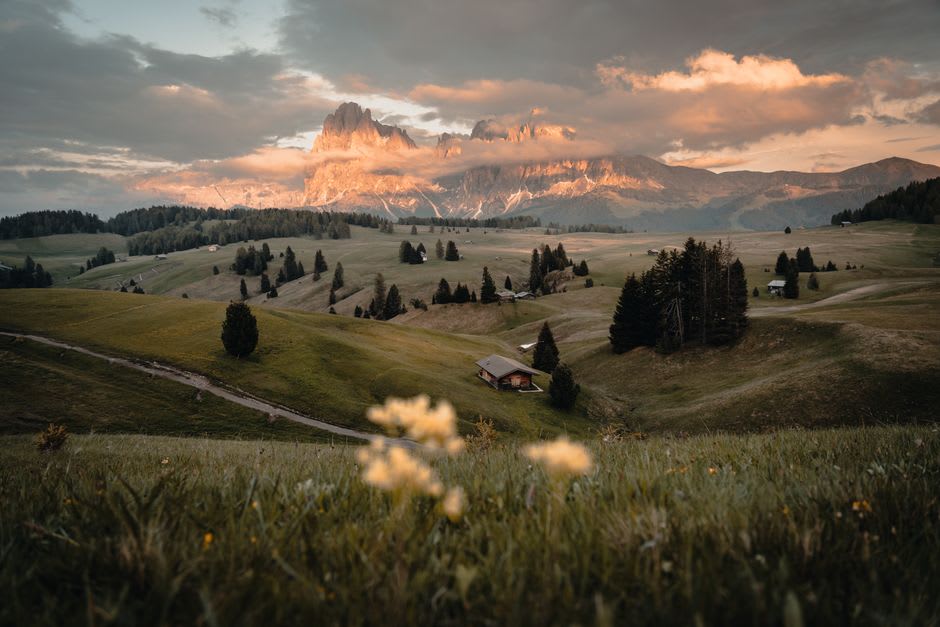
South of town spreads the Alpe di Siusi, the largest high-altitude alpine meadow in Europe, a rolling plateau of grazing land backed by the Sciliar massif. Cars are largely banned in summer, so you arrive by cable car or shuttle bus and walk out into a landscape of grazing cattle, wildflower meadows, and wooden farm huts that has barely changed in silhouette for a century, even as the crowds around it have grown considerably. I rented a bike near the upper station and rode out until the trail crowds thinned, stopping at a rifugio for a plate of speck and Schüttelbrot, the local flatbread, with the whole plateau falling away toward the peaks.
When to go: July and August for wildflower season on the Alpe di Siusi and full cable car access to Seceda; December through March if you’re here to ski Val Gardena’s slopes, part of the vast Dolomiti Superski network — just book well ahead, since this valley is no longer anyone’s secret.