Novara
"You see the dome before you see the city. That felt right, somehow — the ambition arriving first."
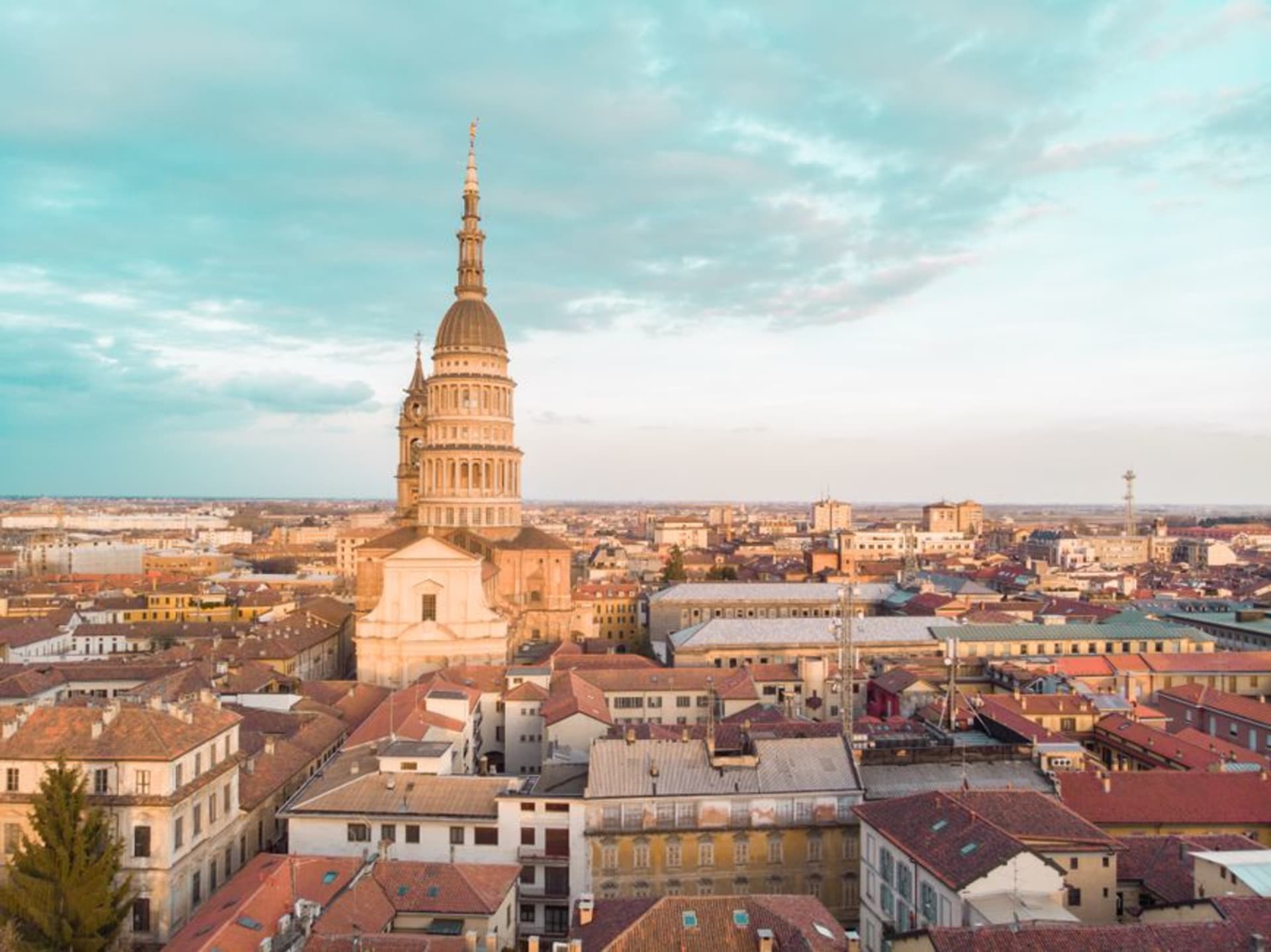
A dome that seems too tall for its city, rising over rice paddies that turn the plain into a second sky each spring.
Novara is the kind of place that gets driven past on the autostrada between Milan and Turin without a second glance, which is a shame, because the skyline visible from that same autostrada is genuinely strange and wonderful: the Basilica di San Gaudenzio’s dome, a spindly, soaring cupola designed by Alessandro Antonelli — the same architect responsible for Turin’s Mole Antonelliana — rises 121 meters into the air, wildly disproportionate to the modest city beneath it. Antonelli was obsessed with height and thin masonry engineering, and Novara’s skyline is essentially the physical record of one architect’s stubbornness winning out over every sensible objection his patrons raised.
An Old Roman Crossroads
Novara’s history runs older than its famous dome. It was a Roman municipium, then a free medieval commune, then fought over relentlessly by the Visconti and Sforza dukes of Milan and the House of Savoy, changing hands so many times that the historic center still reads like a layered argument between eras — a Romanesque baptistery tucked a few steps from Baroque palazzi, a grid of streets whose logic dates to the Roman castrum. The Broletto, a cluster of medieval civic buildings around a quiet inner courtyard, is where the city’s communal government met centuries before Italy existed as a unified idea, and it’s still one of the most atmospheric corners of the old town, largely free of tourists.
Rice, Not Wine
This is where Piedmont stops being wine country and becomes something else entirely: the Novara plain, along with the neighboring Vercelli province, forms the heart of Italian rice cultivation, and in late spring the fields around the city flood for planting and turn into a vast mirror, thousands of hectares reflecting the sky back at itself, dotted with herons hunting the shallows. Novara’s signature dish leans hard into this identity — paniscia, a dense risotto cooked with beans, salami, and local red wine, heartier and earthier than its more famous cousin from Milan, built for people who worked the rice paddies rather than people who dined out. I ate a bowl of it at a trattoria near the Duomo on a cold evening and understood immediately why it’s considered peasant food that outgrew its origins.

Climb the dome if the season allows it — the panorama stretches from the Alps to the rice plains in one uninterrupted sweep, a view that makes Antonelli’s stubbornness feel entirely justified. Then come back down to a city that has been quietly, competently itself for two thousand years, unbothered by how little attention the rest of the world pays it.
When to go: May and June, when the rice fields are freshly flooded and mirror-bright — a genuinely surreal sight from the surrounding countryside. Autumn brings harvest and risotto season proper.