Monopoli
"Monopoli never asked me to be impressed — the fishermen were just unloading the morning's catch like they do every morning, and that unbothered ordinariness was exactly what won me over."
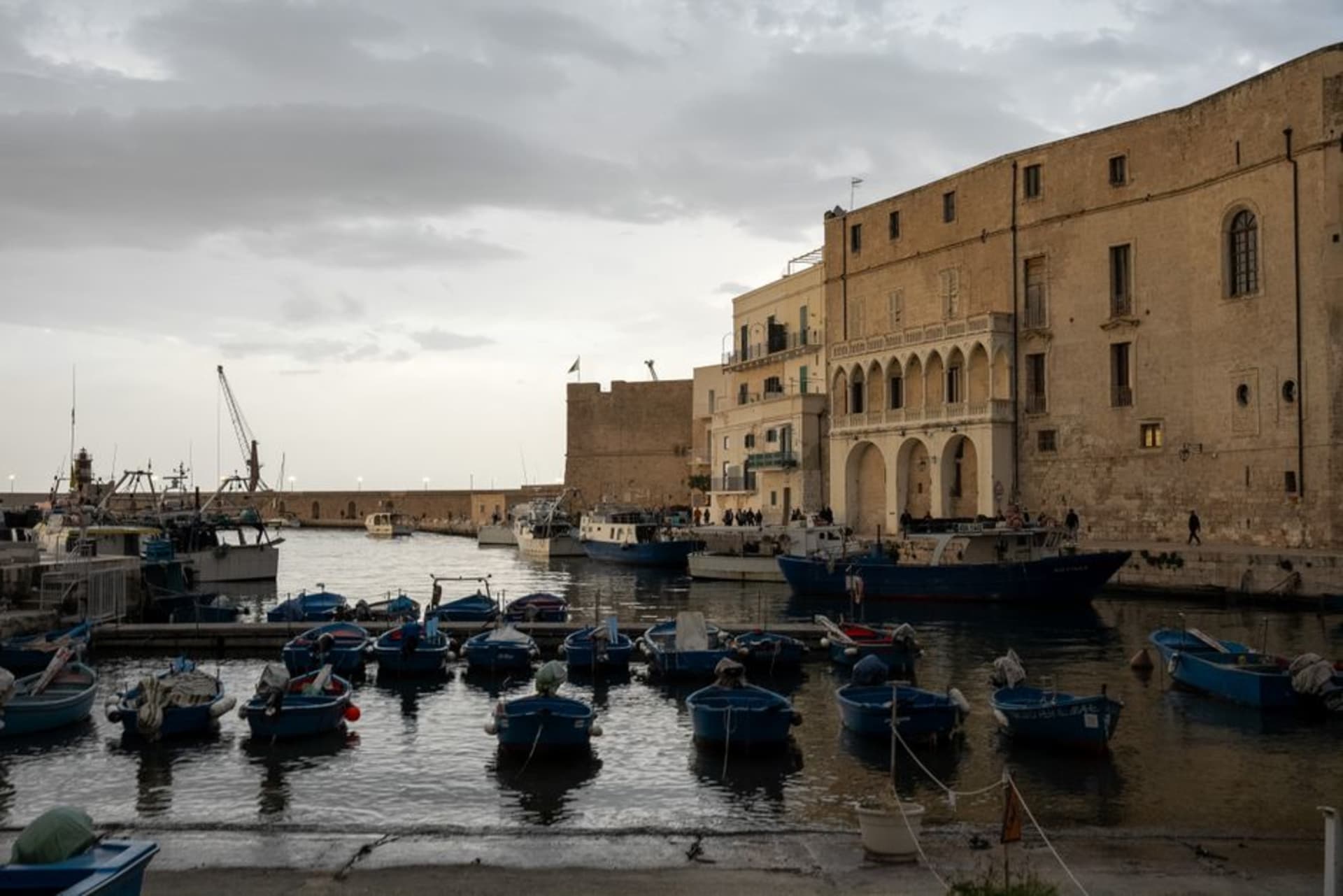
Monopoli is what happens when a working fishing port and a genuinely handsome old town occupy the same small stretch of Adriatic coast and neither one bothers dressing up for visitors — I liked it more than towns that try much harder.
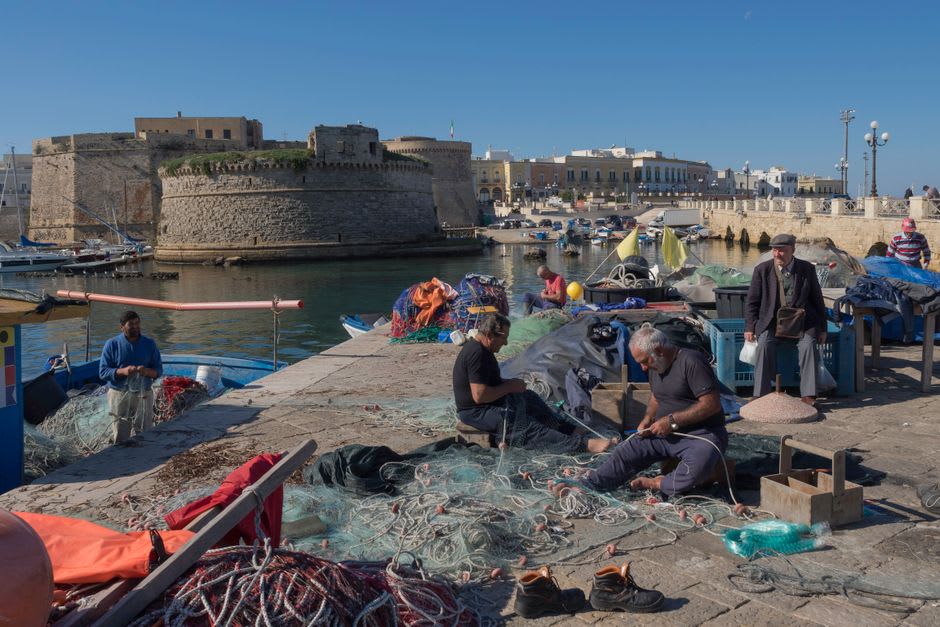
Monopoli doesn’t do much performing, and that’s precisely what I ended up loving about it. Twenty minutes south of Bari and a short drive north of Polignano, it gets a fraction of the attention either of those places attracts, which means the old port still functions as a working harbor rather than a photo backdrop. I arrived mid-morning and the quay was full of gozzi and trabucchi-style fishing boats, nets draped over the sides to dry, men in rubber boots sorting the catch into crates while a couple of cats worked the edges hoping for scraps. Nobody was performing authenticity for an audience; this was just Tuesday.
A Coastline Built From Small Coves
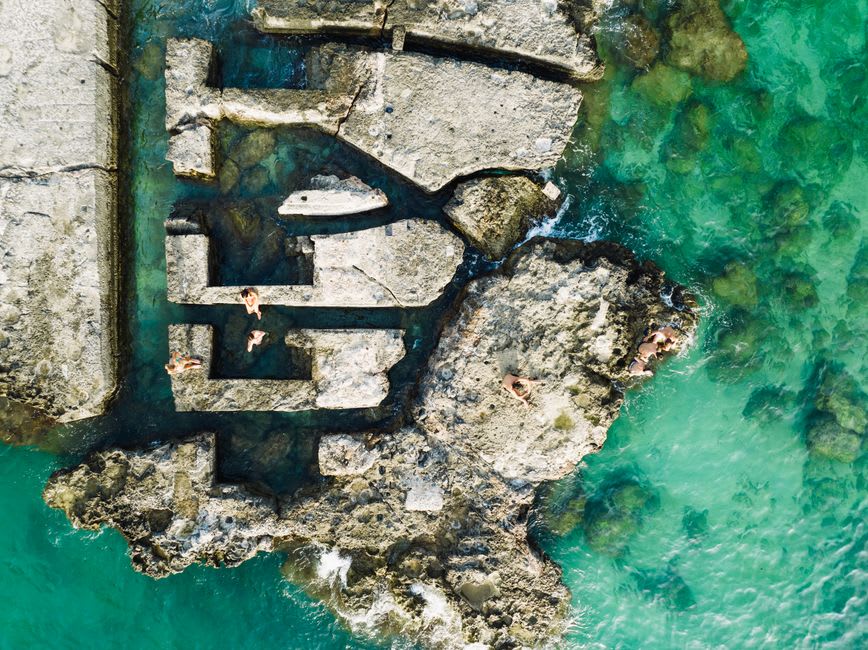
What sets Monopoli apart from its more famous neighbors is the shape of its coastline — instead of one dramatic cliff or a single sweeping bay, the town’s edges break into a long sequence of small rocky inlets, cale, tucked between low limestone outcrops both inside the harbor walls and along the shore to the south. I spent an afternoon working my way down that coast on foot, dropping into a different tiny cove every few hundred meters, most of them nearly empty on a weekday, the water going from pale green in the shallows to a much deeper blue past the rocks. There’s something almost architectural about how the coast is carved here, little rooms of sea walled in by stone, each one private enough that I stopped bothering to find the next and just stayed.
Centro Storico and the Castello
The old town sits behind medieval walls on a small promontory, its street plan an unhurried tangle of whitewashed lanes opening onto the odd baroque church facade or a balcony strung with laundry. The Cattedrale della Madonna della Madia anchors the main piazza, its interior richly decorated in a way the plain exterior doesn’t quite prepare you for, home to a Byzantine icon that, according to local tradition, arrived floating on a wooden raft in the twelfth century — the kind of origin story every good port town seems to need. Down at the water, the Castello di Carlo V juts out on its own spit of rock, built in the 1500s under Spanish rule to guard the harbor from raids, its low, thick-walled bastions looking more functional than decorative even now. I ended the day back at the port as the fishing boats came in for the second time, buying a bag of fresh sardines from a woman working straight off her boat, no stall, no register, just a scale and a knife.
When to go: May, June, and September give the best balance of warm water and manageable crowds; go early morning to catch the port at its most alive, when the boats are still coming in.