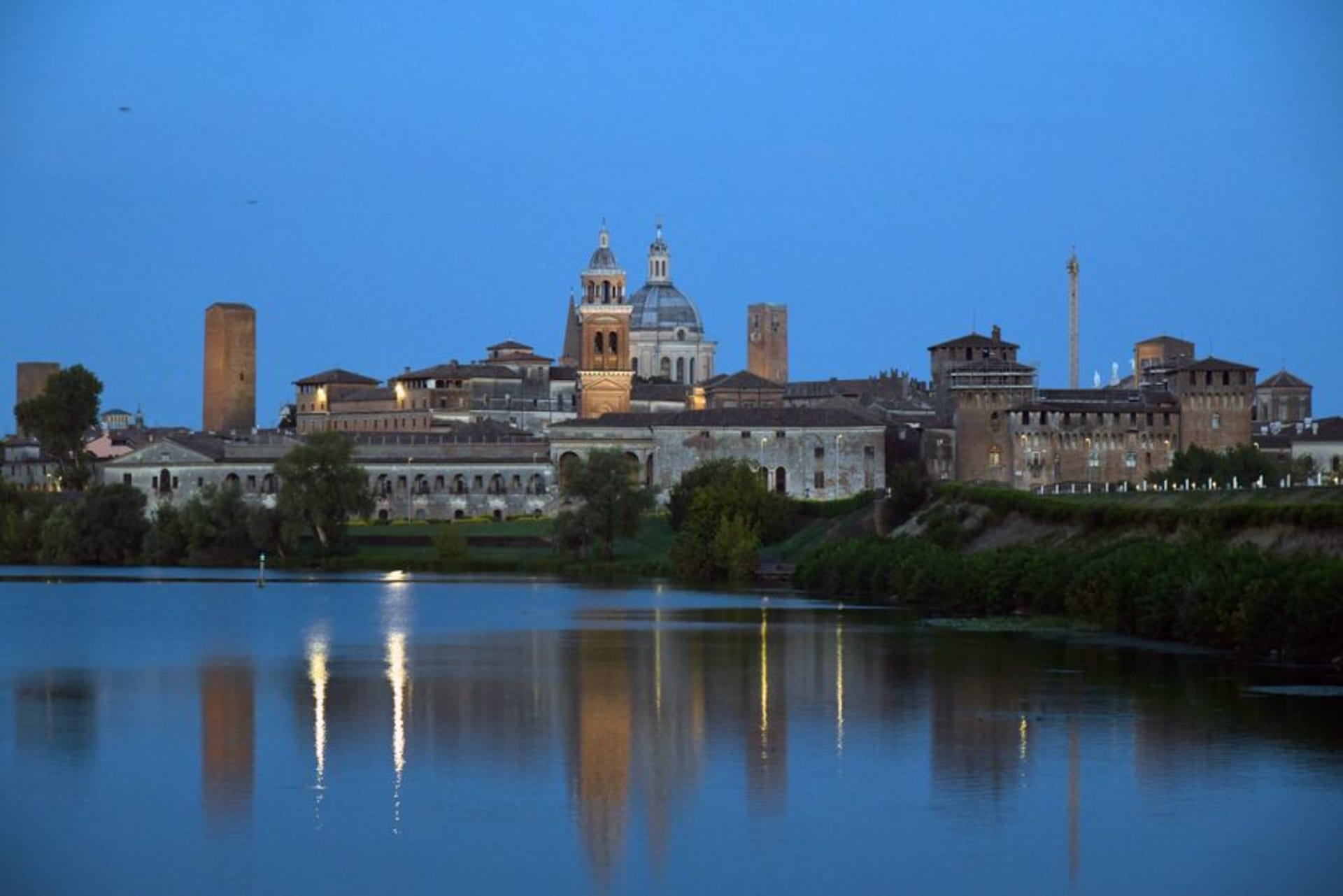
Mantua
"Virgil was born near here, and I finally understood why poets need silence like this."
A Renaissance court city surrounded on three sides by artificial lakes — proof that even swampland can be turned into splendor if the Gonzaga family wants it badly enough.
Mantua sits nearly surrounded by water, three lakes formed centuries ago by damming the Mincio River, a defensive engineering feat that turned an otherwise ordinary patch of the Po plain into something close to an island fortress. The effect today has nothing to do with defense and everything to do with atmosphere: cross one of the causeways into the old town at dusk, watch the domes and towers go gold and then gray against the still water, and you understand immediately why this unassuming Lombard city — smaller and quieter than Milan, less visited than Verona just up the road — punches so far above its size in cultural weight. UNESCO agreed enough to list Mantua and nearby Sabbioneta jointly as a World Heritage site in 2008.
The Gonzaga Court
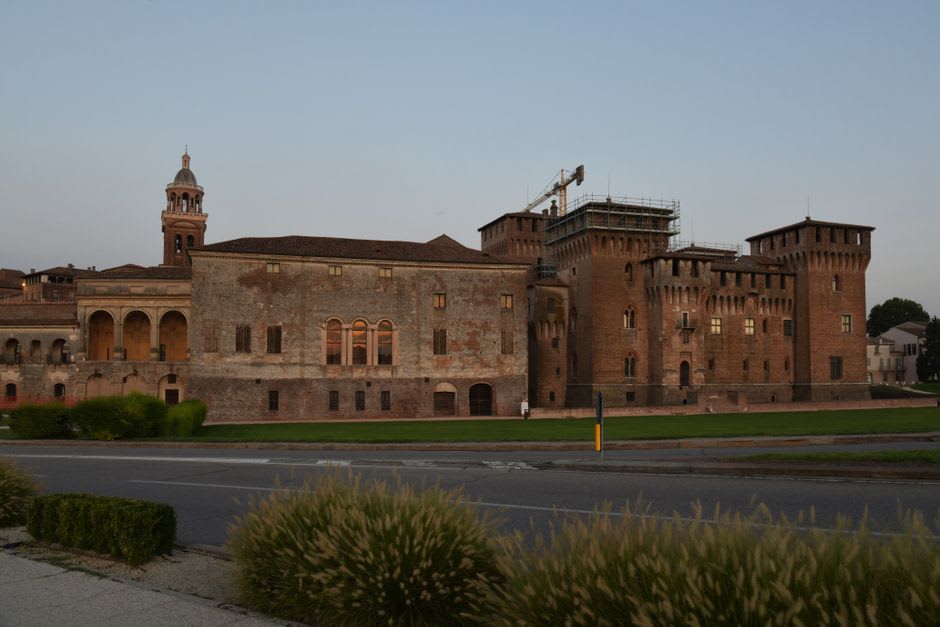
For nearly four hundred years, from the thirteenth century until 1707, Mantua was ruled by the Gonzaga family, and they spent that time turning the city into one of the great courts of Renaissance Italy — patrons to Andrea Mantegna, Giulio Romano, and composer Claudio Monteverdi, whose opera L’Orfeo, one of the earliest operas ever written, premiered here in 1607 at the Gonzaga court. The Palazzo Ducale, their residence, is enormous — several hundred rooms, effectively a small city of its own stitched together over generations — but the room everyone actually comes for is the Camera degli Sposi, painted by Mantegna in the 1470s. Standing under that ceiling, looking up into his trompe-l’oeil oculus with its painted figures peering down as if through a real opening in the roof, I felt the specific vertigo of a trick that still works perfectly five and a half centuries after it was played.
Palazzo Te and the Lakeside Walk
Across town, on what was once an island used for the Gonzaga stud farm, the Palazzo Te is Giulio Romano’s masterpiece — a pleasure palace built for Federico II Gonzaga in the 1520s and 30s, and deliberately, gleefully strange. The Sala dei Giganti, where painted giants appear to be crushed by collapsing architecture on every wall and the ceiling, was designed to physically disorient visitors standing in the center of the room, and it still does; I stood there rotating slowly, genuinely unable to find a stable horizon, and laughed out loud at how well four-hundred-year-old special effects can still land.

Outside the palaces, Mantua is a food town in its own quiet, unshowy way — tortelli di zucca, pumpkin-filled pasta dressed with butter and amaretti crumbs, sounds strange until you taste the sweet-savory balance of it, and it’s a dish I’ve never found done quite right anywhere outside Lombardy. Walk the lakeside path along Lago Inferiore in the evening, past anglers and cyclists and couples doing exactly what I was doing, and the city’s slower rhythm compared to Milan just an hour away starts to make complete sense.
When to go: September brings the Mantua food and wine festival along with pleasant temperatures; spring is lovely too, though the lakes can attract mosquitoes by high summer, so pack accordingly if you visit in July or August.