
Lake Garda
"Lia said the water was the colour of a swimming pool that had read too much poetry. She wasn't wrong."
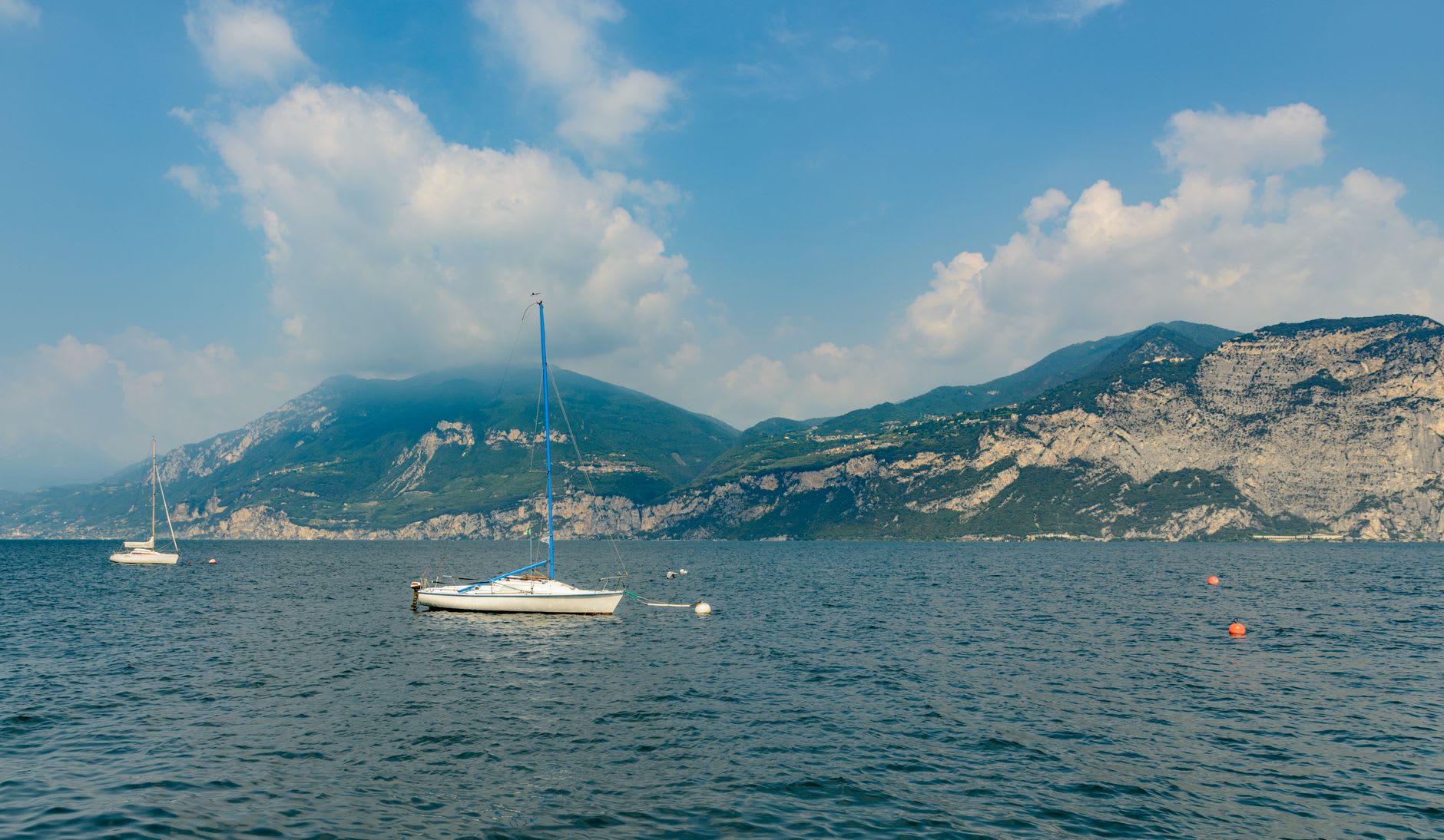
I had been to Lake Como and assumed, as people do, that I’d therefore seen the Italian lake thing and could move on. Then a friend in Verona told me I was an idiot and put us on a train to the southern shore of Garda, and within an hour I understood that the lakes are not interchangeable. Garda is bigger — Italy’s largest lake by some distance — and it does something Como doesn’t: it changes personality completely from one end to the other. The south is soft, warm, almost Mediterranean. The north is a fjord with a wind problem. Both share that absurd water, a blue so saturated Lia said it looked like a swimming pool that had read too much poetry.
Sirmione, and a Roman who knew what he was doing
We started at Sirmione, a town stretched along a needle-thin peninsula that pokes out into the southern lake. You enter through a moated Scaliger castle with crenellations straight out of a child’s drawing, and the streets beyond are pure summer crush — gelato, sunburn, people photographing the castle from inside the castle. I nearly turned around. I’m glad I didn’t, because at the tip of the peninsula sit the Grotte di Catullo, the sprawling ruins of a Roman villa spread across an olive grove with the lake on three sides.
The poet Catullus is said to have had a place near here, and standing among the broken brick arches with the water flashing through the olive trees, I stopped resenting the crowds. Whoever built this villa nearly two thousand years ago chose the single best spot on the entire lake and knew it. The olive trees are still worked; the oil from Garda’s shores is some of the most northerly produced anywhere, thin and grassy. We swam off the rocks below the ruins in water that was bath-warm and clear to the bottom.
The lemons, and the wind
The next day we took the ferry north, and the lake narrowed and the mountains closed in. At Limone sul Garda the old lemon houses — the limonaie, stone-pillared terraces where citrus was grown improbably far north, sheltered through the winter — climb the steep shore in tiers. Lemons here were a serious industry once, shipped across the Alps to places that couldn’t dream of growing their own. A few terraces have been restored, and wandering through one with the smell of citrus leaf and the lake glittering below was the kind of small, specific pleasure I travel for.
By Riva del Garda at the very top, the character had changed entirely. The wind that funnels down the mountain valley each afternoon — the Ora — had filled the northern lake with sailboards and kitesurfers, dozens of them, leaning into a breeze you could practically schedule. We sat with a beer and watched, both of us slightly relieved not to be out there.
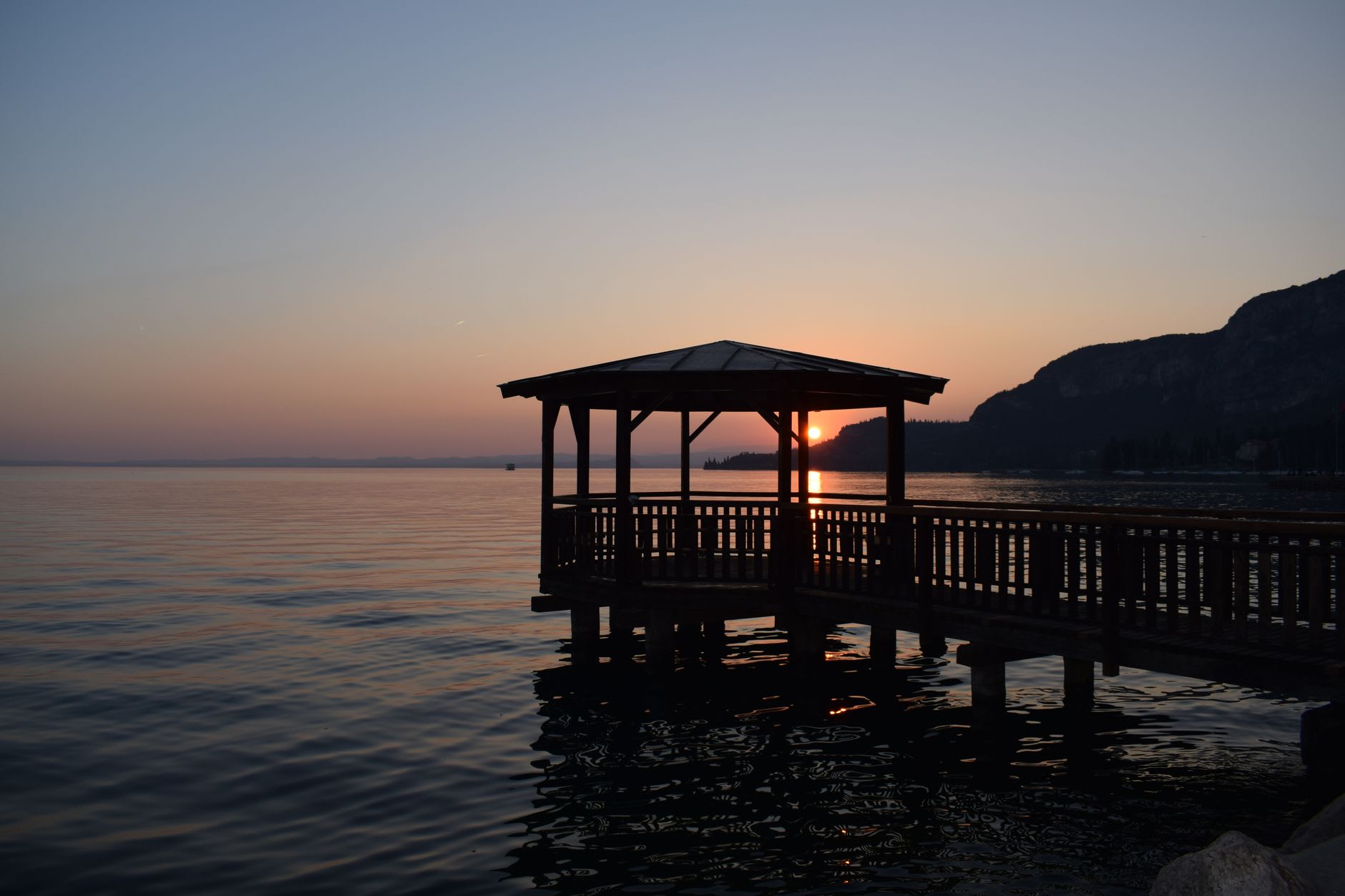
That’s Garda’s trick. In a single day on the ferry you go from warm Mediterranean idleness to an Alpine wind tunnel, passing lemon terraces and Roman ruins and a dozen lakeside towns that each think they’re the real one. Como is lovely and famous. Garda is bigger, stranger, and more itself.
When to go: May, June, and September are ideal — warm enough to swim, before and after the July–August deluge that turns Sirmione into a slow-moving river of people. The northern wind is most reliable in spring and early summer if you’ve come for the water sports.