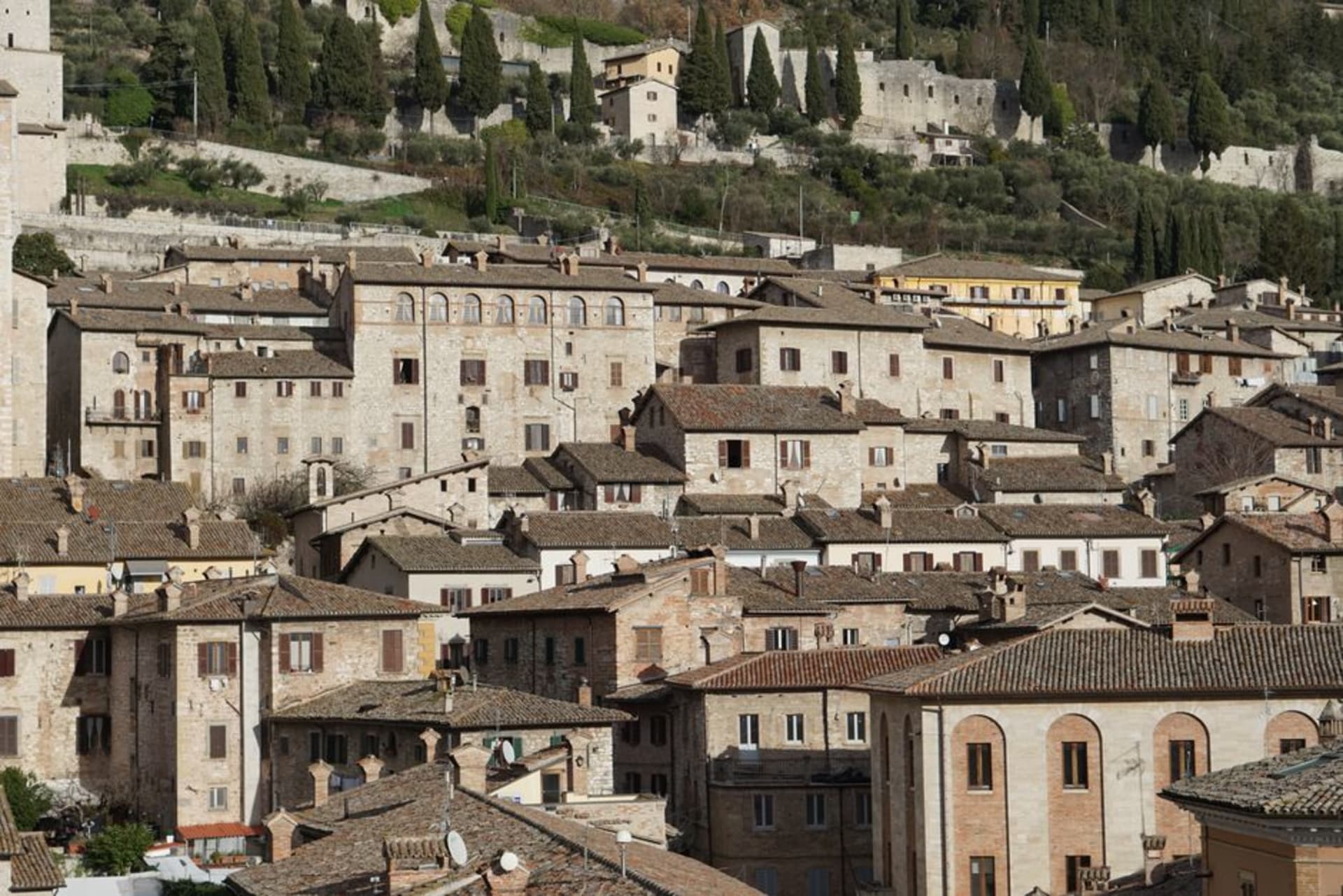
A medieval town so steep and so stone-grey it looks carved rather than built, clinging to the flank of Monte Ingino like it never got the memo about the Renaissance.
I’d read that line — “the most medieval city in Italy” — in some guidebook before I ever set foot in Gubbio, and I arrived ready to roll my eyes at it. Then I walked up Via dei Consoli, past facades the color of wet ash, past the strange little “doors of the dead” bricked into the stone at waist height, and I stopped rolling my eyes. Umbria’s other hill towns soften their medieval bones with Renaissance loggias and Baroque churches. Gubbio never bothered. It stayed exactly what it was in the 1300s: a fortress town of grey limestone stacked against a mountainside, austere in a way that felt less like a tourist attraction and more like a rebuke.
The Palazzo and the Race
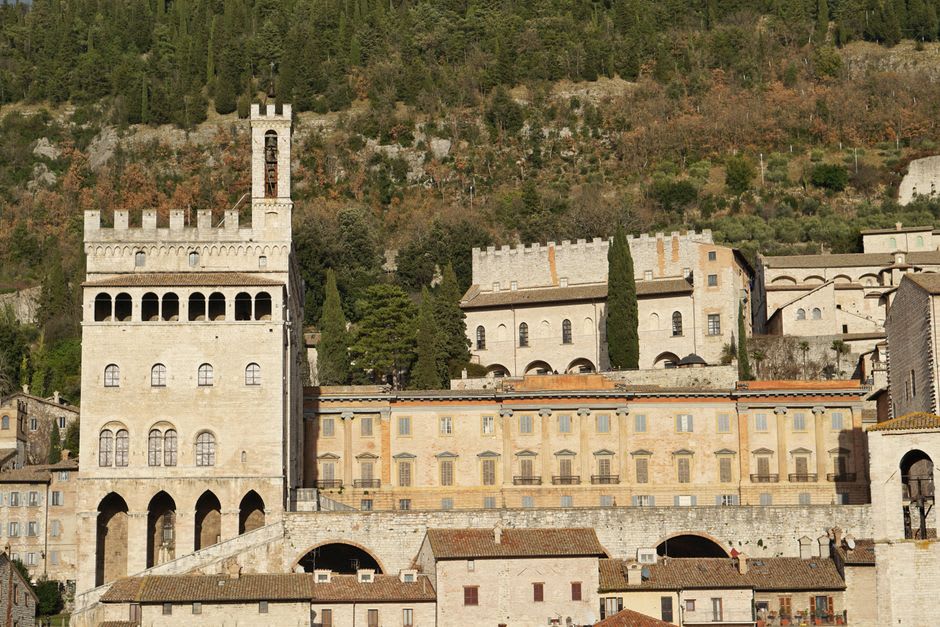
The Palazzo dei Consoli dominates the town from the Piazza Grande — an enormous, fortress-like civic palace built in the fourteenth century, its facade rising sheer from the square like the prow of a ship. Inside, the Eugubine Tables are kept: seven bronze tablets inscribed in the ancient Umbrian language, older than Latin’s dominance of the peninsula, discovered here in the fifteenth century and still the longest surviving text in any Italic language besides Latin. I stood in front of them longer than I expected to, doing the math on how old they actually were, and failing to make the number feel real. If you’re in Gubbio on May 15th, you’ll witness the Corsa dei Ceri — three teams haul enormous wooden “candles,” each ten feet tall and absurdly heavy, at a dead run through the streets and up the mountain to the Basilica di Sant’Ubaldo. It has run every year since the twelfth century, plague and war notwithstanding, and locals will tell you about it with the same fervor Sienese reserve for the Palio.
Up the Mountain, Down to the Wolf
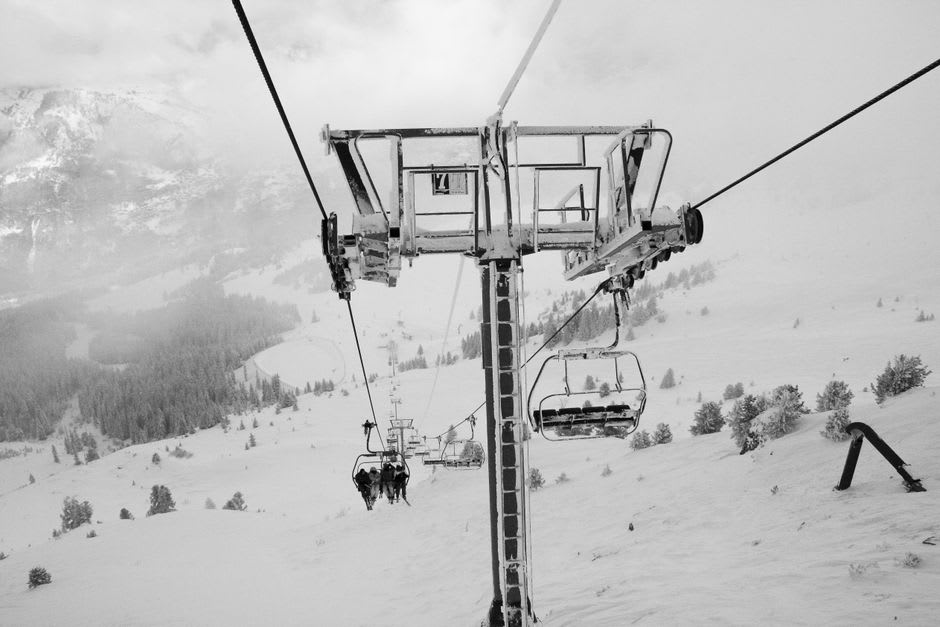
Take the funivia — an open-air two-person cage on a cable, no bar, no seatbelt, just you and the view — up to the Basilica di Sant’Ubaldo on Monte Ingino. It is, without exaggeration, one of the more unnerving lifts I’ve taken in Italy, and also one of the best: the whole Umbrian valley opens up beneath your dangling feet as the town shrinks into a grey smudge on the hillside. Down in town, the story of Saint Francis and the wolf of Gubbio is everywhere — legend has it Francis tamed a wolf that had been terrorizing the townspeople, and struck a truce between them, and there’s a small church, San Francesco della Pace, said to mark the spot. Whether or not you believe it, the tale fits the town’s temperament: a place that respects wildness enough to negotiate with it rather than pretend it away.
Ceramics are Gubbio’s other quiet obsession — the town has produced maiolica since the Renaissance, and the ruby-red lustre glaze developed here by Mastro Giorgio in the early 1500s was, for a while, a closely guarded secret that other Italian workshops couldn’t replicate. A few studios still fire it the old way. I bought a small plate I had no real use for and have never regretted it.
When to go: May 15th if you can time it for the Corsa dei Ceri — it’s chaotic and unforgettable. Otherwise, September and October give you the stone-and-fog atmosphere the town was built for, without Assisi-level crowds spilling over from the rest of Umbria.